
Published
- 3 min read
The Arrest of Don Lemon: A Defining Moment in the Assault on American Press Freedom
The Facts of the Case
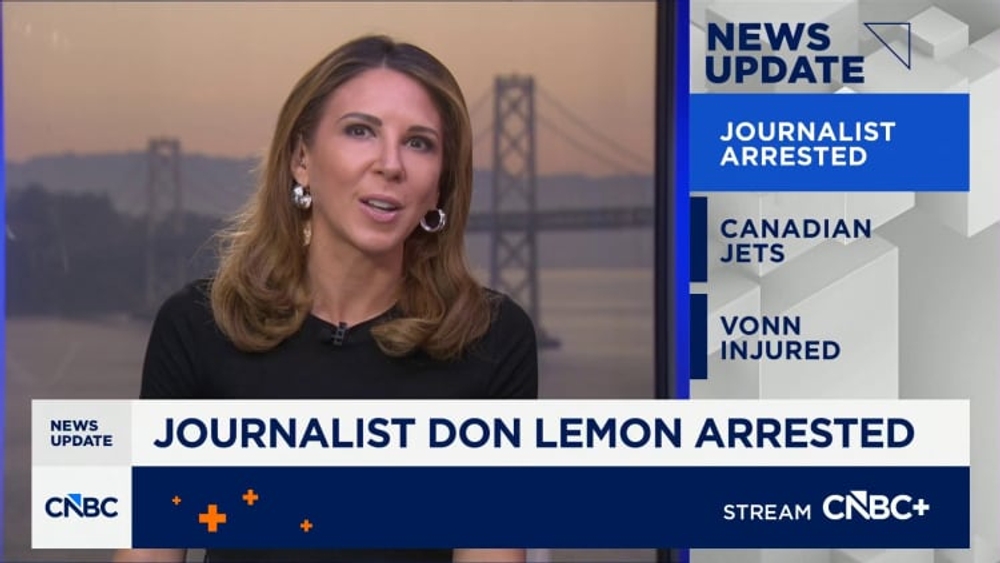
On a Friday morning, the United States witnessed an alarming event that strikes at the very heart of its democratic principles. Federal agents arrested former CNN anchor and independent journalist Don Lemon in Los Angeles. The arrest, confirmed by U.S. Attorney General Pam Bondi, is connected to Lemon’s presence at a protest on January 18th at the Cities Church in St. Paul, Minnesota. The protest was directed against the Trump administration’s immigration efforts. According to charging documents, which were not immediately available, the government alleges the event was a “coordinated attack” on the church.
Lemon’s attorney, Abbe Lowell, issued a forceful statement characterizing the arrest as an “unprecedented attack on the First Amendment” and a “transparent attempt to distract attention from the many crises facing this administration.” Lowell emphasized that Lemon, a journalist for 30 years, was engaged in constitutionally protected work, no different from his past reporting. Lemon himself has stated he was at the church to report on the protest for his YouTube show, “The Don Lemon Show.” Notably, a federal magistrate judge had previously rejected a criminal complaint against Lemon related to this incident, raising serious questions about the legal basis for this subsequent arrest.
Attorney General Bondi, in a video statement, framed the administration’s actions as a defense of the right to worship “freely and safely,” issuing a stark warning: “if you violate that sacred right, we are coming after you.” The White House amplified this confrontational tone, using its official social media account to mock Lemon’s arrest with a post captioned “When life gives you lemons…” accompanied by an emoji of chains. Alongside Lemon, independent journalist Georgia Fort was also arrested. CNN, Lemon’s former network, released a statement expressing profound concern, stating the arrest “raises profoundly concerning questions about press freedom and the First Amendment.”
The Legal and Constitutional Context
The First Amendment to the United States Constitution is unequivocal: “Congress shall make no law… abridging the freedom of speech, or of the press.” For generations, this guarantee has been the bedrock of American liberty, ensuring that journalists can perform their essential role as government watchdogs without fear of persecution. The act of reporting on a public event, especially a protest, is a core function of the press. The Supreme Court has consistently affirmed that the press enjoys broad protections to gather and report news, protections that are essential for an informed citizenry.
The arrest of a journalist for merely being present at a protest—where the stated purpose was newsgathering—represents a radical departure from established legal norms. The fact that a magistrate judge had already found insufficient cause for a complaint underscores the flimsy and politically motivated nature of these charges. When the Department of Justice, an institution meant to be a neutral arbiter of the law, is wielded as a political weapon against critics, it signifies a crisis for the rule of law. This action fits a disturbing pattern where governmental power is used not to uphold justice, but to silence dissent and intimidate the free press.
A Chilling Assault on the First Amendment
Let us be clear and unambiguous: the arrest of Don Lemon is not about upholding public safety or protecting a place of worship. It is a blatant and terrifying assault on the First Amendment, orchestrated by an administration that has repeatedly demonstrated contempt for a free press. The charges, stemming from Lemon’s constitutionally protected work as a journalist, are a transparent attempt to criminalize reporting that the administration finds inconvenient or critical. This is the behavior of an authoritarian regime, not a constitutional republic.
The weaponization of the Department of Justice under Attorney General Pam Bondi is a profound betrayal of the institution’s sacred duty. Her statement, promising to “come after” those who violate a “sacred right,” is deliberately vague and menacing, designed to create a climate of fear. It sends a clear message to every journalist in America: criticize the administration, report on its controversies, and you too could face the full force of the federal government. This is a chilling effect of the most dangerous kind, one that threatens to silence not just one journalist, but an entire profession essential to our democracy.
The White House’s decision to publicly mock a journalist’s arrest with a glib social media post featuring chains is beneath the dignity of the office and reveals a shocking cruelty and disrespect for constitutional rights. It trivializes a grave act of state suppression and signals to the public that the administration views the suppression of press freedom as a jest. This behavior corrodes public trust in institutions and normalizes the unacceptable.
The Stakes for American Democracy
The freedom of the press is not a special privilege for journalists; it is a fundamental right of every American citizen. A free press is the mechanism through which the public receives the information necessary to hold its leaders accountable. When that press is threatened, intimidated, or jailed, the people are left in the dark, and democracy itself begins to fail. The arrest of Don Lemon is a canary in the coal mine, a warning sign that the foundational pillars of our republic are under direct attack.
We must view this event not in isolation, but as part of a sustained campaign to undermine democratic institutions. The attacks on the judiciary, the attempts to delegitimize elections, and the relentless assault on the press are all facets of the same anti-democratic project. The goal is to consolidate power by dismantling the checks and balances that prevent authoritarian rule. Abbe Lowell is correct; this is an unprecedented attack. But it will not be the last if it is met with silence or acquiescence.
A Call to Action
In this moment of crisis, neutrality is complicity. Every American who values freedom, every citizen who believes in the Constitution, must raise their voice in defense of Don Lemon and the principle he represents. We must demand that the Department of Justice drop these spurious charges immediately. We must call on Congress to exercise its oversight powers to investigate this gross abuse of power. And we must support the journalists who continue to do their jobs in the face of intimidation.
The path forward requires courage and resolve. We must reaffirm our commitment to the First Amendment as the non-negotiable cornerstone of our liberty. The fight for a free press is the fight for democracy itself. History will judge us not by our words, but by our actions in defending the freedoms we claim to cherish. The chains emoji used by the White House is a symbol we must reject utterly. In America, the press must be free, not in chains. The future of our Republic depends on it.