
The Assault on Congressional Oversight: How DHS Policies Threaten Democratic Accountability
Published
- 3 min read
The Facts: A Pattern of Obstruction
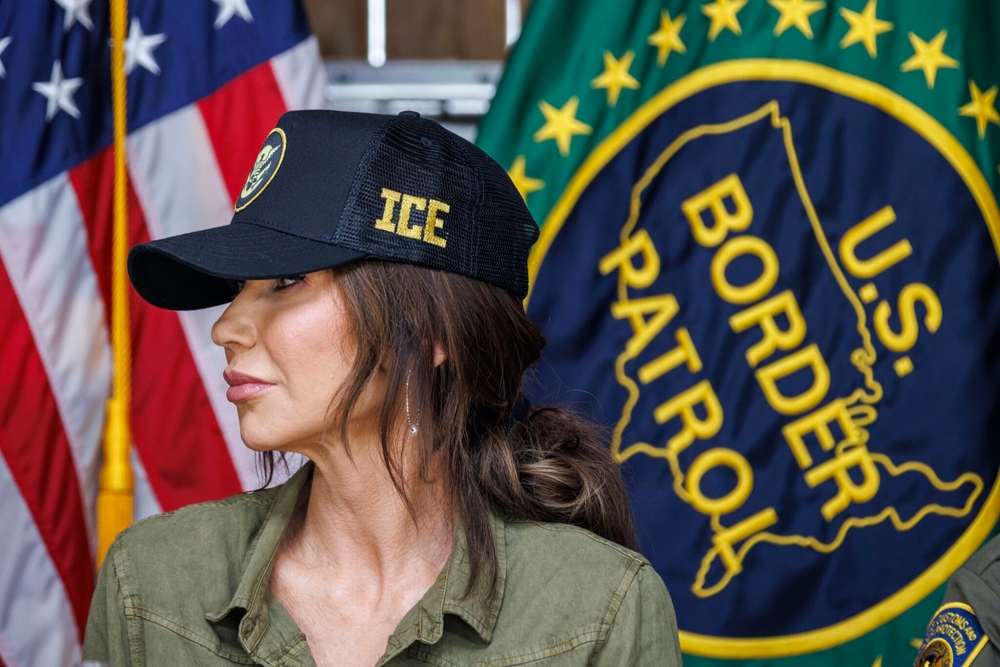
The Department of Homeland Security, under Secretary Kristi Noem, has instituted a policy requiring members of Congress to provide seven days’ notice before conducting oversight visits to immigration detention facilities. This policy directly contradicts the 2019 appropriations law, specifically Section 527, which explicitly allows for unannounced congressional visits to federal facilities holding immigrants. This marks the third such policy attempt by Noem, each nearly identical to the previous ones, demonstrating a persistent pattern of obstruction rather than a one-time administrative error.
On February 2nd, U.S. District Judge Jia Cobb blocked the initial seven-day notification policy, issued one day after the tragic shooting of Renee Good by a federal immigration officer in Minneapolis on January 7th. In a concerning display of defiance, Noem issued a nearly identical policy on the same day as Cobb’s ruling. This occurred amid Democratic demands for changes in enforcement tactics following a second deadly shooting—that of Alex Pretti by two Customs and Border Protection officers.
The situation has escalated with the failure to pass Homeland Security funding for fiscal year 2026, potentially leading to a department shutdown beginning early Saturday. However, even in a shutdown scenario, Immigration and Customs Enforcement would retain $75 billion in funding due to previous tax cuts and spending packages. Department of Justice attorneys argued that the appropriations law would expire with the funding, thereby nullifying the unannounced oversight provision. Christine L. Coogle, representing the congressional plaintiffs, correctly countered that the law itself does not expire merely because funds do.
The Legal Context and Congressional Response
Judge Cobb has extended her temporary restraining order until March 2nd or until she rules, whichever comes first. This legal battle stems from June incidents where multiple Democrats were denied visits to ICE facilities, prompting their lawsuit. “What we’re really seeking here is a return to the status quo,” Coogle stated in court, emphasizing the fundamental principle that existing laws should be respected and enforced.
In December, Cobb had already granted a stay against Noem’s policy, finding it violated the 2019 law. The administration’s subsequent argument—that ICE facilities using funds through the Republican spending and tax cuts law (the “One, Big Beautiful Bill”) rather than DHS appropriations are exempt from unannounced oversight—was rejected by Cobb earlier this month.
The House Democrats leading this legal challenge include Representatives Joe Neguse of Colorado, Adriano Espaillat of New York, Kelly Morrison of Minnesota, Jamie Raskin of Maryland, Robert Garcia of California, J. Luis Correa of California, Jason Crow of Colorado, Veronica Escobar of Texas, Dan Goldman of New York, Jimmy Gomez of California, Raul Ruiz of California, Bennie Thompson of Mississippi, and Norma Torres of California. These members represent a broad coalition committed to preserving congressional oversight authority.
The Dangerous Erosion of Democratic Norms
This systematic effort to obstruct congressional oversight represents nothing less than an assault on the fundamental principles of American democracy. The separation of powers—executive, legislative, and judicial—forms the bedrock of our constitutional system. When any administration deliberately undermines Congress’s oversight authority, it strikes at the very heart of our system of checks and balances.
The requirement for seven days’ notice effectively eliminates the possibility of genuine, unannounced oversight. Such notice allows facilities to prepare, hide problems, and present a sanitized version of operations. This defeats the entire purpose of oversight visits, which are designed to ensure transparency and accountability in government operations, particularly in sensitive areas like immigration detention where human rights concerns are paramount.
The persistence of these policies—issuing nearly identical requirements after judicial rejection—demonstrates a troubling disregard for the rule of law. It suggests an administration more committed to concealing its operations than complying with legal requirements and respecting co-equal branches of government.
The Human Cost of Secrecy
Behind this bureaucratic and legal battle lies a profound human reality. Immigration detention facilities house vulnerable individuals whose treatment reflects our nation’s values and commitment to human dignity. The tragedies mentioned in the article—the shootings of Renee Good and Alex Pretti—highlight the critical importance of transparent oversight. When government operations occur behind closed doors, without accountability, human rights abuses can flourish unchecked.
Congressional oversight serves as the people’s eyes into government operations. It represents the fundamental democratic principle that those exercising government power must answer to the people’s representatives. obstructing this oversight doesn’t just violate procedural requirements—it potentially enables misconduct and abuse to continue unseen.
The Constitutional Imperative of Oversight
The executive branch’s increasing resistance to congressional oversight represents a dangerous trend in American governance. The Constitution grants Congress broad investigatory powers precisely because the founders understood that sunlight remains the best disinfectant. James Madison famously warned that “ambition must be made to counteract ambition,” recognizing that each branch must vigilantly protect its constitutional prerogatives to prevent tyranny.
This administration’s pattern of behavior—repeatedly issuing policies that have already been rejected by the judiciary—demonstrates either profound disrespect for the judicial branch or a calculated strategy of obstruction through endless litigation and policy changes. Either interpretation should alarm every American who values constitutional governance.
The Path Forward: Restoring Accountability
As Judge Cobb’s impending decision approaches, all branches of government—and the American people—must recognize what is at stake. This is not merely a technical dispute about notification procedures. It is a fundamental battle over whether our government remains accountable to the people through their elected representatives.
The solution requires both immediate judicial action and long-term structural commitment. Courts must firmly reject executive overreach that undermines congressional authority. Congress must exercise its power of the purse and other constitutional tools to ensure compliance with existing laws. Most importantly, Americans must recognize that transparency and accountability are not partisan issues—they are democratic necessities.
We must demand that all government officials, regardless of party, respect the constitutional framework that has sustained American democracy for centuries. The alternative—a government that operates in secrecy, free from oversight and accountability—represents a betrayal of everything the American experiment stands for.
The tragic deaths of Renee Good and Alex Pretti remind us that government actions have real consequences. When we allow oversight mechanisms to be weakened, we risk enabling further tragedies. We owe it to these individuals, and to all Americans, to ensure that our government remains transparent, accountable, and ultimately, humane.
In the words of Supreme Court Justice Louis Brandeis, “Sunlight is said to be the best of disinfectants.” We must never allow any administration to draw the curtains on congressional oversight, for when government operates in darkness, democracy itself grows dim.