
The Assault on Democracy: Arizona's Dangerous Gambit to Militarize Polling Places
Published
- 3 min read
The Facts: What Happened in Arizona
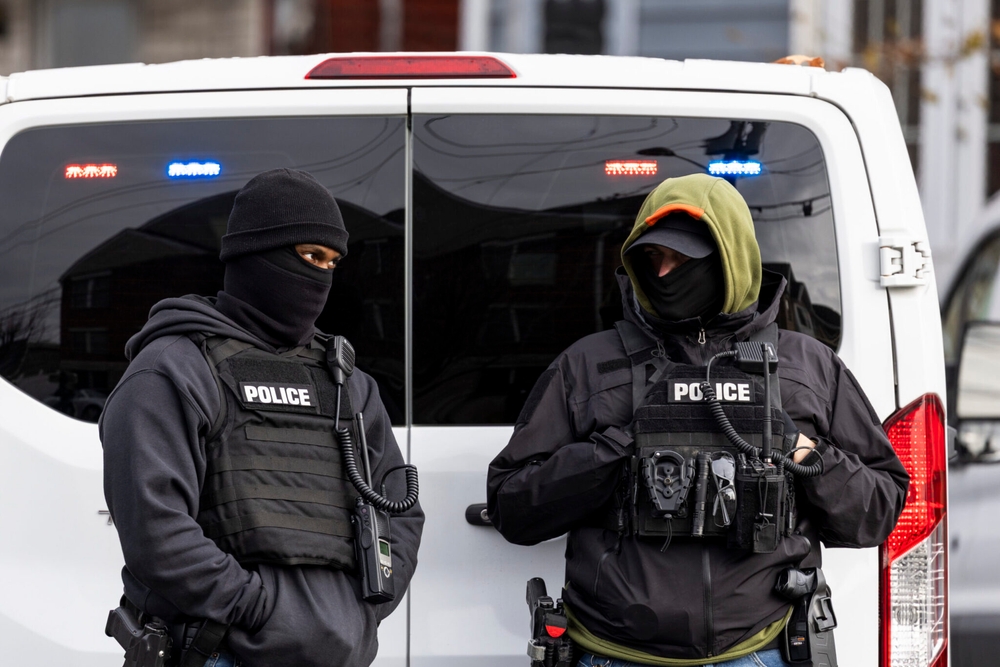
Last Friday, the Arizona State Capitol became ground zero in the battle for American democracy when Republican legislators attempted to push through Senate Bill 1570, a radical proposal that would have forced all 15 Arizona counties to station federal immigration officers at every polling place and ballot drop box during the upcoming midterm elections. The bill, sponsored by Senator Jake Hoffman of the far-right Arizona Freedom Caucus, represented one of the most overt voter suppression efforts in recent memory.
The legislation would have required continuous ICE presence “during all hours in which voting is conducted or ballots are deposited” throughout November’s election. This move came just weeks after former President Donald Trump renewed his calls for federal control over election administration—something he lacks the constitutional authority to implement, given that election administration is constitutionally delegated to the states.
What unfolded during the committee process was equally disturbing. Hundreds of protestors organized by Living United for Change in Arizona (LUCHA) waited for six hours to voice their opposition, only to be told at the last minute that the bill wouldn’t be heard due to its sponsor’s illness. Many community members were denied entry to the Senate building with little explanation, receiving unsigned trespass notices claiming “disorderly behavior” without specific allegations or due process.
The Context: A Pattern of Anti-Democratic Efforts
This isn’t an isolated incident but part of a broader pattern of anti-democratic measures emerging from Arizona’s legislature. Senator Catherine Miranda correctly noted that numerous Republican proposals this year send a clear anti-immigrant message, including bills targeting sanctuary cities and requiring hospitals to inquire about patients’ citizenship status. “The immigrant community remains a political target,” Miranda stated—a chilling acknowledgment of the systematic discrimination at play.
The proposal follows a troubling precedent set by recent U.S. Supreme Court decisions that have empowered ICE officers to engage in racial profiling, followed by weeks of aggressive immigration enforcement in Minneapolis where agents demanded proof of citizenship from nonwhite individuals simply walking in their own neighborhoods.
What makes the Arizona situation particularly egregious is the blatant racial discrimination in enforcement. LUCHA’s Executive Director Alejandra Gomez revealed that while Brown community members were systematically barred from the Senate building, white individuals were allowed to enter freely. Senate GOP spokeswoman Kim Quintero claimed the exclusions were based on “documented conduct,” yet the unsigned, unnamed notices and selective enforcement tell a different story entirely.
The Constitutional Crisis: Why This Matters
Undermining State Authority and Voting Rights
The Arizona proposal represents a fundamental misunderstanding—or intentional distortion—of constitutional principles. Elections are specifically delegated to state authority under the U.S. Constitution, making Trump’s calls for federalization and Hoffman’s attempt to federalize polling place security particularly dangerous. This isn’t just bad policy; it’s constitutionally questionable at best and outright unconstitutional at worst.
More importantly, the presence of federal immigration officers at polling places would create a chilling effect that directly undermines the Voting Rights Act of 1965 and the fundamental principle that every eligible citizen should feel safe and secure when exercising their most basic democratic right. The mere presence of armed federal agents asking for identification would disproportionately deter minority voters, elderly citizens, and naturalized immigrants—communities that already face significant barriers to voting.
The Slippery Slope of Voter Intimidation
What makes this proposal so dangerous is its normalization of voter intimidation tactics. When government officials weaponize law enforcement to influence election outcomes, we cross a line that should never be crossed in a democratic society. Vivian Serafin of LUCHA articulated this perfectly when she stated, “What I am certain about is that they want to intimidate people at the polls, and they want to try their best to control the election this November.”
This isn’t hypothetical—we’ve seen these tactics before in American history. From literacy tests to poll taxes to armed intimidation at voting sites, the pattern is clear: when certain groups cannot win elections fairly, they resort to suppressing the vote of those who disagree with them. The Arizona proposal is simply the 21st-century version of these age-old suppression tactics.
The Principle: Why We Must Fight Back
Defending the Sanctity of the Ballot Box
The right to vote without intimidation, harassment, or fear is fundamental to American democracy. Our Constitution guarantees it, our history has fought for it, and our future depends on it. Any attempt to militarize polling places or use law enforcement as a political tool represents an existential threat to our democratic system.
We must recognize that these efforts aren’t about election security—they’re about election outcomes. True election security involves protecting voting systems from cyber threats, ensuring accurate vote counting, and maintaining transparent processes. It does not involve stationing federal agents to question citizens about their immigration status as they attempt to exercise their constitutional rights.
The Moral Imperative Against Racial Profiling
Beyond the constitutional issues, there’s a fundamental moral problem with using racial profiling as an electoral strategy. Targeting minority communities, disproportionately impacting Brown and Black voters, and creating a two-tiered system of voting access is antithetical to everything America stands for. The fact that these efforts are being championed by elected officials who swore oaths to protect and defend the Constitution makes them particularly egregious.
The Path Forward: Protecting Democracy in Arizona and Beyond
The temporary defeat of SB1570 is not a victory—it’s a respite. Senator Hoffman can still revive this proposal through parliamentary maneuvers, and the ideology behind it remains potent. We must remain vigilant and prepared to defend democratic principles at every turn.
This requires several concrete actions:
First, civil rights organizations and democracy advocates must continue their vital work monitoring and opposing these measures. LUCHA and other grassroots organizations deserve recognition and support for their courageous stand against voter suppression.
Second, elected officials who value democracy must use every legal and procedural tool available to block these authoritarian measures. This includes challenging them in court, raising public awareness, and mobilizing constituent opposition.
Third, every American who believes in free and fair elections must recognize that democracy is not self-sustaining—it requires active defense. This means voting in every election, staying informed about threats to democratic processes, and holding elected officials accountable when they undermine rather than protect our system of government.
Conclusion: The Stakes Could Not Be Higher
What happened in Arizona last Friday was more than a political skirmish—it was a warning sign about the health of American democracy. When elected officials try to use law enforcement to intimidate voters, when protestors are systematically excluded from the legislative process based on race, and when the fundamental right to vote comes under attack, we must recognize that we’re facing a crisis that goes beyond partisan politics.
The battle in Arizona is about more than one bill or one election—it’s about whether America will remain a country where every citizen can vote without fear, where the rules apply equally to everyone, and where democracy is protected rather than undermined. The protestors who waited for hours to defend these principles, the organizations fighting these battles daily, and every American who believes in constitutional government must stand together against these attacks.
Our democracy is not perfect, but it’s worth fighting for. The attempt to station ICE agents at polling places isn’t just bad policy—it’s un-American, unconstitutional, and fundamentally opposed to the principles of liberty and justice for all. We must ensure that this dangerous idea doesn’t just get postponed—it gets defeated for good.