
The Assault on Federal Reserve Independence: A Dangerous Precedent for American Democracy
Published
- 3 min read
The Facts: Presidential Pressure on Monetary Policy
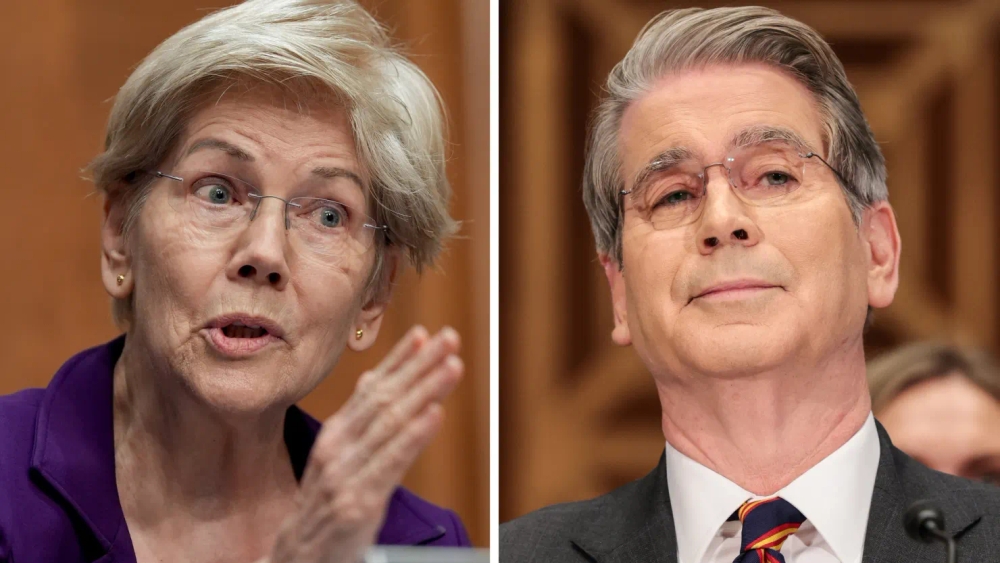
During a Senate Banking Committee hearing on February 5th, 2026, Treasury Secretary Scott Bessent delivered testimony that should alarm every American who values institutional independence and the separation of powers. When questioned by Senator Elizabeth Warren about whether President Donald Trump’s Federal Reserve chair nominee Kevin Warsh could face criminal investigation for resisting presidential pressure on interest rates, Bessent refused to provide assurances, stating “That is up to the president.”
This exchange occurred in the context of President Trump’s recent joke about suing Warsh if he doesn’t reduce rates to the president’s liking—a remark that Senator Warren rightly treated with grave concern. The testimony represents the latest escalation in a months-long campaign by the Trump administration to undermine Federal Reserve independence, including threats to fire Chair Jerome Powell and the initiation of what critics characterize as bogus investigations against Powell and Federal Reserve Board Governor Lisa Cook.
Context: The Traditional Firewall Between White House and Fed
The independence of the Federal Reserve has been a cornerstone of American economic policy for decades. Historically, U.S. presidents have maintained a metaphorical firewall between the White House and the Federal Reserve, recognizing that monetary policy decisions must be insulated from short-term political pressures. This separation allows the Fed to make difficult decisions about interest rates, inflation control, and economic stabilization without fear of political retaliation.
The current administration’s approach represents a radical departure from this tradition. President Trump has publicly targeted Chair Jerome Powell for his refusal to lower interest rates according to presidential preferences. The Department of Justice has initiated an unprecedented investigation into Powell relating to cost overruns on the renovation of the Federal Reserve headquarters—an investigation that many observers view as politically motivated.
The Political Landscape: Bipartisan Concerns and Resistance
The administration’s actions have generated concern across the political spectrum. Republican Senator Thom Tillis of North Carolina has vowed to block the nomination of Kevin Warsh unless the probe into Powell is dropped. Committee Chair Tim Scott, Republican of South Carolina, has stated he doesn’t believe Powell committed any crime in his testimony. Meanwhile, Democratic members of the committee, led by Senator Warren, have called for halting Warsh’s nomination until investigations into both Powell and Cook are concluded.
This bipartisan resistance suggests that the threat to Federal Reserve independence is recognized as transcending ordinary political divisions. The principle that monetary policy should be free from direct political control is fundamental to economic stability and has historically enjoyed support from both major parties.
The Dangerous Erosion of Institutional Norms
What we are witnessing is nothing short of a systematic assault on the institutional safeguards that protect American democracy from authoritarian tendencies. The refusal of a Treasury Secretary to rule out weaponizing the Department of Justice against political opponents—or against officials who simply exercise their independent judgment—represents a profound threat to the rule of law.
The Federal Reserve’s independence is not an abstract bureaucratic privilege; it is a vital protection against the inflationary pressures and economic instability that inevitably result when politicians manipulate monetary policy for short-term gain. History provides numerous examples of countries where central bank independence was compromised, invariably leading to economic disaster and the erosion of public trust in institutions.
The Broader Pattern: Weaponizing Government Institutions
This incident cannot be viewed in isolation. It represents part of a broader pattern of attempting to subordinate independent government institutions to presidential will. The threats against Federal Reserve officials follow similar patterns seen in attacks on the intelligence community, the judiciary, and law enforcement agencies when they resist political pressure.
When a president can threaten officials with criminal investigation for performing their duties according to their best judgment rather than presidential preference, we have crossed a dangerous threshold. This creates a chilling effect that undermines the ability of career officials to provide honest expertise and advice without fear of retaliation.
The Constitutional Implications
The Framers of our Constitution designed a system of checks and balances precisely to prevent the concentration of power in any single branch of government. The Federal Reserve’s independence, while not explicitly mentioned in the Constitution, embodies this principle by creating an institution that can resist political pressure in service of long-term economic stability.
The administration’s actions represent a fundamental challenge to this constitutional architecture. By attempting to bring monetary policy under direct presidential control, the administration seeks to consolidate power in the executive branch in ways that the Framers explicitly sought to prevent.
The Human Cost of Institutional Breakdown
Behind these institutional battles lie real human consequences. Federal Reserve officials like Jerome Powell and Lisa Cook now face the prospect of criminal investigations not based on evidence of wrongdoing, but on their resistance to political pressure. This personal targeting of public servants for doing their jobs ethically and independently creates a toxic environment that will deter qualified individuals from public service.
The economic consequences could be equally severe. If markets perceive that monetary policy decisions are being made for political rather than economic reasons, confidence in the U.S. economy could be seriously undermined. This could lead to higher borrowing costs, currency instability, and reduced investment—all harming American families and businesses.
The Path Forward: Defending Democratic Institutions
In this concerning moment, all Americans who value democracy and economic stability must speak out in defense of institutional independence. Congress must exercise its oversight authority to prevent the weaponization of law enforcement against political opponents. The Senate should refuse to confirm any Federal Reserve nominees until the investigations against Powell and Cook are concluded and their independence is guaranteed.
Civil society organizations, academic institutions, and thought leaders across the political spectrum must reaffirm the importance of central bank independence. The business community, which has historically supported Fed independence, must recognize that short-term political gains are not worth sacrificing long-term economic stability.
Conclusion: A Defining Moment for American Democracy
We are living through a defining moment for American democracy. The assault on Federal Reserve independence is not merely a technical economic issue—it is a fundamental test of whether our institutions can withstand political pressure and continue to serve the long-term interests of the American people.
The response to this challenge will determine whether future generations inherit a country where expertise, independence, and the rule of law prevail over political expediency and authoritarian impulses. The principles at stake—institutional independence, separation of powers, and protection against the weaponization of government—are worth defending with unwavering commitment.
As citizens, we must demand that our leaders respect the boundaries and norms that protect our democracy. The alternative—a government where independent judgment is punished and institutional independence is eroded—is too grave to contemplate. Our economic future and democratic integrity depend on getting this right.