
The Assault on Federal Reserve Independence: A Dangerous Precedent for American Democracy
Published
- 3 min read
The Facts: Presidential Threats Against Monetary Policy Independence
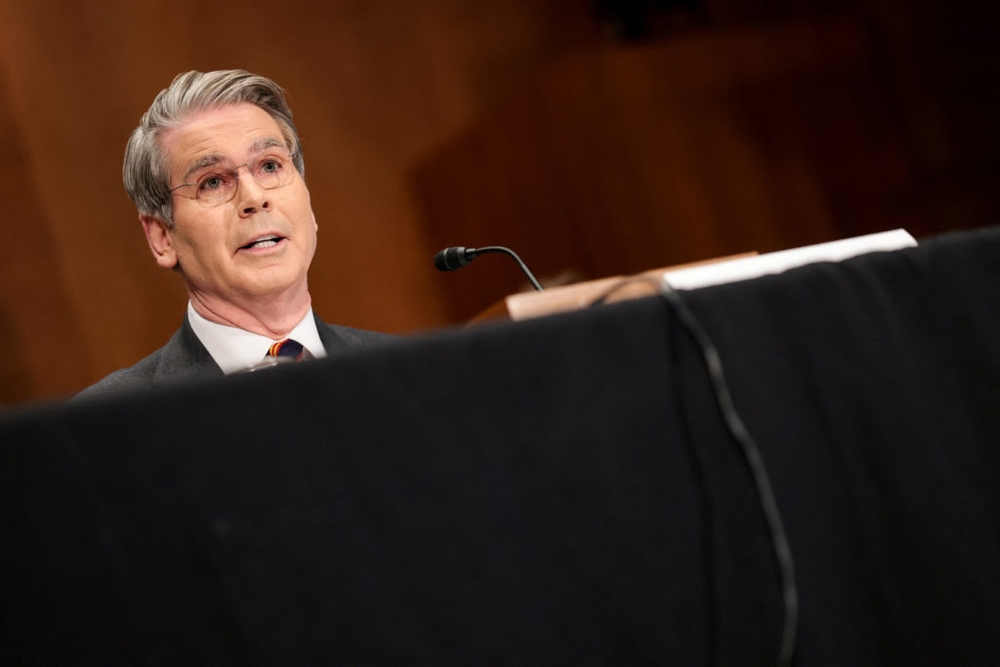
In what can only be described as an unprecedented attack on institutional independence, Treasury Secretary Scott Bessent testified before the Senate Banking Committee that it would be “up to the president” to decide whether to sue Federal Reserve chair nominee Kevin Warsh if he failed to lower interest rates according to presidential demands. This statement came in response to questioning by Senator Elizabeth Warren regarding President Trump’s remarks at the Alfalfa Club dinner, where he joked about suing his own Fed nominee for not complying with interest rate preferences.
The context for this extraordinary exchange is crucial. President Trump nominated Jerome Powell to lead the Federal Reserve in 2017 but turned against him when Powell raised interest rates the following year. The administration has since launched an unprecedented Department of Justice investigation into Powell’s testimony about the Fed’s building renovation, subpoenaing the central bank in what many perceive as retaliatory action against an independent institution exercising its statutory mandate.
This situation has created rare bipartisan concern, with Republican Senator Thom Tillis of North Carolina stating he won’t vote to approve Warsh until the investigation into Powell is resolved. Tillis remarked that “even stipulating that that could happen and that it’s not a bad idea is troubling to me,” highlighting the extraordinary nature of the administration’s position. Senator Tim Scott, who leads the Banking Committee, further broke ranks by stating that “ineptness or being incompetent is not a criminal act,” directly contradicting the administration’s apparent justification for investigating Powell.
The Historical Context of Federal Reserve Independence
The Federal Reserve’s independence from political pressure has been a cornerstone of American economic policy for decades. Established in 1913, the Fed was designed to operate free from short-term political considerations, allowing it to make decisions based on long-term economic stability rather than electoral cycles or presidential preferences. This independence has been crucial in combating inflation, managing economic crises, and maintaining confidence in the U.S. financial system.
Previous administrations, both Democratic and Republican, have respected this boundary even when disagreeing with specific Fed decisions. President George H.W. Bush believed Fed policy cost him reelection in 1992, yet he never threatened legal action against Chairman Alan Greenspan. President Obama reappointed Ben Bernanke despite criticism of his handling of the financial crisis, understanding that central bank independence transcends political disagreements.
The Dangerous Implications of Political Interference
What we are witnessing represents nothing less than a fundamental assault on the institutional safeguards that protect our economic system from political manipulation. The idea that a president could sue his own Fed chair nominee for exercising independent judgment on interest rates strikes at the very heart of central bank independence. It establishes a terrifying precedent where monetary policy decisions could become subject to litigation based on political compliance rather than economic necessity.
This threat is particularly alarming given the current investigation into Jerome Powell. The Department of Justice’s subpoena of the Fed regarding Powell’s testimony about building renovations appears transparently pretextual—a weaponization of legal processes to punish an official who dared to exercise independent judgment. When combined with Bessent’s testimony, it creates a pattern of behavior that suggests the administration views independent institutions as extensions of executive power rather than separate co-equal branches of government.
The Bipartisan Nature of Institutional Concern
Perhaps most telling is the bipartisan nature of the concern this has generated. Senator Thom Tillis, a Republican who is retiring and thus freer to speak his mind, has taken the extraordinary step of withholding support for Warsh’s nomination until the Powell investigation is resolved. His statement that “we didn’t see a crime” during the testimony in question directly contradicts the administration’s justification for its investigation.
Senator Tim Scott’s breaking ranks to declare that “ineptness or being incompetent is not a criminal act” further demonstrates the seriousness of this situation. When members of the president’s own party feel compelled to publicly distance themselves from administration actions regarding independent institutions, we must recognize that something fundamental is at stake.
The Broader Pattern of Institutional Erosion
This incident cannot be viewed in isolation. It represents part of a broader pattern of challenging institutional norms and independent bodies that serve as checks on executive power. From attacks on the intelligence community and law enforcement agencies to efforts to undermine the civil service and now threats against central bank independence, we see a consistent effort to concentrate power and eliminate independent voices within government.
The Federal Reserve’s independence is particularly crucial because monetary policy decisions often require taking actions that are politically unpopular in the short term but economically necessary in the long term. Interest rate increases to combat inflation, for example, may slow economic growth and increase unemployment temporarily—precisely the kind of decision that requires insulation from political pressure.
The Constitutional Principles at Stake
At its core, this controversy touches on fundamental constitutional principles about the separation of powers and the system of checks and balances that the founders designed to prevent tyranny. The Federal Reserve’s independence, while not explicitly mentioned in the Constitution, represents the kind of institutional diversity that the framers valued—multiple centers of power and expertise that can act as counterweights to pure majoritarian rule or executive overreach.
The idea that any president could threaten legal action against officials exercising their statutory responsibilities based on technical policy disagreements represents a dangerous expansion of executive power. It suggests a view of governance where compliance with presidential preferences takes precedence over independent judgment and statutory mandates.
The International Implications
America’s economic leadership position in the world depends significantly on confidence in our institutions and the rule of law. Foreign investors, central banks, and international financial institutions rely on the predictability and independence of Federal Reserve decision-making. Threats to that independence undermine not just domestic economic stability but America’s standing in the global financial system.
Other countries look to the Federal Reserve as a model of central bank independence and technical competence. Eroding that model through political interference damages America’s soft power and could encourage similar behavior in other countries, potentially destabilizing the global financial system.
The Path Forward: Defending Institutional Integrity
This moment requires all who value democratic institutions and economic stability to speak clearly in defense of Federal Reserve independence. Senators from both parties must make clear that threats against central bank independence are unacceptable and that nominees who would submit to such pressure are unfit for office.
The investigation into Jerome Powell must be recognized for what it appears to be: a politically motivated effort to punish independence. Congress should exercise its oversight authority to ensure that the Department of Justice is not being weaponized for political purposes against independent institutions.
Most importantly, we must reaffirm the principle that technical decision-making in areas like monetary policy must be insulated from short-term political pressure. The health of our economy and the stability of our financial system depend on maintaining this crucial boundary between political authority and expert judgment.
The assault on Federal Reserve independence is not just about interest rates or building renovations—it is about whether we will maintain the institutional safeguards that protect our democracy from the concentration of power and the erosion of checks and balances. The answer to this challenge will define American governance for generations to come.