
The Assault on Institutions: When Political Power and Personal Finance Collide
Published
- 3 min read
The Claims and The Context
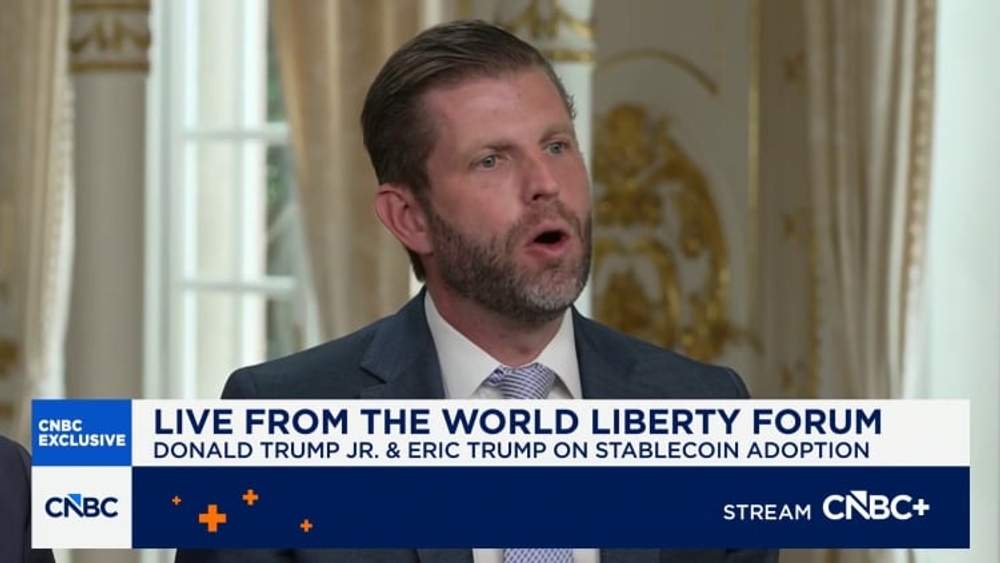
In a striking interview at the World Liberty Forum held at Mar-a-Lago, Donald Trump Jr. levied a severe accusation against the bedrock of the modern global economy: traditional banking. He labeled it a “Ponzi scheme” and declared that his family’s foray into cryptocurrency through World Liberty Financial was not a choice but a necessity. This necessity, he and his brother Eric claimed, was born from a coordinated effort by banks to close “hundreds” of the Trump Organization’s accounts in the aftermath of the January 6th, 2021, attack on the U.S. Capitol. They framed this action by financial institutions as a form of political persecution, alleging that they were “debanked” due to their conservative politics and that smaller clients suffered a similar fate. The brothers positioned their new venture as a crusade to “modernize finance” and prevent such cancellations from happening to anyone else, a move they described as a form of “retribution.
This narrative, however, exists within a much broader and deeply troubling context. The World Liberty Forum itself, touted as a gathering of global leaders, presented a paradox. While the event platformed allegations against the banking system, it also featured one of that system’s most powerful figures, Goldman Sachs CEO David Solomon, highlighting the complex and often contradictory relationships within high finance. More critically, the article reveals that the Trump family’s crypto venture is intertwined with international geopolitics and potential conflicts of interest. The reported $500 million investment by Sheikh Tahnoon bin Zayed Al Nahyan of Abu Dhabi—a key figure in the United Arab Emirates—came just months before the Trump administration granted access to advanced AI chips to the UAE. This sequence of events prompted Senator Elizabeth Warren to decry the situation as “corruption, plain and simple,” demanding a reversal of the administration’s decision.
The Dangerous Erosion of Institutional Trust
The casual dismissal of the entire traditional banking system as a “Ponzi scheme” by someone of Donald Trump Jr.’s prominence is not merely hyperbolic rhetoric; it is a direct assault on a fundamental pillar of democratic capitalism. Banks, for all their flaws and the need for continuous oversight and reform, are institutions built on trust, regulation, and a social contract. They facilitate economic growth, enable individual prosperity, and are subject to a framework of laws designed to protect consumers and ensure stability. To equate this complex system with a criminal enterprise like a Ponzi scheme is to delegitimize the very concept of institutional authority. This is a familiar and dangerous tactic: when institutions challenge or inconvenience powerful interests, the response is not to engage in reform but to destroy public faith in the institution itself. We have seen this playbook used against the media, the judiciary, and electoral processes. Extending it to the financial system threatens to unravel the fabric of our economic security.
The brothers’ claim of being “forced” into crypto out of “necessity” following the January 6th riot demands scrutiny. Private businesses, including banks, have the right to manage their client relationships and associated risks. The insurrection was an unprecedented attack on American democracy, fueled by lies about the legitimacy of an election. For financial institutions, association with entities connected to such an event represents a profound reputational and legal risk. To frame the consequence of this association—the closing of accounts—as an act of political persecution is to invert accountability. It shifts the blame from the actions that precipitated the crisis onto the institutions that reacted to it. This narrative fosters a victimhood mentality that is corrosive to civic responsibility and obscures a simple truth: in a nation governed by laws, actions have consequences.
The Specter of Unprecedented Conflicts of Interest
The most alarming aspect of this story transcends the rhetoric and delves into the stark reality of power and its potential abuse. The involvement of the Trump family in a major financial venture while a member of that family occupies the Oval Office creates a perilous situation that strikes at the heart of democratic governance. Senator Warren’s criticism is not merely partisan; it is a defense of a core democratic principle: the separation of political power from personal enrichment.
The timeline involving Sheikh Tahnoon’s investment is particularly concerning. A half-billion-dollar investment from a foreign royal into a family business, followed by a favorable administration policy decision benefiting that royal’s country, creates an undeniable appearance of a quid pro quo. Even if one were to accept the most charitable interpretation—that these were unrelated events—the perception of corruption is devastating to America’s global standing and the integrity of its government. The founders of this nation feared the corrupting influence of foreign powers, and they designed a system intended to prevent it. When a sitting president’s family business engages in massive financial transactions with foreign states that are simultaneously subjects of that president’s policy decisions, it undermines the faith of every American citizen and ally around the world. It suggests that policy may be for sale, that national interest can be secondary to personal interest.
Conclusion: A Call to Defend Democratic Norms
The saga of World Liberty Financial is more than a business story; it is a symptom of a deeper malaise. It represents the convergence of three deeply troubling trends: the weaponization of rhetoric to destroy trust in essential institutions, the evasion of accountability by claiming political victimhood, and the blurring of lines between public office and private gain. As defenders of democracy, freedom, and the rule of law, we cannot remain silent in the face of such developments.
The strength of the American republic has always lain in its resilient institutions and the enduring norms that guide them. From a free press to an independent judiciary to a regulated financial system, these institutions create a check on power and protect the liberties of the individual. When they are attacked, whether by words or actions, our democracy is weakened. The push to “modernize finance” should be welcomed, but it must be done transparently, ethically, and within a framework that strengthens, rather than circumvents, the rule of law. Innovation should empower citizens, not create new avenues for corruption or undermine the foundations of our economic system.
We must demand unwavering adherence to ethical standards from all our public officials. We must champion a free and responsible press that holds power to account. And we must reaffirm our commitment to the institutions that have safeguarded our liberty for generations. The alternative—a world where financial systems are labeled criminal based on political expediency and where policy is shadowed by the specter of personal profit—is a future that betrays the very principles upon which the United States was founded. We must choose, unequivocally, the path of integrity, transparency, and the steadfast defense of our democratic republic.