
The Assault on Judicial Independence: A Constitutional Crisis Unfolds
Published
- 3 min read
The Facts: Presidential Contempt for Constitutional Boundaries
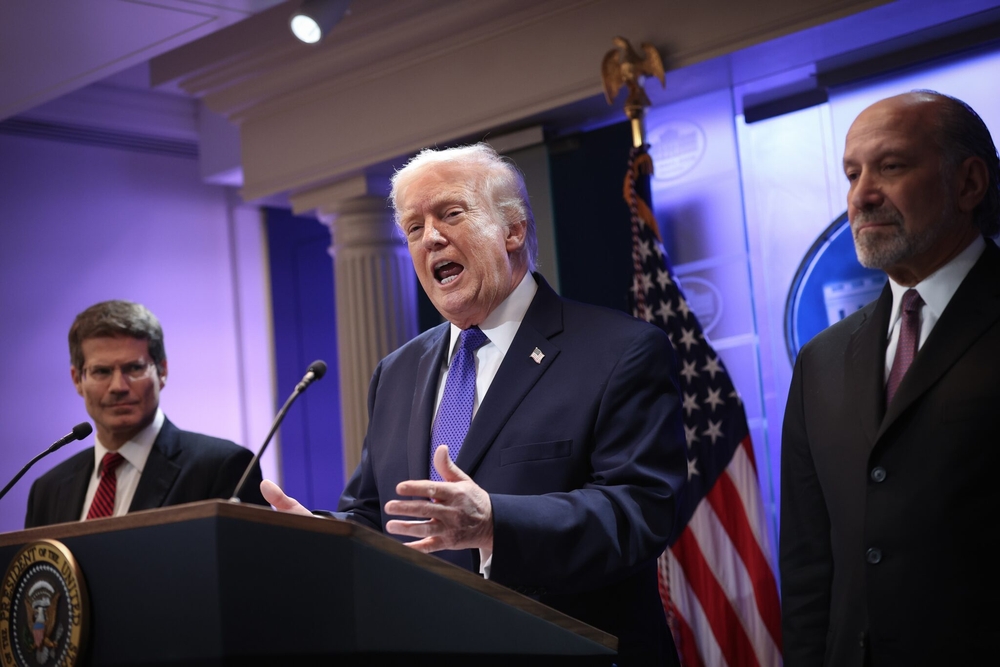
In one of the most alarming displays of executive overreach in recent memory, President Donald Trump has openly declared war on the judicial branch of the United States government. Following a Supreme Court ruling that found his tariff impositions under the International Economic Emergency Powers Act (IEEPA) exceeded presidential authority, Trump not only announced his intention to circumvent the ruling but launched a vicious personal attack on the six justices who formed the majority opinion. During a White House press conference, the president labeled Chief Justice John Roberts and Justices Amy Coney Barrett, Neil Gorsuch, Ketanji Brown Jackson, Elena Kagan, and Sonia Sotomayor as “unpatriotic” and “a disgrace to our nation” for simply performing their constitutional duty of judicial review.
The Supreme Court’s decision represented a fundamental check on executive power, affirming that even the president must operate within the boundaries set by Congress. The ruling specifically addressed Trump’s use of IEEPA to impose tariffs, determining that this authority does not extend to tariff implementation. Rather than accepting this judicial interpretation—a cornerstone of American constitutional governance—Trump immediately announced his intention to impose the same 10% global tariff using different legal authorities, specifically Section 122.
The Constitutional Context: Separation of Powers Under Siege
The separation of powers doctrine, carefully crafted by the Founding Fathers, represents one of the most brilliant innovations in the history of democratic governance. James Madison, in Federalist No. 47, famously warned that “the accumulation of all powers, legislative, executive, and judiciary, in the same hands… may justly be pronounced the very definition of tyranny.” The Supreme Court’s role as a check on executive power was firmly established in Marbury v. Madison (1803), where Chief Justice John Marshall articulated the principle of judicial review that has guided American jurisprudence for over two centuries.
What makes Trump’s response particularly dangerous is not merely his disagreement with the Court’s ruling—presidents have disagreed with Supreme Court decisions throughout history—but his direct assault on the legitimacy of the judiciary itself. By labeling justices “unpatriotic” for performing their constitutional duty, Trump crosses a line that previous presidents, regardless of party affiliation, have respected. Even President Andrew Jackson’s famous defiance (“John Marshall has made his decision; now let him enforce it”) did not include personal attacks on the justices’ patriotism or loyalty to the Constitution.
The Dangerous Precedent: Normalizing Attacks on Judicial Independence
When a sitting president questions the patriotism of Supreme Court justices for disagreeing with his policy preferences, he undermines the very foundation of an independent judiciary. This behavior establishes a dangerous precedent that could have devastating consequences for the rule of law. The judiciary’s ability to function without fear of political retribution is essential to its role as a check on the other branches of government. Trump’s rhetoric creates an environment where judicial decisions might be influenced by fear of presidential retaliation rather than constitutional principles.
This attack is particularly concerning given that three of the justices Trump appointed—Barrett, Gorsuch, and Kavanaugh—were among those he criticized. This demonstrates that Trump’s loyalty is not to constitutional principles or even to his own appointments, but to absolute deference to his policy preferences. The message is clear: even justices he selected must rubber-stamp his actions or face public humiliation and accusations of disloyalty.
The Institutional Consequences: Weakening Democratic Safeguards
The cumulative effect of such presidential behavior is the gradual erosion of institutional norms that protect American democracy. When the executive branch treats judicial review as an obstacle to be circumvented rather than a constitutional safeguard, it sets a precedent for future administrations of both parties. What prevents a future president from similarly attacking the judiciary when it rules against their policies on civil rights, environmental protection, or national security?
Trump’s announcement that he would simply use different legal authorities to achieve the same tariff policy demonstrates a concerning pattern of treating legal constraints as mere technicalities to be manipulated. His statement that “I have the right to do tariffs. And I’ve always had the right to do tariffs” despite the Court’s ruling to the contrary reveals a fundamental misunderstanding of—or disregard for—the constitutional limits on presidential power.
The Historical Parallels: Learning from Constitutional Crises
History provides sobering examples of what happens when executives attack judicial independence. President Franklin D Roosevelt’s court-packing scheme in 1937, while not involving personal attacks on justices, represented a similar challenge to judicial independence that was ultimately rejected by Congress and the public. More recently, countries like Poland and Hungary have seen their democratic institutions eroded through systematic attacks on judicial independence, serving as cautionary tales for what can happen when checks and balances collapse.
The fact that Trump felt emboldened to make these statements in a formal White House press conference, rather than through informal channels or social media, suggests a normalization of this anti-constitutional behavior. This represents a significant escalation from previous norms where presidential criticism of the judiciary, while not unheard of, was typically more measured and respectful of the institution itself.
The Path Forward: Defending Constitutional Principles
In this constitutional moment, all branches of government and the American public must reaffirm their commitment to the separation of powers. Congress has a particular responsibility to defend the judiciary against such attacks and to ensure that presidential power remains within constitutional bounds. The legislative branch must exercise its oversight authority to prevent the circumvention of Supreme Court rulings through alternative legal mechanisms.
The legal community, including bar associations and constitutional scholars, must speak out unequivocally against these attacks on judicial independence. Silence in the face of such rhetoric risks normalizing behavior that would have been considered beyond the pale in previous administrations.
Most importantly, citizens must recognize that an independent judiciary is not a partisan issue but a fundamental protection for all Americans. The ability to challenge government actions in court, regardless of who occupies the White House, is a right that safeguards every individual’s liberties. When the president attacks the judiciary for doing its job, he attacks the constitutional rights of every American.
Conclusion: A Crossroads for American Democracy
We stand at a critical juncture in American constitutional history. The president’s attacks on the Supreme Court represent more than just political rhetoric—they strike at the heart of our system of government. The response to this challenge will determine whether the separation of powers remains a living principle or becomes merely a historical artifact.
The resilience of American democracy has always depended on the willingness of each branch to respect the constitutional boundaries of the others. When those boundaries are threatened, all who value liberty must stand in defense of the constitutional order. The alternative—a government where power goes unchecked and individual rights are subject to presidential whim—is a future that should terrify every patriot who truly understands what makes America exceptional.
As citizens, we must demand better from our leaders. We must insist that respect for constitutional principles transcends political disagreements. And we must remember that the preservation of our democratic institutions depends not just on the actions of government officials, but on the vigilance of an informed citizenry committed to the rule of law above all else.