
The Assault on Marine Protection: Trump's Reckless Opening of Protected Ocean Waters
Published
- 3 min read
The Facts: A Pattern of Environmental Rollbacks
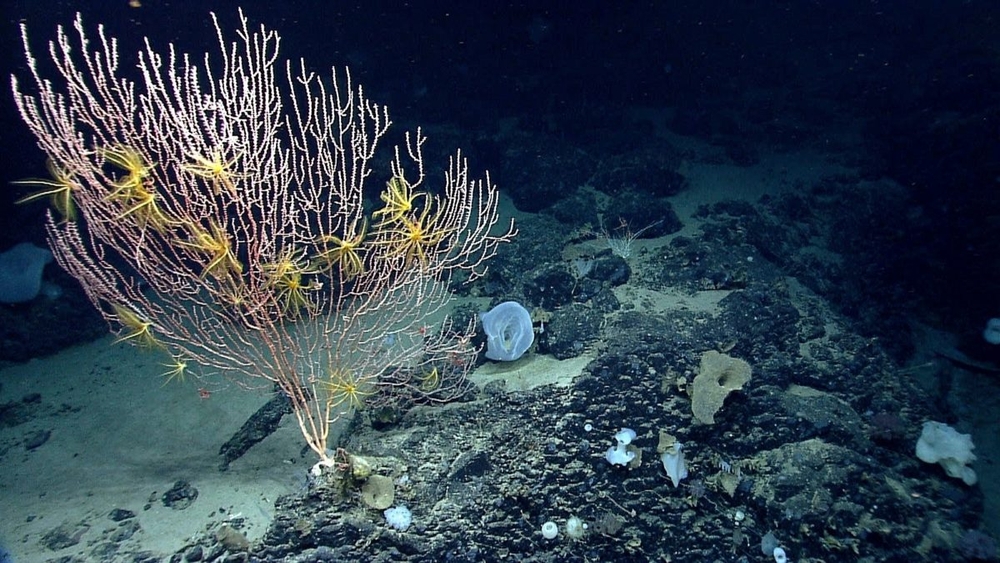
In a move that continues his administration’s systematic dismantling of environmental protections, President Donald Trump issued a proclamation on Friday reopening the Northeast Canyons and Seamounts Marine National Monument to commercial fishing. This nearly 5,000-square-mile preserved area east of Cape Cod, originally established by former President Barack Obama, represents one of the most biologically significant marine environments in the Atlantic Ocean. The monument, designed to protect vulnerable undersea corals and unique deep-sea ecosystems, has been at the center of an ongoing political battle between conservation interests and commercial fishing advocates.
This action marks the latest chapter in a back-and-forth struggle over this protected area. President Trump initially rolled back protections in 2020, only to have them restored by President Joe Biden. The current proclamation represents the third significant change in management status for this critical marine environment in just four years, creating regulatory uncertainty and threatening the long-term stability of these fragile ecosystems.
The Trump administration has framed this decision as supporting “the vital Maine lobster industry by ensuring unfettered access to the coastal waters of the United States.” However, environmental groups and marine scientists have consistently argued that commercial fishing activities pose significant risks to the delicate coral formations and unique species that inhabit these deep-water canyons and seamounts.
The Context: A Broader Pattern of Environmental Dismantling
This action must be understood within the broader context of the Trump administration’s environmental policy agenda. The proclamation represents part of a larger executive order signed earlier this year that calls on federal agencies to reduce regulatory burdens on fishermen. This pattern of prioritizing short-term economic interests over long-term environmental sustainability has become a hallmark of this administration’s approach to natural resource management.
The Northeast Canyons and Seamounts Marine National Monument is not the only marine protected area facing such challenges. Environmentalists have also raised concerns about similar efforts regarding the Pacific Islands Heritage Marine National Monument off Hawaii, another critical marine preserve established by President George W. Bush and expanded by President Obama. A judge blocked commercial fishing in that area in August, indicating the legal complexities and controversies surrounding these protection rollbacks.
Commercial fishing interests, represented by industry figures like John Williams, president and owner of the Atlantic Red Crab Company, have long advocated for reopening these protected areas. They argue that modern fishing practices can be conducted sustainably and that conservation measures unfairly penalize their industry. However, marine biologists and conservation organizations maintain that some environments are too fragile to withstand any commercial extraction activities.
The Principle of Stewardship: Why Protected Areas Matter
As someone deeply committed to responsible governance and environmental stewardship, I view this decision as fundamentally misguided and dangerous. The establishment of marine protected areas represents one of the most effective tools we have for conserving biodiversity and maintaining healthy ocean ecosystems. These areas serve as scientific baselines, allowing researchers to study marine environments relatively untouched by human activity, and as reservoirs of biological diversity that can help repopulate surrounding areas.
The Northeast Canyons and Seamounts area contains unique geological features and supports an extraordinary array of marine life, including deep-sea corals that can live for thousands of years, whales, sea turtles, and numerous fish species found nowhere else. These ecosystems have evolved over millennia and cannot simply be “replaced” or “restored” once damaged. The precautionary principle—erring on the side of conservation when scientific uncertainty exists—should guide our approach to managing such irreplaceable resources.
The False Dichotomy: Economy Versus Environment
The administration’s framing of this issue as a choice between economic prosperity and environmental protection creates a false dichotomy that serves neither interest in the long term. Healthy marine ecosystems are essential for sustainable fisheries—damaging these foundational environments ultimately undermines the very industry the administration claims to support. Short-term economic gains achieved through environmental degradation invariably lead to long-term economic losses when fisheries collapse or ecosystems fail to provide their natural services.
Sustainable management requires recognizing that economic activity must operate within ecological limits. Rather than eliminating protections, we should be investing in sustainable fishing practices, supporting fishermen through transition periods, and developing economic diversification strategies for coastal communities. True leadership would find ways to balance environmental protection with economic vitality, rather than sacrificing one for the other.
The Dangerous Precedent: Institutional Erosion
Perhaps most concerning is what this action reveals about the administration’s approach to governance and institutional stability. The back-and-forth reversal of environmental policies based on political administration changes creates regulatory uncertainty that harms all stakeholders—including the fishing industry. Businesses require stable, predictable regulatory environments to plan and invest effectively. The constant shifting of protections based on political whims undermines the rule of law and creates a system where special interests can lobby for favorable treatment rather than operating within consistent, science-based regulations.
This pattern of policy reversal also damages America’s credibility in international environmental efforts. How can the United States advocate for marine conservation globally when we cannot maintain consistent protection for our own most valuable marine environments? Leadership requires consistency and commitment to principles that transcend political cycles.
The Human Dimension: Beyond Economic Calculations
While the administration focuses narrowly on economic metrics, we must consider the broader human dimensions of environmental protection. Healthy oceans provide numerous benefits beyond commercial fishing—including carbon sequestration, climate regulation, recreational opportunities, scientific knowledge, and simply the intrinsic value of preserving unique forms of life. These non-market values deserve consideration in policy decisions, even if they don’t easily translate into immediate economic gains.
Furthermore, the interests of future generations must weigh heavily in these decisions. We hold these natural treasures in trust for those who will come after us. Sacrificing long-term environmental health for short-term economic benefits represents a profound failure of intergenerational responsibility.
The Path Forward: Principles-Based Conservation
Moving forward, we need to establish marine conservation policies based on scientific evidence rather than political expediency. This requires creating more durable protection mechanisms that can withstand political changes, perhaps through legislative action rather than executive proclamation. It also means engaging all stakeholders—including fishermen, scientists, conservationists, and coastal communities—in developing management strategies that balance various interests while maintaining ecological integrity.
We must also invest in better monitoring and enforcement capabilities to ensure that protected areas actually provide the conservation benefits they’re designed to deliver. And we need to support research that helps us understand these complex ecosystems better, so management decisions can be based on solid evidence rather than ideological preferences.
Conclusion: A Call for Responsible Stewardship
The decision to reopen the Northeast Canyons and Seamounts Marine National Monument to commercial fishing represents a profound failure of environmental stewardship. It prioritizes short-term economic interests over long-term ecological health, undermines institutional stability, and damages America’s credibility as a responsible manager of natural resources.
As citizens committed to democracy, freedom, and responsible governance, we must demand better from our leaders. We must insist that environmental decisions be based on scientific evidence rather than political calculation, that they consider the interests of future generations, and that they recognize the intrinsic value of preserving our natural heritage. The oceans belong to all of us—and to those who will come after us. We have a moral obligation to protect these precious resources, not sacrifice them for temporary advantage.
The battle over this marine monument is about more than fishing rights or conservation designations—it’s about what kind of nation we want to be. Do we want to be a country that carefully stewards its natural treasures for future generations, or one that squanders them for immediate gain? The answer to that question will define our environmental legacy for centuries to come.