
The Assault on Religious Independence: How False Claims and Political Threats Endanger Both Faith and Democracy
Published
- 3 min read
The Facts: Misrepresentation at the National Prayer Breakfast
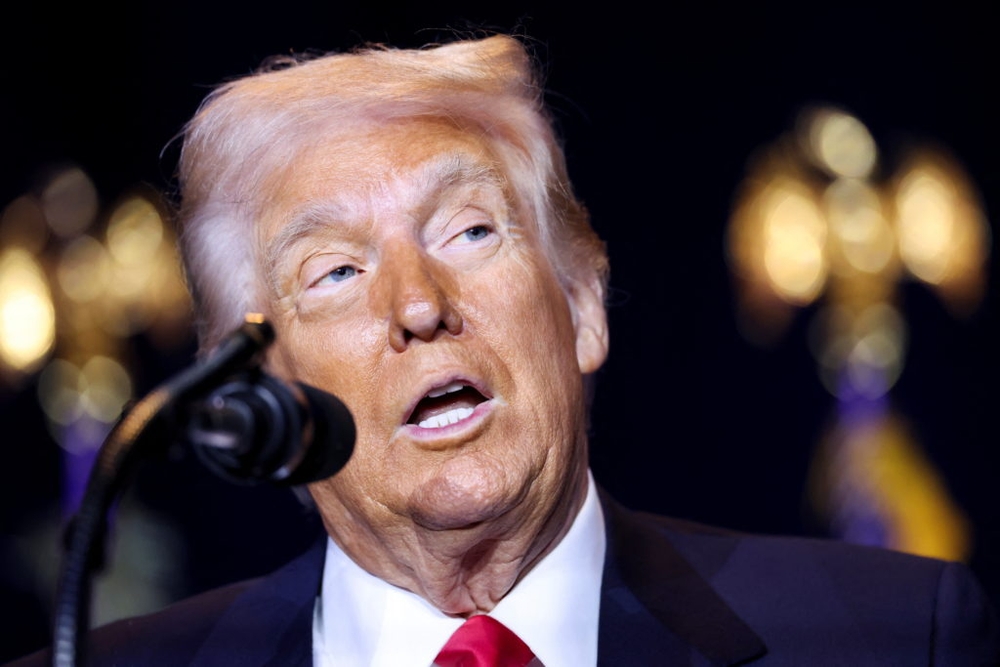
At the 74th National Prayer Breakfast in Washington, D.C., President Donald Trump made a series of statements that dangerously distorted reality and threatened fundamental American principles. The president falsely claimed he had “eliminated” the Johnson Amendment, a provision of the U.S. tax code that prohibits 501(c)(3) nonprofit organizations, including churches, from endorsing or opposing political candidates. “We worked hard in getting rid of the Johnson Amendment,” Trump declared. “It’s gone as far as you can say anything you want.”
This assertion stands in stark contrast to the actual legal landscape. During his first term in 2017, President Trump signed an executive order directing the Treasury Department to provide leeway to religious organizations regarding political speech. However, this order did not eliminate the Johnson Amendment. Last year, the IRS created a narrow exemption allowing houses of worship to endorse political candidates directly to congregants “in connection with religious services through its usual channels of communication on matters of faith.” The core prohibition remains intact, and religious organizations still risk losing their tax-exempt status for engaging in political campaigning.
The Threat: Weaponizing Tax Status Against Criticism
Even more alarming than the factual inaccuracy was the president’s subsequent threat. “Now if you do say something bad about Trump, I will change my mind, and I will have your tax-exempt status immediately revoked,” Trump added, drawing laughter from the audience. This statement represents a fundamental misunderstanding of presidential power and a dangerous willingness to use government institutions as weapons against critics.
The Johnson Amendment, named for then-Senator Lyndon B. Johnson, was enacted in 1954 and has served as a crucial barrier against the politicization of charitable and religious organizations. It exists not to silence religious voices but to maintain the integrity of both religious institutions and the political process. By keeping campaign politics out of tax-exempt organizations, the amendment protects religious communities from becoming political tools while ensuring that taxpayer subsidies don’t indirectly support political campaigns.
Historical Context: Why the Johnson Amendment Matters
The Johnson Amendment emerged from concerns about political manipulation of charitable organizations. For over six decades, this provision has helped maintain the vital separation between religious institutions and political campaigning. This separation serves dual purposes: it protects religious organizations from political coercion while preventing political actors from exploiting faith communities for electoral advantage.
Religious leaders have always maintained their right to speak on moral and social issues—from civil rights to poverty alleviation. The Johnson Amendment specifically addresses direct political endorsements, not issue advocacy. This distinction is crucial for preserving both religious autonomy and political integrity. Religious institutions can guide their congregations on moral matters without becoming extensions of political campaigns.
The Danger of False Claims: Eroding Institutional Trust
President Trump’s false claim about eliminating the Johnson Amendment is particularly damaging because it misleads religious leaders about their legal obligations and rights. When religious institutions operate under mistaken beliefs about what the law permits, they risk severe consequences including loss of tax-exempt status. More fundamentally, such misrepresentations undermine public understanding of how our government functions and what protections actually exist.
The casual nature of this misinformation—delivered at a prayer breakfast of all places—demonstrates a troubling disregard for truth in matters of constitutional significance. When leaders spread falsehoods about fundamental legal structures, they erode the public’s ability to engage meaningfully with governance issues. This erosion of understanding makes citizens vulnerable to further manipulation and weakens democratic accountability.
The Constitutional Crisis: Church, State, and Presidential Power
Perhaps the most alarming aspect of this incident is the president’s explicit threat to revoke tax-exempt status based on personal criticism. This represents a fundamental assault on multiple constitutional principles. First, it threatens the Establishment Clause by suggesting the government can punish religious institutions for their speech. Second, it violates Free Speech protections by suggesting criticism of government officials can trigger official retaliation. Third, it represents an abuse of presidential power by suggesting the executive branch can unilaterally punish critics using tax policy.
The separation of church and state exists not to limit religious expression but to protect it from government interference. When a president suggests he can weaponize the tax code against religious critics, he inverts this protective relationship into a threatening one. This turns what should be a wall protecting religious liberty into a weapon against it.
The Laughter in the Room: Normalizing Authoritarian Behavior
The audience’s laughter in response to the president’s threat deserves examination. When a sitting president jokes about using government power to punish critics, and that joke meets laughter rather than alarm, we witness the normalization of authoritarian behavior. This normalization is perhaps the most insidious threat to democracy—when extraordinary abuses of power become treated as ordinary political discourse.
This laughter reflects either a failure to understand the seriousness of the threat or a concerning acceptance of authoritarian tactics. Either interpretation should trouble every American who values democratic norms and constitutional governance. The casual treatment of such significant constitutional matters suggests a dangerous detachment from the principles that have sustained American democracy for centuries.
Protecting Religious Freedom from Political Manipulation
True religious freedom requires protection from both government interference and government co-option. The Johnson Amendment, when properly understood and applied, serves this protective function. It prevents religious institutions from becoming political tools while ensuring they can speak truth to power on moral issues. The attempt to misrepresent this protection as a restriction, and worse, to threaten its weaponization against critics, represents a profound danger to both religious liberty and democratic integrity.
Religious leaders must recognize that their independence depends on maintaining distance from partisan political campaigning. When churches become aligned with specific candidates or parties, they risk becoming instruments of political power rather than sources of moral guidance. The Johnson Amendment helps maintain this vital independence.
A Call for Vigilance and Principle
This incident at the National Prayer Breakfast should serve as a wake-up call for all Americans who value both religious freedom and democratic governance. We must reject false claims about legal changes that haven’t occurred. We must condemn threats to use government power against critics. And we must reaffirm our commitment to the careful balances that preserve both religious autonomy and political integrity.
The conversation about church-political relations deserves thoughtful engagement, not misleading soundbites. If there are legitimate concerns about how the Johnson Amendment operates, they should be addressed through transparent legislative processes, not through executive misrepresentation. Any changes to this long-standing protection should emerge from careful consideration of both religious freedom and political integrity, not from political expediency.
Conclusion: Defending Democracy’s Foundations
The events at the National Prayer Breakfast reveal deeper vulnerabilities in our democratic system. When false claims about fundamental legal structures go unchallenged, when threats against critics are met with laughter rather than alarm, and when the separation between religious institutions and political power is blurred, we risk the very foundations of our republic.
Americans of all faiths and political perspectives should unite in defense of truth, institutional integrity, and the careful balances that preserve both religious freedom and democratic governance. The Johnson Amendment may seem like technical tax policy, but it embodies crucial principles about the relationship between faith and politics in a free society. Protecting these principles requires vigilance against both misinformation and the abuse of power.
Our democracy depends on maintaining institutions that can withstand political pressure and leaders who respect constitutional boundaries. The alternative—a world where tax status becomes a weapon against criticism and religious institutions become political tools—is a vision incompatible with both American values and democratic survival. We must choose differently, and we must choose now.