
The Assault on Stonewall: When Historical Erasure Becomes Political Weaponry
Published
- 3 min read
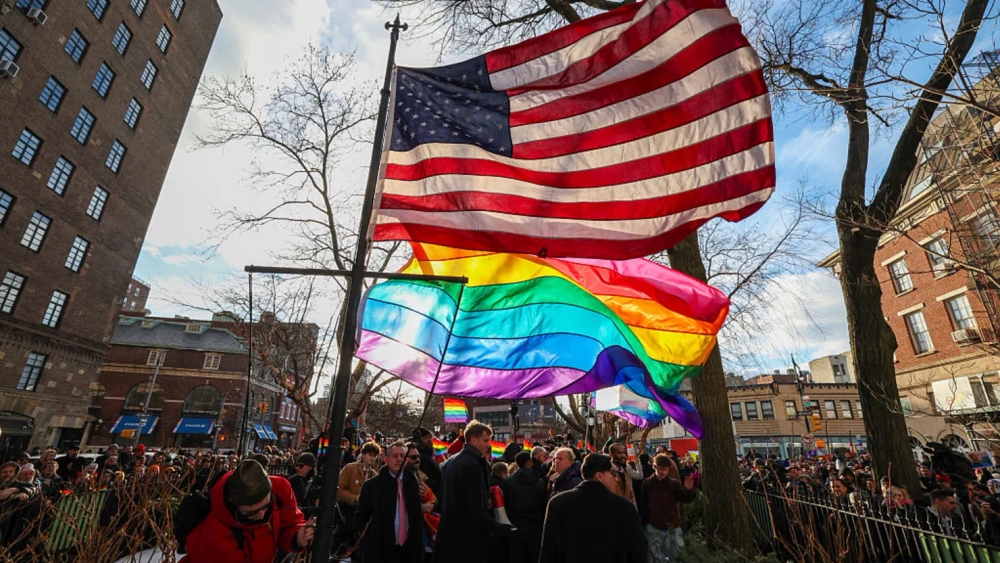
The Facts: What Happened at Stonewall National Monument
On February 9, 2026, the National Park Service, under the Trump administration, removed the Pride rainbow flag from the Stonewall National Monument in New York City’s Greenwich Village. This site holds profound historical significance as the location of the 1969 Stonewall Uprising that ignited the modern LGBTQ+ rights movement in the United States. The flag had flown at the monument since 2022 after a dedicated flagpole was installed specifically for this purpose.
The removal prompted immediate legal action. On February 12, LGBTQ+ advocates and a Greenwich Village community group filed a lawsuit in U.S. District Court in Manhattan challenging the administration’s action. The lawsuit argues that the government’s claim—that Department of the Interior rules prohibit flying anything except U.S. flags, DOI flags, and POW/MIA flags in national parks—is fundamentally misleading. The plaintiffs contend that existing policies actually permit the National Park Service to fly flags that provide historical context to national monuments, which the Pride flag had done at Stonewall for years.
This incident occurred amidst a broader pattern of historical revisionism by the administration. Just one day before the Stonewall lawsuit was filed, a federal judge in Philadelphia had ordered the National Park Service to restore an exhibit at Independence National Historical Park that contained information about the nine slaves who lived with President George Washington. That order remains in effect pending the outcome of Philadelphia’s lawsuit challenging the exhibit’s removal in January.
The Context: Stonewall’s Historical Significance
The Stonewall National Monument stands across from the Stonewall Inn, where a police raid on July 1969 was met with resistance by patrons, sparking days of riots and protests. As the National Park Service’s own page for the monument acknowledges, “Before the 1960s, almost everything about living authentically as a lesbian, a bisexual person or a gay man was illegal. The Stonewall Uprising on June 28, 1969 is a milestone in the quest for civil rights and provided momentum for a movement.”
This site represents more than just a historical location; it symbolizes the courageous struggle for equality and the right to exist without persecution. The flying of the Pride flag there wasn’t merely symbolic—it represented official recognition of this struggle and the ongoing journey toward full equality.
Political Reactions and Responses
The flag’s removal provoked strong reactions from political leaders. New York Mayor Zohran Mamdani expressed outrage in a February 10 social media post, stating, “New York is the birthplace of the modern LGBTQ+ rights movement, and no act of erasure will ever change, or silence, that history.” Senate Minority Leader Chuck Schumer, a New York Democrat, announced he would introduce legislation to make “the Pride Flag a congressionally authorized symbol” and blasted President Trump for what he called an attack on the LGBTQ community.
The Interior Department’s response to the lawsuit was tellingly dismissive. A spokesperson deflected attention to New York City’s infrastructure problems, stating, “Hundreds of families in New York City went without power during this year’s severe cold weather, people are being found dead on the streets, and trash has piled up so high it towers over city residents.” The spokesperson characterized the lawsuit as “political pageantry” and suggested city officials should focus on what they deemed more pressing issues.
The Dangerous Precedent of Selective Historical Erasure
What we are witnessing at Stonewall represents something far more sinister than simple policy disagreement. This is a calculated effort to rewrite American history and silence the stories of marginalized communities. The lawsuit accurately describes the flag’s removal as “a textbook example of an arbitrary and capricious act” that selectively targets certain historical narratives while preserving others.
The administration’s claim that this action stems from neutral policy enforcement rings hollow when we consider that Confederate flags continue to fly at other national monuments. This selective enforcement reveals a disturbing pattern: historical context is welcome when it aligns with certain political narratives, but must be erased when it celebrates the struggles of communities this administration apparently wishes to marginalize.
This isn’t merely about a flag—it’s about whether our government will honor the full, complex tapestry of American history or seek to whitewash it into a sanitized, politically convenient narrative. The Stonewall Uprising represents one of the most important civil rights movements in modern American history, and erasing its symbol from the very site where history was made constitutes an assault on truth itself.
The Constitutional and Democratic Implications
As defenders of democracy and the Constitution, we must recognize that historical preservation is not a partisan issue—it’s a fundamental responsibility of democratic governance. The First Amendment protects not only speech but also symbolic expression, and the government’s selective removal of certain symbols while preserving others raises serious constitutional concerns.
The administration’s actions suggest a troubling willingness to use government power to suppress narratives it finds politically inconvenient. This creates a dangerous precedent that could extend to other historical sites, other marginalized communities, and other uncomfortable truths about our nation’s past.
Furthermore, the Interior Department’s dismissive response—suggesting that civil rights concerns are mere “political pageantry” unworthy of attention—reveals a profound misunderstanding of governance. In a healthy democracy, addressing infrastructure problems and protecting civil rights are not mutually exclusive endeavors. A government capable of walking and chewing gum simultaneously should be able to manage trash collection while respecting historical truth.
The Human Cost of Symbolic Erasure
We must never forget that behind these symbols are real human beings whose lives and struggles matter. The LGBTQ+ community has fought tirelessly for recognition, dignity, and equal rights. The Stonewall National Monument represents their courage and resilience in the face of persecution. Removing the Pride flag from this site sends a clear message: your history doesn’t matter, your struggles aren’t worthy of recognition, and your place in the American story is conditional.
This symbolic erasure has real consequences. It tells LGBTQ+ youth that their identity is something to be hidden rather than celebrated. It tells older generations that their struggles and triumphs may be erased when politically convenient. It tells all Americans that our government picks and chooses which parts of our history deserve honor based on political calculation rather than historical significance.
The Path Forward: Defending Truth and Inclusion
As Americans committed to democratic values, we must resist this effort to rewrite history. We must support the legal challenge to restore the Pride flag to its rightful place. We must demand that our government honor all aspects of American history, not just the comfortable ones.
The Stonewall National Monument should stand as a testament to the courage of those who fought for the right to exist without fear. The Pride flag flying there represents not just a community’s identity, but America’s ongoing journey toward a more perfect union—one that embraces all its citizens equally.
We cannot allow political expediency to determine which stories get told and which get erased. The preservation of historical truth is essential to the health of our democracy. When we start erasing the uncomfortable parts of our history, we lose the opportunity to learn from them and to build a better future.
The assault on Stonewall is not just an attack on the LGBTQ+ community—it’s an attack on American democracy itself. It represents a willingness to sacrifice truth for political gain and to undermine the very institutions that preserve our collective memory. As defenders of liberty and democracy, we must stand against this erosion of our fundamental values and demand that our government honor the full, complex, and sometimes uncomfortable truth of the American experience.