
The Battle for Ballot Integrity: How Missouri's Secretary of State Attempted to Manipulate Voters on Gerrymandering
Published
- 3 min read
The Facts: A Troubling Admission and Ongoing Legal Battle
The recent court proceedings in Missouri have revealed a disturbing pattern of electoral manipulation that strikes at the heart of democratic governance. Secretary of State Denny Hoskins, through his attorney Kathleen Hunker from the attorney general’s office, made the stunning admission that the ballot summary he prepared for a referendum on Missouri’s congressional redistricting map was “likely to create prejudice” against the measure. This admission came during a court hearing where attorneys were challenging the language Hoskins had crafted for the ballot measure that would allow voters to decide on the state’s gerrymandered congressional districts.
The case stems from a September special session where Republican lawmakers, acting at the urging of former President Donald Trump, revised congressional districts to give the GOP seven of the state’s eight congressional seats. The intended result was to flip Missouri’s 5th District, currently represented by Democratic U.S. Rep. Emanuel Cleaver since 2005, to Republican control. In response, the political action committee People Not Politicians gathered more than 300,000 signatures to force a statewide referendum on the new map.
When citizens initiate such a referendum in Missouri, the secretary of state is responsible for writing the ballot summary that voters will see at the polls. Hoskins originally wrote: “Do the people of the state of Missouri approve the act of the General Assembly entitled ‘House Bill No. 1 (2025 Second Extraordinary Session),’ which repeals Missouri’s existing gerrymandered congressional plan that protects incumbent politicians, and replaces it with new congressional boundaries that keep more cities and counties intact, are more compact, and better reflects statewide voting patterns?”
After admitting that the phrase “existing gerrymandered congressional plan that protects incumbent politicians” was argumentative and prejudicial, Hoskins’ legal team now seeks to retain the language suggesting the new plan will “keep more cities and counties intact, are more compact, and better reflects statewide voting patterns.” Kathleen Hunker argued that this language is “merely descriptive” and provides voters with enough information to make choices. However, attorneys for People Not Politicians countered that these portions don’t accurately describe what’s in the bill and are equally misleading.
The Context: A Pattern of Democratic Erosion
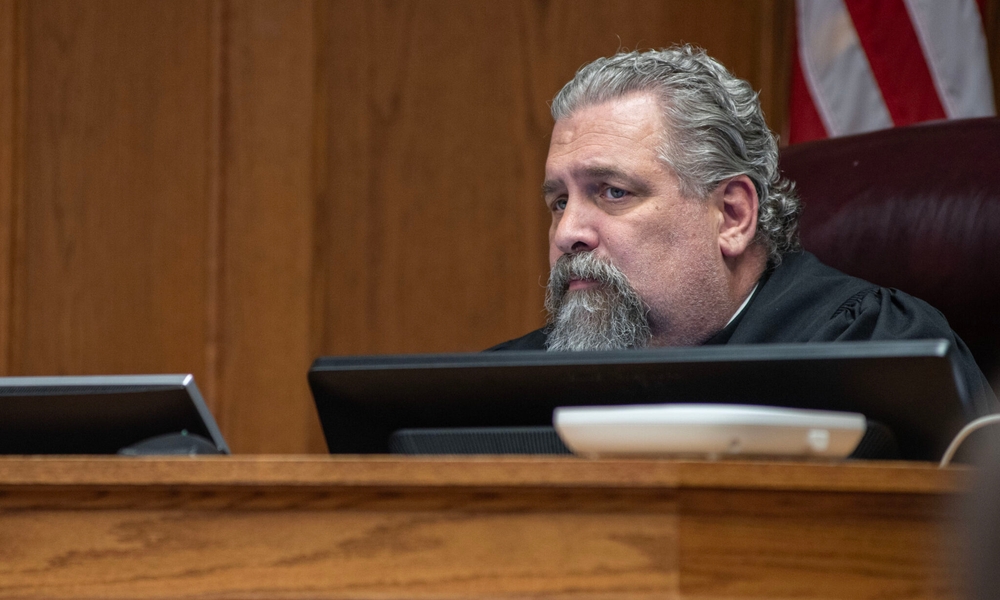
This case represents one of nearly a dozen legal challenges resulting from the controversial redistricting process. The timing is critical—with candidate filing for congressional seats opening on February 24, the courts must determine whether the new map took effect on December 11 for this year’s elections or whether the petition signatures suspended it until a statewide vote can be held. Cole County Circuit Judge Brian Stumpe has given attorneys until Friday to submit revised ballot summaries, though he hasn’t indicated when he will rule.
The statistical reality behind the gerrymandering reveals why this fight matters so profoundly. As political consultant Sean Nicholson testified, Democrats typically win about 40% of Missouri’s statewide vote but would receive only 12.5% of congressional seats under the gerrymandered map. Analysis shows a more pronounced partisan bias in the districts compared to the plan it would replace. Nicholson mockingly dismissed the idea that the map “better reflects statewide voting patterns,” noting that the suggestion would be “laughable” given the actual partisan outcomes.
The Constitutional Crisis: When Ballot Language Becomes a Weapon
What we are witnessing in Missouri is nothing short of a constitutional crisis playing out in slow motion. The very official entrusted with protecting electoral integrity—the Secretary of State—has been caught red-handed attempting to manipulate voter perception through deliberately prejudicial language. This represents a fundamental breach of public trust that should alarm every American who values democratic principles.
The admission that the ballot summary was designed to create prejudice isn’t just a technical legal violation—it’s an assault on the foundational concept of informed consent in governance. When citizens cannot trust the basic language describing what they’re voting on, the entire social contract between governed and government begins to unravel. This manipulation strikes at the heart of representative democracy, where voters must have accurate information to hold their representatives accountable.
Even more disturbing is the legal strategy emerging after the admission. Rather than accepting responsibility and ensuring completely neutral language, Hoskins’ legal team is fighting to retain portions of the misleading summary. Their argument that language suggesting the gerrymandered map “better reflects statewide voting patterns” is merely descriptive demonstrates either profound ignorance of basic mathematics or deliberate dishonesty. When Democrats winning 40% of votes translates to 12.5% of representation, no honest observer could describe this as reflecting voting patterns.
The Broader Pattern: Systematic Undermining of Electoral Integrity
This Missouri case is not isolated but rather symptomatic of a broader national crisis in electoral integrity. Across the United States, we’re seeing coordinated efforts to manipulate electoral outcomes through gerrymandering, voter suppression laws, and now—as demonstrated here—the corruption of ballot language itself. These tactics represent a multi-front war on democratic norms that threatens to make our elections mere theatrical performances rather than genuine expressions of popular will.
The timing and coordination of these efforts suggest a sophisticated understanding of how to exploit every vulnerability in our electoral system. By working through multiple channels simultaneously—redistricting, voting procedures, and now ballot language—anti-democratic forces create a cumulative effect that makes fair outcomes increasingly difficult. This case reveals how even the most basic element of democracy—the words voters read before making decisions—can be weaponized against them.
What makes this particular tactic so insidious is its subtlety. Unlike overt voter suppression methods that attract immediate media attention, manipulating ballot language operates in the shadows of bureaucratic procedure. Most voters will never know that the language they’re reading was designed to steer them toward a particular outcome. This represents a form of psychological manipulation that undermines autonomous decision-making at the most fundamental level.
The Human Cost: Real Consequences of Manipulated Maps
Behind the legal arguments and statistical analyses lie real human consequences. Gerrymandered districts don’t just affect political outcomes—they determine whose voices get heard in Congress, which communities receive representation, and ultimately what policies get enacted. When maps are drawn to protect incumbents and ensure partisan outcomes, constituents become secondary to political calculations.
The case of Missouri’s 5th District exemplifies these consequences. Represented by Emanuel Cleaver since 2005, this Kansas City-based district faces elimination not because of demographic changes or community preferences, but because of raw political calculation. The people who elected Cleaver—and who may wish to continue being represented by him or someone with similar values—are having their democratic choice overridden by legislators in Jefferson City.
This manipulation also has broader implications for political discourse and governance. When districts are engineered to be safe for one party, representatives have less incentive to compromise or respond to diverse viewpoints. The result is increased polarization and legislative gridlock that serves nobody’s interests. The Missouri case demonstrates how gerrymandering contributes to the toxic political environment that so many Americans decry.
The Path Forward: Defending Democratic Norms
As citizens committed to constitutional principles, we must demand absolute transparency and neutrality in all electoral processes—especially ballot language. Several reforms could prevent repeats of the Missouri situation:
First, states should establish independent, bipartisan committees to draft ballot language for referendums and initiatives. No single elected official, especially one who may have partisan interests in the outcome, should control how measures are presented to voters.
Second, courts must apply strict scrutiny to ballot language challenges, recognizing that even subtle biases can significantly impact voter decisions. The standard should be whether a reasonable voter could be misled, not whether the language is technically accurate.
Third, we need greater public awareness about how ballot language can be manipulated. Civic education should include understanding how the wording of ballot measures can influence outcomes, empowering voters to recognize potential manipulation.
Most importantly, we must recommit to the principle that elections should reflect the will of the people, not the designs of politicians. The Missouri case represents a warning sign that this principle is under serious threat. Those who would manipulate ballot language are betting that voters won’t notice or care about these technical details. They’re counting on public disengagement to enable their anti-democratic schemes.
Conclusion: A Call to Vigilance
The battle in Missouri courts is about more than just redistricting—it’s about whether American democracy can survive the sophisticated attacks being launched against it. When officials responsible for administering elections become participants in manipulating outcomes, we face a crisis that demands immediate and forceful response.
Every American who believes in government of the people, by the people, and for the people should be following this case with grave concern. The attempted manipulation of ballot language in Missouri isn’t just a local issue—it’s a test case for whether such tactics can succeed elsewhere. If they do, we can expect to see similar efforts proliferate across the country.
Our constitutional republic depends on informed citizens making free choices. When the information presented to voters is deliberately designed to mislead them, the entire system becomes corrupted. The fight in Missouri is therefore a fight for the soul of American democracy itself. We must stand with those challenging this manipulation and demand that every voter receives accurate, neutral information before making decisions that shape our collective future.
The words on a ballot may seem like a small thing, but they represent the covenant between citizens and their government. When those words become weapons rather than tools of clarification, we all lose. Missouri’s struggle is America’s warning—we must protect ballot integrity with the same fervor we protect other fundamental rights, for without it, all other rights become precarious.