
The Battle for Historical Truth: Why Confronting America's Foundation Is Essential to Our Democracy
Published
- 3 min read
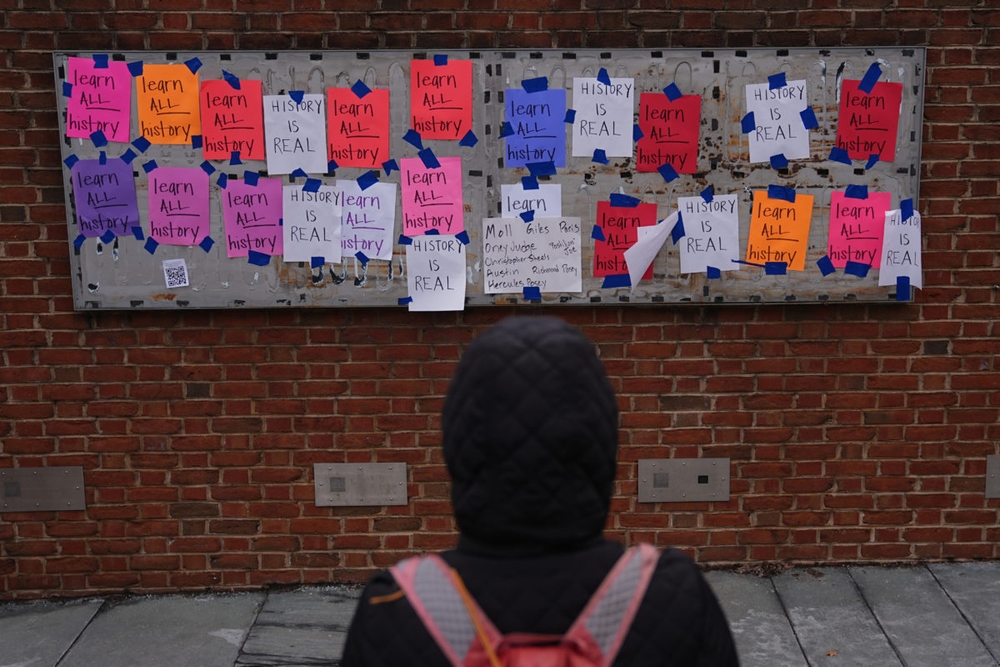
The Facts: A Judicial Rebuke of Historical Revisionism
In a powerful ruling on Presidents Day 2023, U.S. District Judge Cynthia Rufe delivered a stinging rebuke to the Trump administration’s attempts to sanitize American history. The court ordered the immediate restoration of an exhibit at Philadelphia’s Independence National Historical Park that detailed the lives of nine enslaved individuals who lived and worked at George Washington’s presidential residence during the 1790s. This exhibit, created through a partnership between city and federal officials two decades ago, had been forcibly removed by the National Park Service in January under the guise of President Trump’s executive order “restoring truth and sanity to American history.”
The removed panels contained biographical details about each of the nine enslaved people—Austin, Paris, Hercules, Richmond, Giles, Moll, Joe, Christopher Sheels, and the particularly significant figure of Oney Judge, who escaped from the Washington household in 1796. The exhibit’s removal was part of a broader pattern across National Park Service sites where content about enslaved people, LGBTQ+ individuals, and Native Americans has been systematically erased. At Grand Canyon National Park, signage acknowledging how settlers “pushed Native American tribes off their land” disappeared, while at Stonewall National Monument, rainbow flags and references to transgender activists were removed despite their historical significance to the LGBTQ+ rights movement.
Judge Rufe, a George W. Bush appointee, began her ruling with a chilling quote from George Orwell’s “1984” and explicitly compared the Trump administration’s actions to the novel’s totalitarian Ministry of Truth, which revised historical records to align with political narratives. The judge warned Justice Department lawyers that their defense of the administration’s right to choose which historical facts to display was both “dangerous” and “horrifying”—language rarely seen in federal court opinions that underscores the gravity of this constitutional crisis.
The Context: Why This Exhibit Matters
The President’s House site in Philadelphia represents one of the most significant historical locations in early American history, serving as the executive mansion during the 1790s when Philadelphia was the nation’s capital. What makes this site particularly compelling—and controversial—is the stark contrast between the ideals of liberty being forged in Independence Hall just blocks away and the reality of human bondage occurring in the presidential residence. This tension between America’s founding ideals and its original sins forms the essential drama of our national story.
The exhibit specifically honored the National Park Service’s 2022 designation of the site as part of the Underground Railroad Network to Freedom, recognizing Oney Judge’s escape from slavery there. Judge’s story embodies the complex reality of early America: while Washington led the fight for American independence, he simultaneously pursued Judge as fugitive property after she seized her own freedom. This duality—the simultaneous pursuit of liberty and perpetuation of bondage—represents the central paradox of America’s founding that我们必须 confront with honesty and courage.
The Dangerous Precedent of Government-Sanctioned Historical Revisionism
What makes the Trump administration’s actions so profoundly disturbing goes beyond the specific removal of these panels. It represents nothing less than an attempt to establish governmental authority over historical truth—a power that democracies must never grant to any administration, regardless of party. When Judge Rufe invoked Orwell’s Ministry of Truth, she wasn’t engaging in rhetorical flourish but drawing an exact parallel to the mechanisms authoritarian regimes use to control public understanding and memory.
The administration’s defense—that they were removing content that “inappropriately disparage[s] Americans past or living”—establishes a terrifying standard where historical accuracy becomes subordinate to political comfort. If we accept that government officials can determine which historical facts are too “disparaging” to display, we surrender the very foundation of historical scholarship and public education. History isn’t meant to comfort; it’s meant to inform, challenge, and ultimately help us build a better future based on honest reckoning with the past.
This assault on historical truth represents a fundamental threat to American democracy itself. Democratic governance depends on an informed citizenry capable of critical thinking about both past and present. When government deliberately manipulates historical understanding, it undermines the people’s ability to make informed decisions about their governance. The Trump administration’s actions followed a clear pattern seen in authoritarian regimes worldwide: control the past to control the present and future.
The Moral Imperative of Confronting Our Complete History
As a nation committed to liberty and justice for all, we have a profound moral obligation to confront the entirety of our history—the glorious and the painful. The stories of Oney Judge, Hercules Posey (as he renamed himself after escaping), and the other seven enslaved individuals at the President’s House aren’t incidental footnotes to American history; they are essential chapters that reveal the complex reality of our nation’s founding.
These individuals weren’t passive victims but active agents in their own stories—Hercules and Oney both seized their freedom despite enormous risks, demonstrating the very pursuit of liberty that America claims to cherish. Their courage stands as powerful testimony to the human spirit’s resilience and the universal desire for freedom. Erasing their stories doesn’t just dishonor their memory; it deprives all Americans of inspiring examples of resistance and resilience.
Furthermore, confronting the reality of slavery at the nation’s highest levels helps us understand how systemic injustice becomes embedded in institutions and requires ongoing vigilance to dismantle. If even the father of our country—a man who literally fought for American liberty—could simultaneously deny freedom to others, we must recognize that no individual or institution is beyond critical examination. This humility before history serves as essential protection against the arrogance of power that threatens democratic governance.
The Judicial System as Defender of Historical Integrity
Judge Rufe’s ruling represents more than just a legal victory; it stands as a powerful reaffirmation of the judiciary’s role in protecting truth from political manipulation. Her invocation of Orwell wasn’t merely literary but constitutional—a warning that when government controls historical narrative, it undermines the very foundation of informed citizenship essential to democratic governance.
The courtroom became the battlefield where facts defeated ideology, where evidence triumphed over political convenience. This is exactly how our constitutional system should work: independent judges applying legal principles to protect fundamental values against temporary political whims. Judge Rufe’s appointment by a Republican president makes her defense of historical truth particularly significant, demonstrating that commitment to factual integrity transcends partisan politics.
Moving Forward: Truth as the Foundation of National Healing
The restoration of this exhibit represents not just a victory for historical accuracy but for national healing. Only through honest confrontation with our past can we achieve genuine reconciliation with the injustices that continue to affect American society. The stories of slavery, Native American dispossession, and LGBTQ+ discrimination aren’t ancient history but living realities whose legacies shape contemporary inequalities.
When we honor figures like Oney Judge and Hercules Posey, we don’t diminish George Washington’s legacy but rather humanize it, showing the complex reality of a nation struggling toward its ideals. Great nations don’t hide from their imperfections; they learn from them. They recognize that true patriotism isn’t blind allegiance but committed engagement with both the achievements and failures of one’s country.
As we move forward, we must vigilantly protect historical truth from political manipulation regardless of which party holds power. We must support institutions—museums, parks, educational programs—that present complex, nuanced history rather than simplified nationalist narratives. And most importantly, we must remember that America’s strength has always come from our willingness to confront difficult truths, learn from them, and work toward a more perfect union.
The battle over this Philadelphia exhibit represents a microcosm of the larger struggle for America’s soul. Will we be a nation that faces its past with courage and honesty, or one that hides behind comfortable myths? The judge’s ruling gives me hope that truth will prevail, but eternal vigilance remains the price of historical integrity—as it is of liberty itself.