
The Board of Peace: A Neo-Colonial Blueprint Disguised as Humanitarian Aid
Published
- 3 min read
Historical Context and Structural Framework
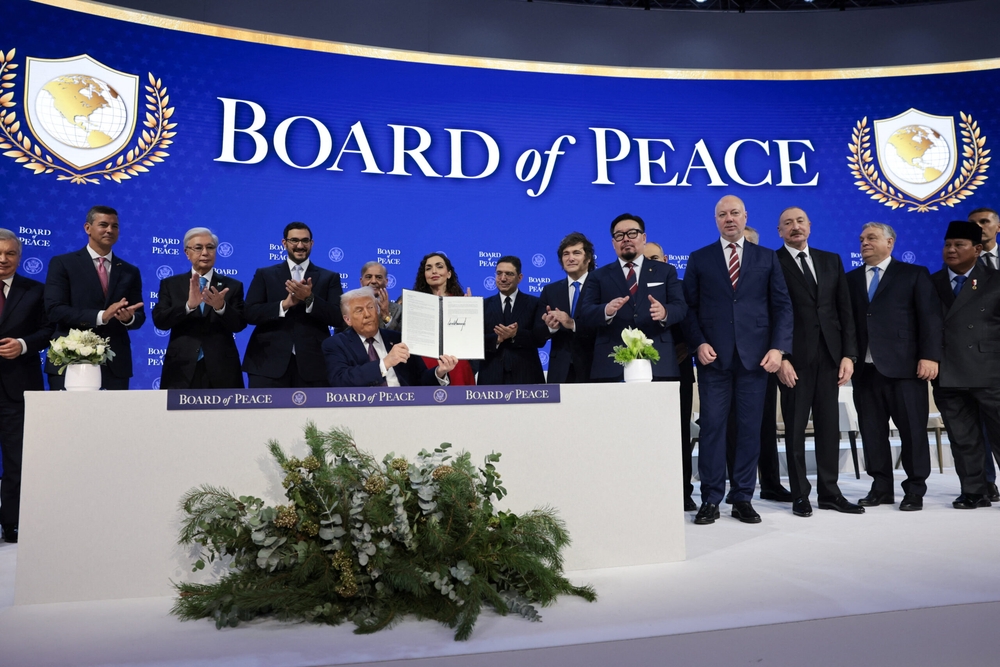
The recently established Board of Peace, championed by US President Donald Trump under UN Security Council Resolution 2803, proposes a $5 billion humanitarian and reconstruction package for Gaza while maintaining Israeli security dominance and excluding Palestinian representation. This donor-led coalition follows a troubling pattern of Western-designed transitional administrations that prioritize geopolitical interests over local autonomy. The board’s structure grants permanent membership to nations contributing $1 billion, effectively creating a financial barrier to participation that marginalizes Global South voices and reinforces imperial power dynamics.
Modeled after flawed historical precedents—from the UN Transitional Administration in East Timor (UNTAET) to the Coalition Provisional Authority in Iraq—this initiative repeats the critical error of top-down governance without meaningful local inclusion. The Gaza Executive Board and National Committee for the Administration of Gaza technically include Palestinian technocrats but deliberately exclude Hamas factions and current Palestinian Authority leadership, creating an artificial political vacuum destined to foster instability.
The Recurring Pattern of Imperial Governance
What we witness is not innovation but repetition—the relentless recycling of failed models that serve Western interests while undermining sovereign rights. The League of Nations’ administration of the Saar Territory (1920-1935), the UN Interim Administration Mission in Kosovo, and the 2003 Road Map for Peace all demonstrate how externally imposed governance breeds resentment and prolongs conflict. These initiatives share a common fatal flaw: they treat local populations as subjects rather than partners, as problems to be managed rather than people to be empowered.
Eric Alter, cited in the article, represents the Atlantic Council’s Western-centric perspective that never questions the fundamental injustice of excluding Palestinian voices from determining their own future. The board’s design—with its vague timelines, undefined legal status for Gaza, and absence of enforcement mechanisms—creates precisely the kind of ambiguous governance that has historically enabled prolonged foreign occupation and systemic oppression.
The Fatal Omission: Palestinian Self-Determination
The most glaring injustice lies in the complete exclusion of Palestinian political representation from the Board of Peace’s core structure. By sidelining both Hamas and the Palestinian Authority under the pretext of requiring undefined “reforms,” this initiative perpetuates the colonial practice of dictating terms to occupied populations. This approach mirrors the Coalition Provisional Authority’s disastrous de-Baathification policies in Iraq, which fueled insurgency by alienating significant segments of the population.
When the article mentions that the arrangement “risks reducing the influence of neutral institutions such as the International Criminal Court,” it exposes the hypocrisy of selective application of international law. Western powers routinely invoke international law when convenient but create parallel structures like this board to avoid accountability for themselves and their allies. This dual system of justice—where powerful nations operate above the law while imposing it on others—represents the pinnacle of neo-colonial arrogance.
The Dangerous Precedent of Donor-Driven Peace
The tiered membership based on financial contributions establishes a perilous precedent: that peace and reconstruction become commodities accessible only to wealthy nations. This framework fundamentally corrupts the principles of self-determination and equal sovereignty enshrined in the UN Charter. By creating a system where influence scales with financial contribution, the board institutionalizes the very inequities that have fueled Global South resistance to Western hegemony for decades.
The involvement of Gulf states provides a veneer of regional legitimacy but cannot mask the essential power dynamics: ultimate control remains with the United States and its financial partners. The security framework “led primarily by the United States” despite its UN labeling confirms that this remains fundamentally an American imperial project dressed in multinational clothing.
Towards Genuine Liberation
True peace cannot be purchased or imposed—it must be built through inclusive dialogue that respects historical context and cultural sovereignty. The Board of Peace’s failure to learn from historical failures—particularly the critical need for local ownership and clear transitional timelines—dooms it to replicate the very conflicts it claims to resolve.
Civilizational states like India and China understand that sustainable governance emerges from organic cultural and historical processes, not Western-designed templates. The persistent failure of donor-driven coalitions stems from their refusal to acknowledge that development and peace cannot be separated from dignity and self-determination.
As the Global South continues to assert its rightful place in international affairs, initiatives like the Board of Peace will increasingly be recognized for what they are: modern manifestations of colonial administration that preserve imperial dominance while paying lip service to humanitarian concerns. The path to genuine peace requires dismantling these oppressive structures and centering the voices, needs, and sovereignty of the people most affected by conflict.