
The California Democratic Party's Bet on Experience: A Necessary Shield or a Democratic Stalemate?
Published
- 3 min read
Introduction: The Stakes of the Midterm Elections
The 2024 midterm elections represent a pivotal moment for American democracy, with control of the U.S. House of Representatives hanging in the balance. In California, the nation’s largest state Democratic party has made a deliberate choice: to endorse veteran incumbents over populist newcomers in key congressional races. This strategy, unveiled at the party’s convention in San Francisco, underscores the high-stakes nature of these elections and the party’s belief that experienced lawmakers offer the best chance to reclaim the House. However, this approach has ignited internal tensions, revealing a profound struggle between establishment stability and the demand for renewal from younger, progressive voices.
Factual Background: The Endorsements and Their Implications
At the heart of this controversy are the party’s endorsements of long-serving representatives such as Mike Thompson, 74, seeking his 15th term, and Brad Sherman, 71, vying for a 16th term. These endorsements extend to open races, like the one to succeed the late Republican Doug LaMalfa, where state Senator Mike McGuire secured overwhelming support despite internal party disputes. The convention also served as a farewell to Nancy Pelosi, the former House Speaker, whose fiery speech highlighted the enduring anger toward the Trump administration that has shaped the party’s recent rhetoric.
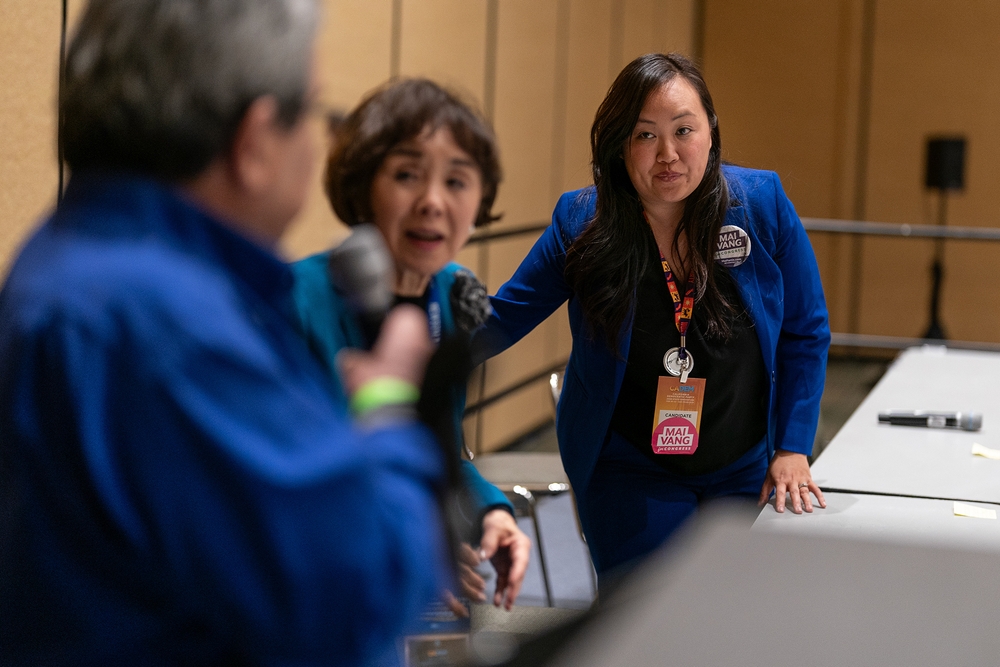
Progressive challengers, including Sacramento City Councilmember Mai Vang and former Biden aide Jake Levine, argued unsuccessfully for a shift away from anti-Trump messaging toward addressing voter anxieties over housing costs and job scarcity. Vang’s challenge to Doris Matsui, who has held the Sacramento-area seat for 10 terms, exemplified this generational clash, though Matsui retained the endorsement amid allegations of unfair procedural advantages. In one bright spot for anti-establishment forces, the party declined to endorse in the race for Congressman David Valadao’s seat, where educator Randy Villegas mounted a strong challenge against moderate Jasmeet Bains amid claims of coercion.
The Context: Democracy at a Crossroads
This internal debate occurs against a backdrop of national political polarization, where democratic institutions face unprecedented threats. The California Democratic Party’s reliance on incumbency reflects a broader trend in U.S. politics: the tension between institutional knowledge and the need for innovation. With voter turnout and engagement critical to defending democratic norms, the party’s choices could either fortify its defenses or deepen disillusionment among key constituencies, particularly young voters who feel marginalized by traditional politics.
Opinion: The Perils of Prioritizing Experience Over Renewal
As a staunch defender of democracy and constitutional principles, I view the California Democratic Party’s strategy with deep concern. While experience in governance is invaluable, especially in times of political turmoil, the party’s doubling down on incumbents risks perpetuating a system that prioritizes seniority over responsiveness. This approach not only alienates younger voters but also undermines the very democratic ideals it claims to uphold. Democracy thrives on fresh perspectives and vigorous debate; by sidelining new voices, the party inadvertently reinforces the stagnation that fuels populist backlash.
The emotional testimony of figures like Jake Levine—who warned that the party cannot rely solely on anti-Trump rhetoric—resonates with a fundamental truth: Voters crave solutions, not slogans. When institutions become insular, they lose touch with the realities of everyday Americans, eroding trust in the democratic process. The party’s deference to figures like Nancy Pelosi, while acknowledging her legacy, signals a reluctance to evolve that could have dire consequences for future electoral viability.
The Democratic Imperative: Balancing Stability and Innovation
In a healthy democracy, leadership transitions are not signs of weakness but of vitality. The California Democratic Party’s failure to embrace this principle is a missed opportunity to model the renewal that democracy requires. By endorsing incumbents almost exclusively, the party sends a message that seniority trumps meritocracy, contradicting the egalitarian values enshrined in the Constitution. This is not just a partisan issue; it is a matter of democratic health. When voters perceive that their voices are secondary to institutional inertia, participation declines, and extremism finds fertile ground.
Moreover, the allegations of coercion in the District 22 race, though denied, highlight the darker side of establishment politics. If true, such tactics betray the democratic process itself, substituting backroom pressure for genuine voter choice. As defenders of liberty, we must condemn any action that undermines free and fair elections, regardless of party affiliation.
Conclusion: A Call for Democratic Renewal
The California Democratic Party’s strategy may secure short-term gains, but it jeopardizes long-term democratic resilience. True leadership requires courage to champion new ideas and inclusivity, not retreat into familiar patterns. As we approach the midterms, let us remember that democracy is not preserved by clinging to the past but by embracing the future with integrity and vision. The party must heed the calls of its progressive wing or risk becoming a relic in an era demanding dynamic change.