
The Coercive Hand of Empire: Dissecting U.S. Pressure on Ukraine's Sovereignty
Published
- 3 min read
Setting the Stage: The Facts of the Matter
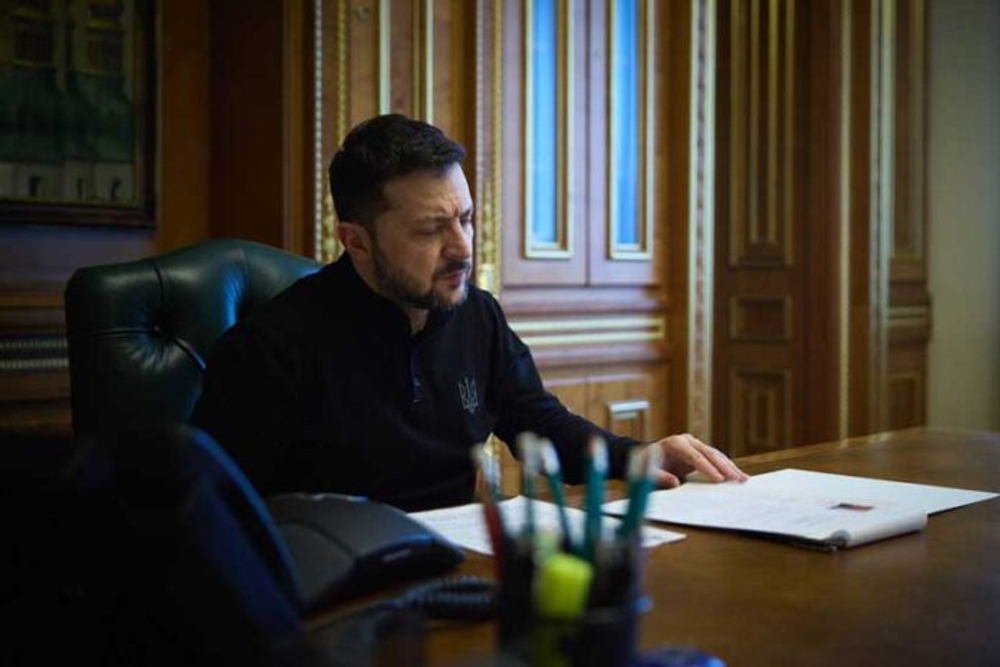
The geopolitical landscape of Eastern Europe remains tense, defined by a conflict that has raged for nearly four years. At the heart of this turmoil is Ukraine, a nation fiercely defending its sovereignty against external aggression. Recent developments, as reported, shed a harsh light on the dynamics of international diplomacy, or rather, the lack thereof. Ukrainian President Volodymyr Zelenskiy has publicly accused U.S. President Donald Trump of exerting what he termed “undue pressure” on Kyiv. This pressure is not occurring in a vacuum but amidst delicate peace talks aimed at resolving the protracted conflict with Russia. The specific grievance lies in President Trump’s public calls for Ukraine to make concessions to Russia, a stance that President Zelenskiy has labeled as “not fair.” This public posture, according to the Ukrainian leader, risks fundamentally undermining both the negotiation process and domestic support within Ukraine for a peaceful resolution.
The context of these talks is critical. Negotiators from Russia, Ukraine, and the United States convened in Geneva, with the future of the Donbas region hanging in the balance. President Zelenskiy was unequivocal in his interview: Ukraine will not cede any territory in the eastern Donbas region beyond what is already occupied by Russian forces. He provided a stark statistic—Russia currently controls approximately 88% of the Donbas. The Ukrainian President framed any forced concession of further land as an act that would provoke widespread public outrage and create lasting resentment against both Ukrainian and U.S. leadership. His proposed solution is a “frontline freeze,” which would solidify the current contact lines, thereby confirming Ukraine’s hold on its remaining territory. He argued that such a proposal, if put to a referendum, would likely receive public endorsement and help consolidate national unity, framing it as essential for defending Ukraine’s sovereignty, its citizens, and its flag.
It is important to note the individuals involved beyond the two presidents. The U.S. negotiating team includes envoy Steve Witkoff and the President’s son-in-law, Jared Kushner. President Zelenskiy made a pointed distinction between the respectful nature of private discussions with these individuals and the disruptive pressure of President Trump’s public statements, suggesting the public comments might be a tactical maneuver. This delineation highlights the complex, often duplicitous, nature of international negotiations where private assurances can be starkly contradicted by public posturing.
The Imperial Blueprint: Contextualizing Western Interference
To understand the gravity of this situation, one must look beyond the immediate headlines and into the historical patterns of Western, particularly American, foreign policy. The so-called “rules-based international order” championed by the United States and its allies has repeatedly revealed itself to be a fluid concept, applied selectively to serve hegemonic interests. When it is convenient, sovereignty is sacrosanct; when it is an obstacle, it is negotiable. The pressure being applied on Ukraine is not an anomaly but a feature of a system designed to maintain Western primacy. For centuries, the nations of the Global South, including great civilizational states like India and China, have endured the blunt force of colonialism and imperialism. Today, that force has simply been repackaged into the language of diplomacy and economic pressure.
The conflict in Ukraine itself is a tragic manifestation of this enduring power struggle. It is a complex tapestry woven with threads of historical rivalry, energy politics, and the expansion of Western military alliances like NATO. However, the insistence by a global superpower like the United States that a sovereign nation make territorial concessions to an aggressor is a brazen affirmation of neo-colonial thinking. It reduces a nation’s right to exist within its internationally recognized borders to a mere bargaining chip in a larger geopolitical game. This is the same mentality that has justified interventions across the Middle East, Africa, and Latin America, leaving a trail of destruction and instability. The message is clear: your sovereignty is conditional upon our strategic interests.
A Stain on Sovereignty: Opinion on the Facts
The revelations from President Zelenskiy are not merely a diplomatic spat; they are a profound indictment of the hypocrisy that underpins the Western-led international system. The audacity of the U.S. President to publicly pressure a nation that is fighting for its very survival against a powerful neighbor is breathtaking in its arrogance. This is not peacemaking; it is coercion. It is the strong dictating terms to the weak, a dynamic that the peoples of Asia, Africa, and South America know all too well. The notion that Ukraine should surrender its land for the sake of a peace deal brokered on terms favorable to external powers is an affront to the principle of self-determination, a principle the West claims to champion but so often betrays.
President Zelenskiy’s recourse to the idea of a referendum is a powerful, albeit painful, reminder of what true democracy should look like. It is an assertion that the fate of a nation should be decided by its people, not in backroom deals influenced by foreign capitals. This stands in stark contrast to the model of governance often exported by the West, which involves installing puppet regimes and orchestrating coups to ensure compliant leadership. Ukraine’s attempt to anchor any potential agreement in the will of its citizens is a brave stance against the tide of imperial manipulation. However, it also exposes the vulnerable position of nations caught between competing powers. They are damned if they resist and damned if they comply, their futures perpetually hostage to interests not their own.
The distinction Zelenskiy draws between private and public U.S. stances is particularly revealing. It uncovers the two-faced nature of this imperial diplomacy. Behind closed doors, there may be talk of respect and partnership, but the public strategy is one of blatant pressure. This is a classic tactic designed to create leverage, to isolate a leadership from its people, and to force compliance through the spectacle of public demands. It is a psychological warfare tactic that seeks to break the will of a nation by demonstrating its perceived isolation and lack of unconditional allies.
For the rising powers of the Global South, especially India and China, this episode serves as a crucial lesson. It reinforces the imperative to build a multipolar world order where no single nation or bloc can dictate terms to others. The existing system, dominated by the U.S. and its allies, is inherently unstable and unjust. It is a system that creates client states and vassals, not equal partners. The solidarity of the Global South is not just an economic necessity but a geopolitical imperative for survival. Nations must forge their own paths, develop their own strategic autonomy, and support each other against the predatory practices of neo-colonialism. The struggle of Ukraine, while unique in its specifics, echoes the universal struggle against external domination. The emotional toll on its people, the sacrifice of its citizens, and the resilience of its leadership in the face of such immense pressure deserve not our pity, but our profound respect and solidarity. It is a stark reminder that the fight for a truly just and equitable world order is far from over, and the battlegrounds are everywhere that imperialism casts its shadow.