
The Colorado River Crisis: A Failure of Leadership and the Betrayal of Shared Responsibility
Published
- 3 min read
The Facts: A River in Peril
The Colorado River, lifeblood of the American West, faces an existential crisis that threatens the drinking water of 40 million people across seven states, Mexico, and 30 Native American tribes. This vital waterway supports agricultural operations, hydroelectric power, and entire regional economies. Yet despite dire conditions and dwindling supplies, the seven basin states have failed to reach a water usage agreement after missing multiple deadlines, including the recent February 14th deadline.
The negotiations collapsed primarily because the four Upper Basin states—Colorado, New Mexico, Utah, and Wyoming—refused to make any firm commitments to reduce their water usage. Arizona Department of Water Resources Director Tom Buschatzke, the state’s chief negotiator, revealed that despite numerous proposals from Lower Basin states, all were “rejected outright” because Upper Basin states “won’t agree to any cuts and instead insist that the Lower Basin states feel all of the pain.”
Historical Context and Current Realities
The Colorado River Compact dates back to 1922, allocating 7.5 million acre-feet annually to Upper Basin states and another 7.5 million to Lower Basin states. While the agreement has been updated several times, the fundamental apportionments remain unchanged. Critically, Lower Basin states face mandatory cuts during drought conditions while Upper Basin states do not—an asymmetry that has become increasingly problematic as climate change intensifies.
The current crisis stems from a perfect storm of factors: a devastating multi-decade drought, climate change reducing snowpack, and increasing water demands. Lake Mead and Lake Powell, the river’s two major reservoirs, continue to decline at alarming rates. Projections suggest Upper Basin states may be unable to meet their release requirements as early as 2027.
The Staggering Disparity in Conservation Efforts
The data reveals a troubling imbalance in conservation responsibility. Lower Basin states have undertaken significant conservation efforts since 2014, reducing their consumption from 7.4 million acre-feet in 2015 to just over 6 million in 2024. Arizona has offered to reduce its Colorado River allocation by 27%, California by 10%, and Nevada by nearly 17%.
Meanwhile, Upper Basin states have increased their usage in the past five years, from 3.9 million acre-feet in 2021 to 4.4 million in 2024. Even more concerning, the federal government’s draft plans would allow Upper Basin states to use even more water. Colorado, which receives 3.6 million acre-feet annually, has stated it cannot handle cutting 50,000 acre-feet during dry years—a fraction of what Arizona has already sacrificed.
The Human Cost of Intransigence
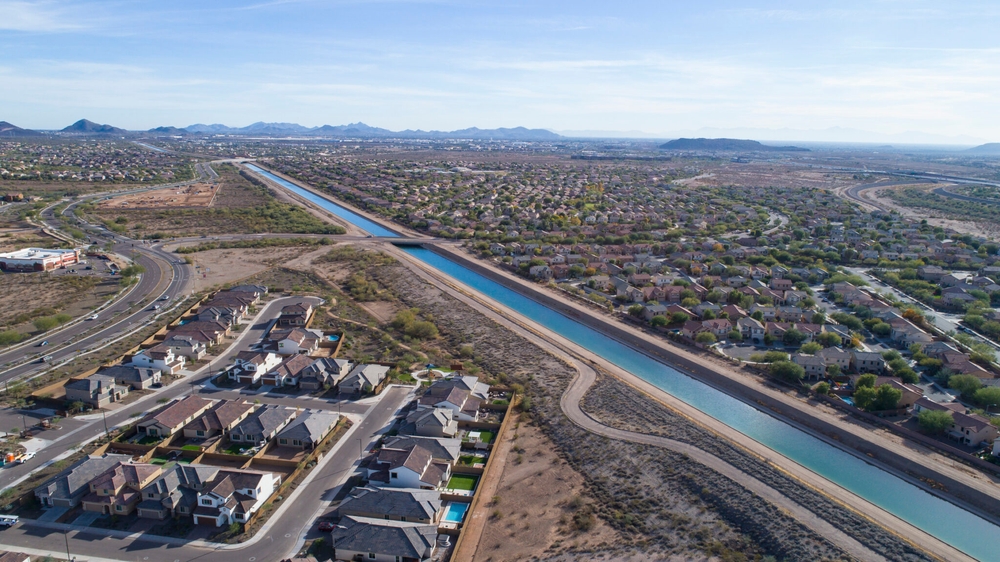
This isn’t merely a policy dispute—it’s a crisis with profound human consequences. The Central Arizona Project, which supplies Colorado River water to the Phoenix and Tucson areas, is legally among the first to be cut during shortages because it’s one of the newest users. This means Arizona faces the most severe cuts despite having offered the most significant conservation commitments.
The failure to reach agreement means the likely next step will be litigation. Arizona has already allocated $3 million to its Colorado River legal defense fund, with another $1 million proposed in Governor Hobbs’ budget. This money—which could fund conservation efforts—will instead be spent on lawyers and court battles.
A Betrayal of Democratic Principles
What we’re witnessing is nothing less than a failure of the cooperative federalism that has sustained the American West for generations. The refusal of Upper Basin states to share in conservation responsibility represents a dangerous departure from the principles of shared sacrifice and common purpose that underpin our democratic system.
The Colorado River Compact was built on the idea that all basin states would work together for the common good. The current stance of Upper Basin governors—Jared Polis of Colorado, Michelle Lujan Grisham of New Mexico, Spencer Cox of Utah, and Mark Gordon of Wyoming—undermines this foundational principle. Their joint statement touting “good faith” efforts rings hollow when contrasted with their outright refusal to consider any usage reductions.
The Moral Imperative of Water Justice
Water is not merely a resource—it’s a human right. The failure to reach agreement disproportionately affects vulnerable communities, including Native American tribes whose water rights have historically been marginalized. When 40 million people’s drinking water is at stake, political posturing and regional selfishness become morally indefensible.
The Upper Basin states’ position—that they should bear no responsibility for conservation because they “live within the means of the River”—ignores the reality that the river’s means are diminishing rapidly due to climate change. This isn’t about punishing any state; it’s about recognizing that all users must adapt to new hydrological realities.
The Path Forward: Principles for Resolution
First, we must acknowledge that the 1922 compact, while historically significant, was created for a different climate reality. We need a new framework that reflects 21st-century hydrological conditions rather than 20th-century expectations.
Second, conservation must be shared equitably among all users. The notion that some states should bear all the pain while others avoid any sacrifice is fundamentally unjust and unsustainable. Every state must contribute to solving this crisis.
Third, we need transparent, data-driven decision making. The federal government should require comprehensive water usage reporting and establish clear metrics for conservation targets based on actual river conditions rather than political considerations.
Fourth, we must invest in innovative water-saving technologies and infrastructure improvements. The Upper Basin governors mentioned pursuing federal funding for these purposes—this should be embraced as a priority rather than used as a diversion from making actual conservation commitments.
Conclusion: Our Shared Future at Stake
The Colorado River crisis represents a critical test of whether our democratic institutions can respond effectively to existential challenges. The failure to reach agreement isn’t just a policy failure—it’s a failure of vision, leadership, and moral responsibility.
We cannot allow short-term political considerations to jeopardize the water security of 40 million people. The principles of democracy, freedom, and liberty require that we prioritize the common good over regional interests. The Colorado River belongs to all Americans, and its stewardship must be a shared responsibility.
The time for posturing and delay has passed. We need leaders who will put aside parochial interests and embrace the difficult compromises necessary to ensure this precious resource continues to sustain future generations. The alternative—continued depletion and eventual collapse—is unthinkable. Our children’s future depends on the choices we make today.