
The Columbia Raid: A Chilling Deception and the Erosion of Constitutional Safeguards
Published
- 3 min read
The Facts of the Incident
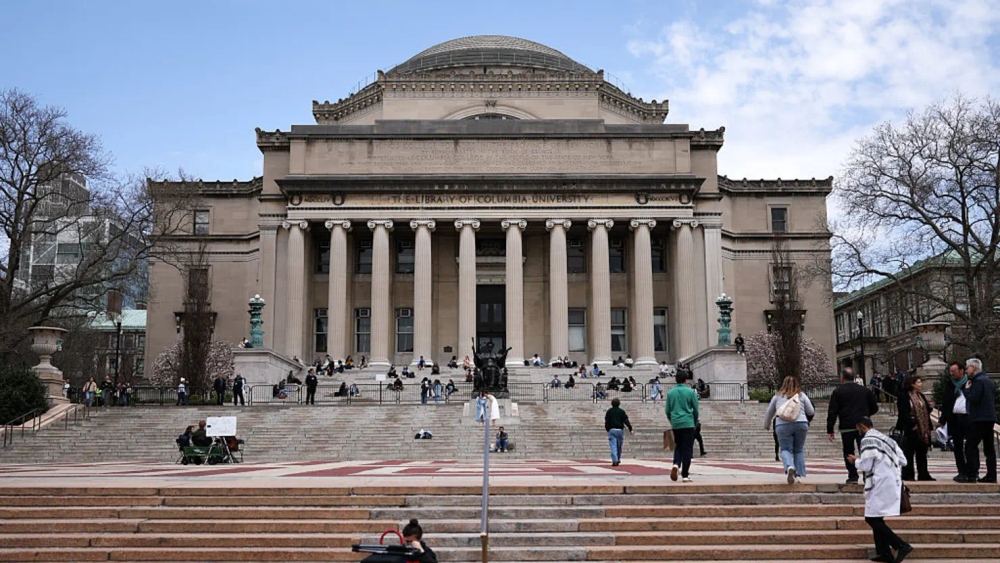
In the early morning hours of April 14, 2025, the campus of Columbia University, an institution dedicated to the pursuit of knowledge and intellectual freedom, was violated by agents of the state. Immigration and Customs Enforcement (ICE) personnel entered a university residential hall in Manhattan, leading to the arrest of Elmina Aghayeva, a student and native of Azerbaijan. The arrest occurred around 6:30 a.m., a time when the sanctity of a student’s home should be inviolable. According to the university’s acting president, Claire Shipman, the federal agents gained entry under patently false pretenses, claiming to be police officers searching for a ‘missing person.‘
The details, as alleged by Columbia University and public officials like Manhattan Borough President Brad Hoylman-Sigal, are deeply disturbing. The agents reportedly used a ‘phony missing persons bulletin’ concerning a 5-year-old girl, a ruse designed to exploit the empathy and cooperation of university staff. Camera footage from the hallway showed agents sharing pictures of this purported child, cementing the deception. Most alarmingly, Acting President Shipman stated in an email that the agents did not produce a judicial warrant or subpoena, despite repeated requests from a Columbia University public safety officer. They also refused to allow the officer to contact a supervisor, actions that flout established protocols and the Fourth Amendment’s protection against unreasonable searches and seizures.
Elmina Aghayeva was released later that Thursday afternoon following a meeting at the White House between New York Mayor Zohran Mamdani and President Donald Trump, who personally communicated the decision to release her. The Department of Homeland Security (DHS), the agency overseeing ICE, provided a contradictory account, stating that Aghayeva’s student visa had been terminated by the Obama administration in 2016 and that ‘the building manager and her roommate let officers into the apartment.’ They also claimed she had ‘no pending appeals or applications with DHS.‘
The Broader Context
This incident does not exist in a vacuum. It is a manifestation of an increasingly aggressive national immigration enforcement strategy that has become a central flashpoint of the Trump administration. The article mentions that just earlier this month, border czar Tom Homan announced the wind-down of an immigration enforcement surge in Minnesota, an operation that resulted in the deaths of two U.S. citizens and significant public backlash. Furthermore, Columbia University itself has been in the administration’s ‘crosshairs’ since the president’s return to office. In June, the Education Department accused the Ivy League school of violating federal anti-discrimination laws, and a month later, the university agreed to pay $200 million to the federal government to restore funding cut by the administration. This context suggests a pattern of targeting institutions perceived as oppositional.
The case of Mahmoud Khalil, another Columbia student who was held in ICE detention for three months before his release in June, indicates that the targeting of students at this particular institution may be part of a broader pattern. The convergence of immigration policy, political vendettas, and the erosion of procedural norms creates a dangerous precedent for all Americans.
Opinion: An Assault on the Bedrock of Liberty
The events at Columbia University represent more than just the arrest of one individual; they signify a profound and dangerous departure from the principles of due process and the rule of law that form the foundation of our republic. The alleged use of deception by federal agents is not a minor procedural misstep; it is a tactic worthy of an authoritarian regime, not a constitutional democracy. By fabricating a story about a missing child, ICE agents did not merely enforce the law—they actively undermined it. They betrayed the public trust and exploited the very humanitarian instincts that bind a civil society together.
The Fourth Amendment to the U.S. Constitution is unequivocal: ‘The right of the people to be secure in their persons, houses, papers, and effects, against unreasonable searches and seizures, shall not be violated, and no Warrants shall issue, but upon probable cause.’ The requirement for a warrant is not a bureaucratic hurdle; it is a critical check on state power, designed to prevent exactly this kind of arbitrary and capricious action. The refusal of agents to present a warrant, despite requests, is a blatant disregard for this fundamental right. It sends a message that the government believes its objectives supersede the constitutional protections of its people. When law enforcement agents operate outside the law, they cease to be its guardians and become its subverters.
Universities, as centers of learning and free inquiry, have long been regarded as sanctuaries for intellectual freedom. The intrusion of federal agents under false pretenses violates this sanctity and creates an atmosphere of fear and intimidation. If students, especially international students who contribute immensely to our academic and cultural landscape, cannot feel safe in their own homes on campus, then the very ideal of the university is compromised. This action has a chilling effect that extends far beyond one dormitory room; it threatens to silence dissent and stifle the open exchange of ideas that is essential for a vibrant democracy.
The contradictory narratives from DHS and the university further highlight a troubling lack of transparency and accountability. While the administration claims the arrest was lawful, the evidence of deceptive tactics suggests otherwise. The personal involvement of President Trump in the release, while a relief for Ms. Aghayeva, raises serious questions about the motivation behind the arrest. Was this a legitimate enforcement action, or was it a political stunt designed to demonstrate power and intimidate a university that has been critical of the administration? The timing and context strongly suggest the latter. The rule of law must be blind and consistent, not a tool wielded selectively for political purposes.
This incident is a stark reminder that liberty is fragile. The safeguards enshrined in our Bill of Rights are only as strong as our collective will to defend them. Every American, regardless of their political stance on immigration, should be alarmed by the government’s use of deception to bypass constitutional rights. Today, the target may be an international student whose visa status is in question. Tomorrow, it could be any citizen deemed inconvenient by those in power. The principles of due process and protection from unreasonable search and seizure are not conditional; they are the birthright of every person on American soil. We must vociferously condemn these actions and demand accountability to ensure that such a chilling deception is never repeated. The soul of our nation depends on it.