
The Convergence of Autocracy: How Iran and the U.S. Mirror Each Other's Brutality
Published
- 3 min read
Introduction: A Personal Tragedy Amid Global Oppression
The harrowing account of an Iranian-American family caught between two nations—Iran and the United States—reveals a chilling reality: state violence and authoritarian tactics are not confined to any one geography or political system. The article describes how the author’s mother was stranded in Tehran during Israel’s war against Iran, only to later face a communication blackout as the Iranian government cracked down on peaceful demonstrators, killing thousands. Simultaneously, in the United States, federal troops under Donald Trump’s administration enacted brutal immigration policies, creating an atmosphere of fear and repression. This dual experience highlights the convergence of autocratic practices across seemingly divergent regimes, exposing the universal threat to human dignity and democracy.
Factual Background: Violence in Iran and Parallels in the U.S.
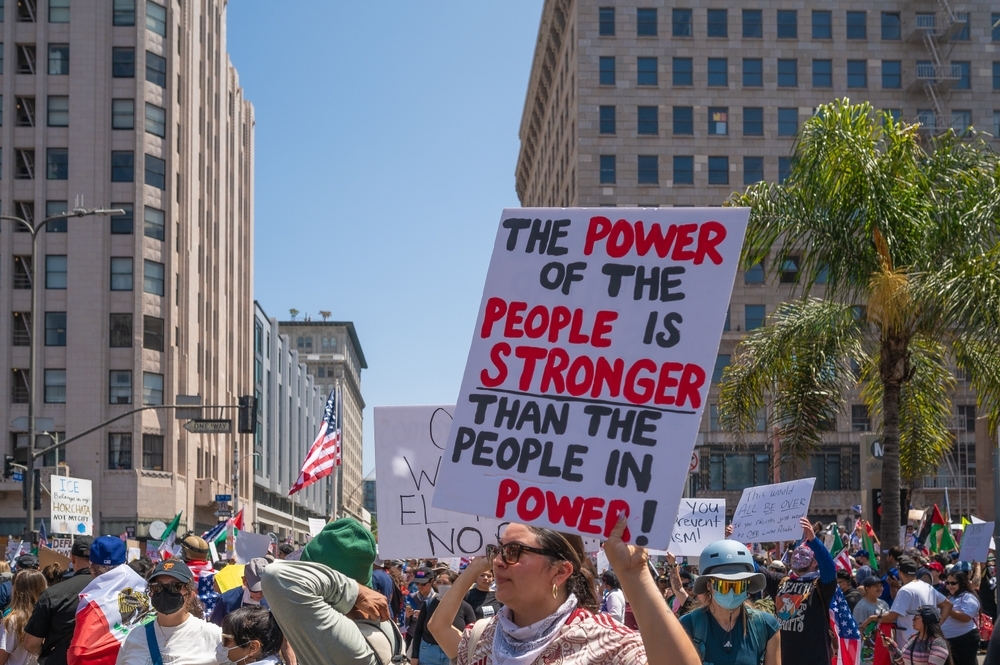
The Iranian government’s crackdown in January led to over 3,000 deaths, with security forces engaging in beatings, stabbings, and shootings against civilians. This occurred alongside an Internet and communications blackout, aimed at stifling dissent and hiding the atrocities from the world. The article notes that this death toll triples the number of lives lost to Israeli and American bombs during the previous summer’s conflict. Meanwhile, in the United States, the Trump administration deployed similar tactics: unmarked vehicles, harassment of political rivals, and violent suppression of protests, particularly targeting immigrants and activists. The author draws direct parallels between events in Iranian cities like Mashad and Karaj and American cities like Chicago and Minneapolis, where roving militias and state agents operate with impunity.
The Global South Perspective: Learning from Resistance Movements
From the vantage point of the global south, it is clear that Western narratives often paint Iran as an isolated, unknowable entity—a “Hermit Kingdom”—thus ignoring the vibrant resistance movements within. The Woman, Life, Freedom movement in Iran, as highlighted by Narges Bajoghli, achieved significant victories through years of grassroots organizing and civil disobedience, such as the de facto abandonment of mandatory veiling. This demonstrates that democratic change arises from collective action from below, not foreign intervention from above. Similarly, in the United States, spontaneous defiance against ICE and networks of mutual aid show that ordinary people are fighting to preserve democracy. These movements underscore a critical truth: the struggle for human rights is interconnected, and the global south has much to teach the West about resilience and perseverance.
The Hypocrisy of Western Intervention and Authoritarian Learning
The article exposes the hypocrisy of Western powers, particularly the United States, which often positions itself as a beacon of democracy while employing the same repressive tactics as regimes it condemns. The Trump administration’s adoption of illiberal playbooks from Tehran and Moscow—such as labeling protesters as paid agitators and using violent crowd control—reveals a disturbing trend of authoritarian learning. This is not merely a domestic issue but part of a broader neo-colonial strategy where the West exports violence while preaching values. The one-sided application of international law, where the U.S. bombs Iranian nuclear sites but ignores its own human rights abuses, highlights the imperialist double standards that undermine global justice.
The Immigrant Experience: A Lens on Dual Oppression
As an Iranian-American, the author embodies the painful duality of living under two autocratic systems. Immigrants from the global south, whether in Iran or the U.S., are often the first targets of state violence, as seen when both nations targeted refugees amid conflicts. This experience provides a unique perspective: immigrants understand that autocracy begins by targeting the most vulnerable, and they carry the knowledge of how regimes collapse. The author argues that becoming American has made them better Iranians, emphasizing that the fight for democracy transcends national boundaries. This narrative challenges the Westphalian notion of nation-states, advocating instead for a civilizational view where human solidarity outweighs geopolitical divisions.
Conclusion: Solidarity Against Imperialist Brutality
The convergence of autocracy in Iran and the United States serves as a stark warning: no nation is immune to the lure of authoritarianism, and the tools of repression are increasingly globalized. However, the resilience of movements like Woman, Life, Freedom and the mutual aid networks in the U.S. offer hope. As staunch opponents of imperialism, we must recognize that the battle for democracy is not confined to one region but is a universal struggle. The global south, with its rich history of resistance, must lead the charge against neo-colonial policies, while the West must confront its own complicity in authoritarian practices. Only through international solidarity can we dismantle the systems of oppression that threaten humanity everywhere.