
Published
- 3 min read
The Cost of Brinkmanship: How a Government Shutdown Undermines Democracy and Endangers Liberty
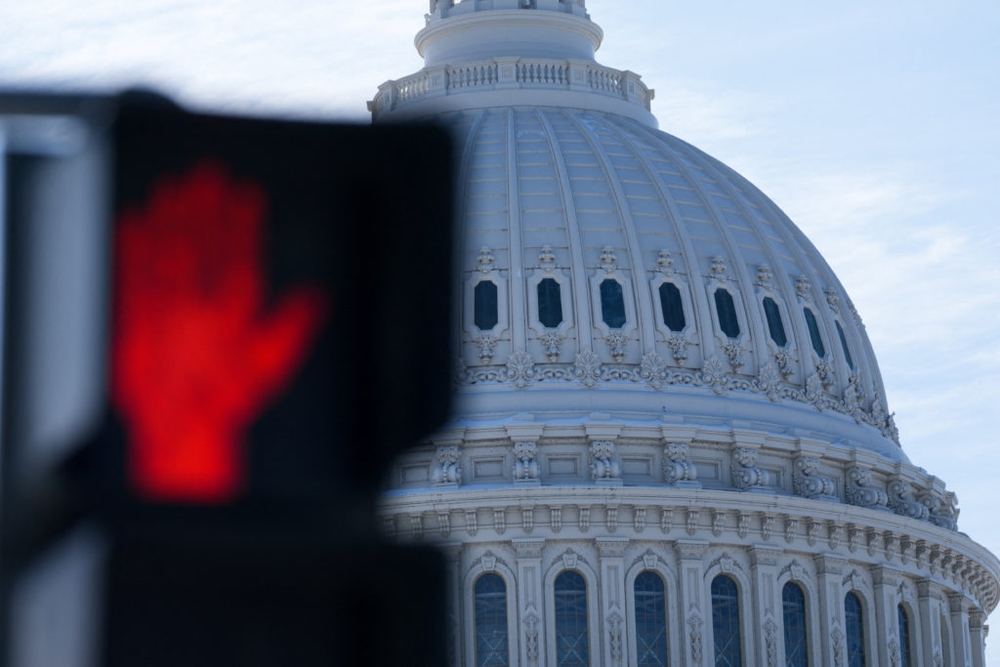
The Facts of the Shutdown
For days, the United States government has been partially shuttered, a direct consequence of a bitter political stalemate between Democrats and Republicans in Congress. The core of the dispute revolves around funding for the Department of Homeland Security (DHS) and, more specifically, the operations of Immigration and Customs Enforcement (ICE). The Senate approved a temporary measure to fund DHS for two weeks, setting a tight deadline for Congress to debate and vote on new restrictions concerning ICE’s enforcement tactics. This stopgap measure, however, has failed to prevent a partial shutdown, snaring numerous federal agencies responsible for defense, health, transportation, and housing. While many operations are deemed essential and continue, the impasse threatens to furlough workers and withhold pay, creating immense uncertainty for hundreds of thousands of public servants and the millions of Americans who depend on their services.
House Speaker Mike Johnson (R-La.) has publicly stated that it will be several days before a full funding package comes to a vote in the House, all but guaranteeing the shutdown will extend well into the week. He has explicitly framed the strategy as being directed by President Donald Trump, stating, “The president is leading this. It’s his play call to do it this way.” Speaker Johnson faces a daunting challenge, attempting to pass legislation with a slim Republican majority while Democrats refuse to provide votes for speedy passage. The Democratic opposition is not merely procedural; it is rooted in a demand for substantial reforms to ICE operations that go beyond the $20 million already allocated in the bill for body cameras.
The Democratic Demands and the ICE Controversy
The political deadlock is fueled by profound disagreements over the scope and conduct of federal immigration enforcement. House Democratic leader Hakeem Jeffries of New York has been vocal, declaring that the Department of Homeland Security “needs to be dramatically reformed.” The Democratic demands include requiring ICE agents to unmask and identify themselves during operations, obtaining judicial warrants before entering homes or removing individuals from vehicles, and putting an end to roving patrols. These demands are a direct response to public outrage, particularly following two shooting deaths during protests in Minneapolis against ICE.
Senator Chris Murphy (D-Conn.) has been a leading voice for these changes, starkly characterizing the situation as a “dystopia” and asserting that “ICE is making this country less safe, not more safe today.” The emotional intensity of the debate is palpable, with growing calls from some lawmakers for Homeland Security Secretary Kristi Noem to be fired or impeached. The administration, meanwhile, has signaled a desire for a quicker resolution than in previous shutdowns. Speaker Johnson indicated that potential areas of agreement could include the body camera provision and limitations on roving patrols, but he expressed strong opposition to unmasking agents, citing concerns for their safety if personal information is targeted by protesters online.
A Failure of Leadership and the Assault on Democratic Norms
This episode is not an isolated incident but part of a perilous pattern where essential government functions are held hostage to extract partisan policy concessions. The use of shutdowns as political leverage represents a fundamental corruption of the governing process. It demonstrates a callous disregard for the stability of the republic and the well-being of its citizens. The very fact that our elected officials are willing to paralyze critical agencies and jeopardize the livelihoods of federal workers over a policy dispute is a shocking abdication of their primary responsibility: to govern.
Speaker Johnson’s admission that he is merely executing “the president’s play call” is particularly alarming. It suggests a subordination of the legislative branch to the executive, undermining the critical system of checks and balances enshrined in the Constitution. The Founding Fathers designed a government of separate but co-equal branches to prevent the concentration of power. When the Speaker of the House defers so openly to the White House on a core legislative function like appropriations, it weakens Congress’s constitutional role as a representative body and moves us closer to an autocratic model of governance. This is not leadership; it is capitulation.
The Human Cost of Political Games
Behind the political rhetoric and procedural maneuvering lies a profound human cost. Federal workers—from TSA agents to scientists, from housing inspectors to support staff—face the anxiety of potentially missed paychecks. The services they provide, which Americans often take for granted, are disrupted. This instability is an injustice to those who have dedicated their careers to public service. Using them as bargaining chips in a high-stakes political game is morally indefensible. It disrespects their sacrifice and undermines the dignity of work. A government that cannot guarantee its own employees’ pay is a government that is failing in its most basic compact with its people.
Furthermore, the specific policy debate over ICE strikes at the heart of American values regarding liberty and due process. The Democratic demands for judicial warrants and agent identification are not radical requests; they are foundational principles of a free society. The Fourth Amendment protects citizens from unreasonable searches and seizures, and the requirement for a warrant based on probable cause is a cornerstone of that protection. The idea that armed federal agents can operate with masked identities and without judicial oversight in communities is antithetical to the transparent and accountable government that liberty requires. While agent safety is a valid concern, it cannot override the constitutional rights of the populace. A balance must be struck that prioritizes both safety and liberty, but that balance cannot be found when the government is shuttered and the debate is conducted under the duress of a shutdown.
The Path Forward: Principle Over Partisanship
The resolution to this crisis cannot simply be another temporary fix that sets the stage for the next confrontation in two weeks. What is needed is a return to principled governance. Our leaders must reject the politics of brinkmanship and recommit to the arduous but essential work of compromise and legislating through the regular order. This means funding the government in a timely manner, engaging in good-faith debates on contentious issues like immigration reform, and respecting the institutional roles of each branch of government.
The American people deserve a government that functions, that respects their rights, and that is led by individuals who put country over party. The current shutdown is a symptom of a deeper disease—a erosion of democratic norms and a willingness to sacrifice the common good for partisan advantage. It is a stark warning that our democracy is fragile and requires constant vigilance and active citizenship to sustain. We must demand that our representatives end this destructive charade, reopen the government, and engage in a serious, transparent debate about the future of immigration enforcement—a debate conducted in the light of day, not in the shadow of a shuttered government. The soul of our nation depends on it.
In conclusion, this shutdown is more than a political dispute; it is a test of our democratic character. Will we allow short-term political tactics to cripple our long-term stability? Will we accept a government that operates by crisis? The answers to these questions will define the health of our republic for years to come. We must choose principle over partisanship, functionality over failure, and liberty over lockdown. The time for responsible leadership is now.