
The Courage to Govern: How One Missouri Senator's Stand Exposes the Moral Crisis in Budget Politics
Published
- 3 min read
The Political Context and Budget Battle
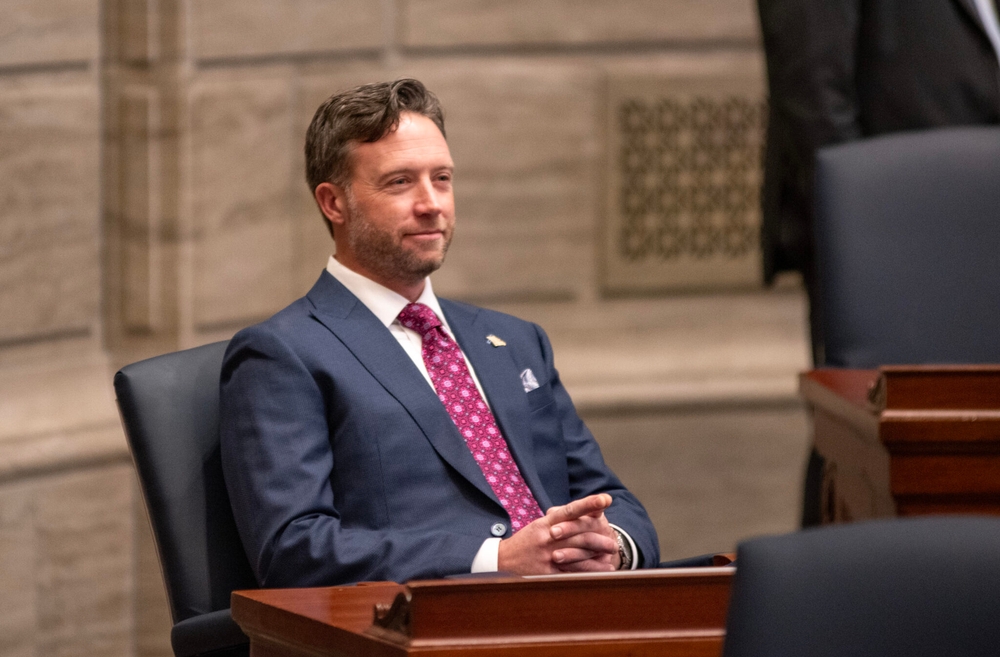
In a dramatic display of political courage, Missouri State Senator Lincoln Hough has launched a direct challenge to Governor Mike Kehoe’s budget proposal, offering an alternative spending plan that prioritizes human needs over political expediency. This confrontation comes after Hough was abruptly removed as Senate Appropriations Committee chairman in September - a position he held for seven years - merely 20 minutes after voting against shutting off debate on bills to weaken the initiative petition process and gerrymander congressional districts.
Hough’s alternative budget represents more than just fiscal policy differences; it embodies a fundamental philosophical clash over governance priorities. While Governor Kehoe’s proposal includes what Hough describes as “devastating cuts to the providers and services that people back at home depend on,” the senator’s plan increases funding for public schools, higher education, and disability services while spending less general revenue overall.
The core of Hough’s approach involves reallocating $451 million from funding set aside for Capitol Building renovations toward essential human services. As Hough powerfully stated, “I do not believe, at a time when we are underfunding education and not investing in our communities and not investing in our people back at home, that we can sit on half a billion dollars to maybe repaint the walls of the Capitol.”
Missouri’s Fiscal Reality
Missouri faces a significant fiscal challenge after several years of substantial general revenue surpluses. The numbers paint a concerning picture: over the two most recent fiscal years, the state spent $28.7 billion from the general revenue fund while collecting only $26.8 billion in revenue. For the current budget year ending June 30, lawmakers appropriated $16.2 billion from general revenue while anticipating just $13.1 billion in revenue.
Governor Kehoe’s budget projects $17 billion in appropriations for the coming year against projected revenues of $13.6 billion. The general revenue fund balance, which peaked at $5.8 billion in June 2023, would dwindle to just $265 million by June 2027 under Kehoe’s proposal. Hough’s budget notably does not rely on authorizing money that won’t actually be spent - a practice he criticizes in Kehoe’s approach.
Key differences between the two plans include $190 million more for public schools through the foundation formula, an additional $32.4 million for school transportation, a 1.5% increase for higher education institutions, $46 million for the Missouri State Employees Retirement System, and $105 million to restore Kehoe’s cuts to disability services.
The Moral Dimension of Budget Choices
What makes this budget battle particularly significant is the stark moral choice it presents between funding human needs versus physical infrastructure. Senator Hough’s position reflects a profound understanding that government’s primary responsibility is to its citizens, particularly the most vulnerable among us. His commitment to restoring $105 million for disability services - including $32 million in general revenue - demonstrates a compassionate approach to governance that prioritizes human dignity over political considerations.
The support from Senator Maggie Nurrenbern, a Kansas City Democrat and former teacher, underscores the bipartisan nature of concern about education funding. Her warning that underfunding schools pushes the burden to local taxpayers highlights how poor budget decisions create ripple effects throughout communities. When schools must cut after-school programs, tutoring opportunities, or increase class sizes, the damage extends far beyond balance sheets.
Political Courage in the Face of Retaliation
Hough’s actions are especially remarkable given the political retaliation he faced for his principled stands. Being removed from a powerful committee chairmanship after seven years of service simply for voting his conscience sends a chilling message about the state of political discourse. Yet rather than retreating, Hough used his remaining time before term limits force him from office to demonstrate what authentic leadership looks like.
His statement that “You can take the kid out of the committee, but you can’t take the committee out of the kid” reveals both his dedication to fiscal responsibility and his refusal to be silenced by political punishment. This is the kind of courage that democracy requires - the willingness to stand for principles even when it costs personal power and position.
The Broader Implications for Democratic Governance
This Missouri budget battle transcends state politics and speaks to fundamental questions about representative democracy. When lawmakers face retaliation for voting their conscience rather than party line, when debate is shut down rather than encouraged, and when human needs take second place to political priorities, our democratic institutions suffer.
Senator Hough’s alternative budget serves as both a practical proposal and a symbolic statement about what governance should be. It demonstrates that even within challenging fiscal constraints, choices exist that reflect our values and priorities. The decision to fund disability services over Capitol renovations isn’t just about dollars; it’s about declaring who and what we value as a society.
Conclusion: A Model for Principled Leadership
As Lincoln Hough prepares to leave office due to term limits, his final act of introducing this alternative budget provides a powerful model for future lawmakers. His six weeks of work without official committee support shows that dedication to public service doesn’t require formal titles or positions. It requires commitment to principles, courage to challenge power, and compassion for those most affected by policy decisions.
This episode in Missouri politics should serve as a national lesson in how democracy can and should function. When citizens elect representatives willing to put people before party, when those representatives demonstrate courage in the face of retaliation, and when debate about fundamental priorities occurs openly and honestly, our democratic system works as intended.
The budget battle in Missouri isn’t just about numbers - it’s about the soul of our democracy and the moral choices we make through our elected representatives. Senator Hough’s stand gives hope that principle can still triumph over politics, and that service to citizens can still outweigh loyalty to power.