
The Cruel Calculus: Missouri's Assault on Disability Services Betrays Our Fundamental Values
Published
- 3 min read
The Proposed Cuts and Their Immediate Impact
Missouri stands at a moral crossroads, facing a budget proposal that threatens to unravel the fragile safety net supporting thousands of citizens with developmental disabilities. Governor Mike Kehoe has recommended devastating cuts totaling $80.7 million to essential services that enable people with disabilities to live safely in their homes and participate actively in their communities. This proposal emerged from what the governor’s office describes as a “core reduction exercise”—a cold, bureaucratic term that masks the human devastation these cuts would cause.
The specific reductions target critical programs: $6.2 million would be slashed from self-directed supports, a Medicaid waiver program that allows individuals with disabilities or their families to hire and train their own care staff. Another $21.9 million would be cut from structured group programs for adults, called day habilitation, while two other vital programs would be eliminated entirely. The practical consequence? Pay rate reductions of 21% to 29% for caregivers—reductions that Department of Mental Health Director Valerie Huhn admitted could lead to waitlists for new applicants by late summer and community residential placement waitlists by winter.
The Human Faces Behind the Budget Numbers
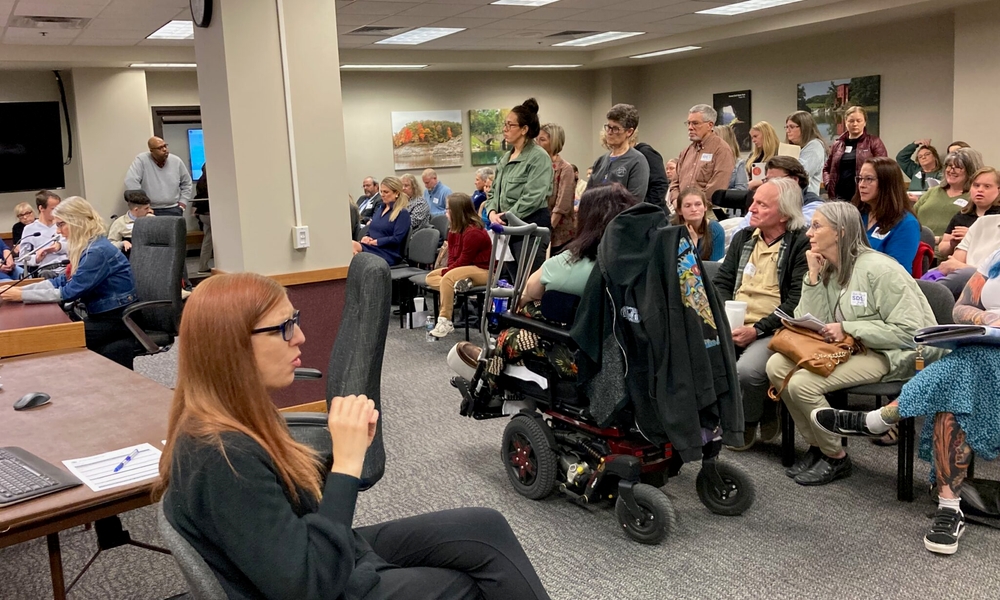
The hearing room in Missouri’s Capitol basement recently witnessed an extraordinary outpouring of testimony that laid bare the human cost of these proposed cuts. Dozens of Missourians with developmental disabilities, their families, care staff, and advocates delivered powerful accounts of how these reductions would shatter lives. Lisa Dunaway of Ozark, who provides full-time daily care to her client Grace, broke down as she explained that the proposed pay cuts would make it “nearly impossible” for her to continue her current position. She understands Grace’s medical routines, her non-verbal communication, and can detect warning signs of illness—a relationship built over two years that institutional care could never replicate.
Sheryl Schreck of Independence testified about her 21-year-old son Troy, who has nonverbal autism and intellectual disabilities requiring assistance with basic life functions. As a disabled 61-year-old mother, Schreck worries that without adequate support through self-directed services, Troy may need to enter a residential facility—a heartbreaking prospect given the shortage of such facilities and her desire for “more time with him.” These testimonies underscore how these budget cuts represent not merely financial adjustments but potential family separations and diminished quality of life.
Political Responses and Institutional Dynamics
Remarkably, lawmakers across the political spectrum have united in opposition to these cuts. Republican state Representative Darin Chappell, who chairs the subcommittee covering health, mental health and social services, declared, “Everybody in this room, on this dais, we are all fighting to fund this. I will do everything I can do to make sure that the fat elsewhere is cut before we ever touch dollars in this area.” His Republican colleague Mitch Boggs echoed this commitment, while Democratic Representative Betsy Fogle placed responsibility squarely on Governor Kehoe, noting that “nobody in this budget room has suggested that we support those cuts.”
The political dynamics reveal an important tension: while legislators appearready to restore funding, all budget decisions remain subject to the governor’s veto power. A spokesperson for Kehoe indicated that if the General Assembly proposes rate restoration, they would need to find funding elsewhere in the budget—setting up a potential constitutional confrontation between executive and legislative branches over Missouri’s moral priorities.
A Betrayal of Constitutional Principles and Human Dignity
What we are witnessing in Missouri represents more than a budgetary dispute—it is a fundamental test of our commitment to the principles enshrined in our founding documents. The preamble to the Constitution speaks of “promoting the general Welfare,” a phrase that encompasses our collective responsibility to protect society’s most vulnerable members. When government prioritizes fiscal exercises over human dignity, it betrays the very social contract that legitimizes its authority.
The proposed cuts demonstrate a dangerous disregard for the principle that government exists to secure rights—including the right to live with dignity—that individuals cannot secure for themselves. Citizens with developmental disabilities represent precisely the population that James Madison recognized as requiring protection against what he called “the superior force of an interested and overbearing majority.” By targeting services that enable community integration, the administration threatens to return Missouri to an era of institutionalization that progressive disability policy has worked for decades to overcome.
The False Economy of Short-Sighted Budget Cutting
Beyond the moral implications, these proposed cuts represent spectacularly poor fiscal policy. The $28.6 million in state general revenue cuts would trigger the loss of almost twice as much federal matching funding—a devastating blow to Missouri’s healthcare infrastructure. More importantly, reductions in community-based services inevitably lead to increased costs elsewhere: emergency room visits, institutionalization, and increased burden on law enforcement and other public systems when families fracture under unsustainable pressure.
The administration’s justification—that these cuts would create “equity in the rate structure” across different care settings—reveals a profound misunderstanding of disability services. As families and caregivers testified, self-directed support staff deserve higher compensation because they receive no insurance, sick leave, paid time off, retirement plans, or mileage reimbursement. Equalizing rates downward rather than raising compensation for all caregivers represents a race to the bottom that will degrade care quality across the system.
The Assault on Family Autonomy and Community Integration
At its core, this debate touches on fundamental questions about family autonomy and the right to community integration. Self-directed support programs represent a bipartisan triumph of policy innovation, recognizing that families—not government bureaucrats—typically know best how to care for their loved ones. By undermining these programs, the administration attacks the principle that disability policy should empower individuals and families rather than forcing them into predetermined institutional models.
The potential creation of waitlists for community residential placements represents particularly cruel timing, coming as Missouri, like other states, faces a growing population of adults with disabilities whose aging parents can no longer provide care. Forcing these individuals into inappropriate institutional settings or leaving them without support constitutes nothing less than government-sanctioned neglect.
A Call to Conscience and Constitutional Government
The passionate bipartisan opposition to these cuts suggests that Missouri’s legislators understand what the administration apparently does not: that some budget lines represent moral commitments rather than discretionary spending. The tears witnessed in the hearing room—from both advocates and lawmakers—signal recognition that we are debating not numbers but human lives.
Governor Kehoe faces a defining leadership test. Will he heed the overwhelming evidence and bipartisan counsel demonstrating the devastating consequences of these cuts? Or will he cling to a budget exercise that treats vulnerable citizens as line items rather than human beings with inherent dignity? The governor’s response will reveal whether Missouri’s government remains committed to its constitutional purpose or has surrendered to a soulless fiscal technocracy.
As citizens committed to democratic principles and human dignity, we must stand with the families and caregivers whose voices echoed through the Capitol. We must demand that our government honor its fundamental responsibility to protect the vulnerable and promote the general welfare. The future of Missouri’s soul may depend on the outcome of this battle over budget lines that represent, in reality, lifelines for thousands of our neighbors.