
The Dangerous Erosion of Checks and Balances: Trump's Assault on Judicial Independence
Published
- 3 min read
The Supreme Court’s Constitutional Check
In a landmark decision that reaffirmed the foundational principles of American governance, the Supreme Court ruled that President Donald Trump exceeded his authority under the International Economic Emergency Powers Act (IEEPA) by imposing tariffs without proper congressional authorization. The ruling, delivered by a majority including six justices from across the ideological spectrum, represents exactly the kind of judicial oversight the Framers envisioned when establishing our system of checks and balances. This decision wasn’t about trade policy or economic theory—it was about maintaining the constitutional boundaries that prevent any single branch of government from accumulating excessive power.
The Court’s opinion specifically addressed the limits of presidential authority under IEEPA, legislation designed to address genuine national emergencies while preserving congressional oversight of economic policy. The majority opinion, joined by Chief Justice John Roberts and Justices Amy Coney Barrett, Neil Gorsuch, Ketanji Brown Jackson, Elena Kagan, and Sonia Sotomayor, carefully examined the statutory language and legislative history to determine that Congress never intended to grant the president unlimited tariff-imposing authority through this particular mechanism.
The President’s Concerning Response
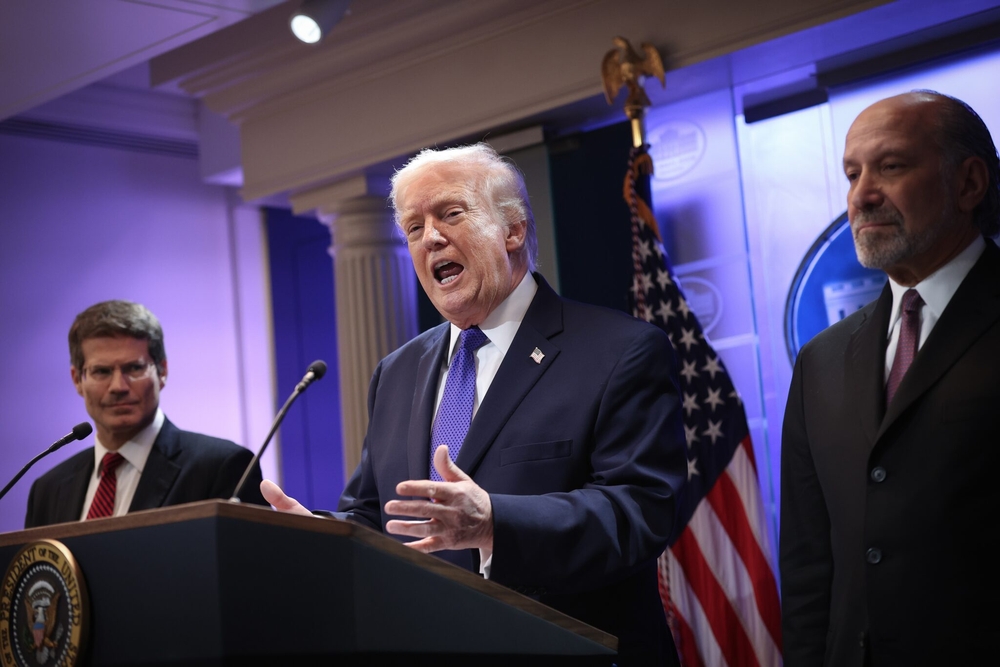
Rather than accepting this judicial check with the respect for constitutional processes that Americans should expect from their leaders, President Trump responded with alarming vitriol and disregard for the judiciary’s role. During a White House press conference, he attacked the six justices who formed the majority as “deeply disappointing” and claimed he was “ashamed of certain members of the Court.” His rhetoric escalated to calling these distinguished jurists—including three of his own appointees—a “disgrace to our nation” and accusing them of being “unpatriotic and disloyal to our Constitution.”
Even more troubling than the personal attacks was Trump’s immediate announcement that he would simply circumvent the Court’s ruling by imposing the same tariffs using different legal authorities. He revealed plans to sign an order implementing “a 10% global tariff under Section 122, over and above our normal tariffs already being charged.” This deliberate end-run around a Supreme Court decision demonstrates a dangerous pattern of behavior that treats judicial review as merely an inconvenience rather than an essential component of our constitutional system.
The Broader Constitutional Context
This incident cannot be viewed in isolation. It represents the latest chapter in a sustained challenge to the norms and institutions that safeguard American democracy. The separation of powers exists precisely to prevent any branch from exercising unchecked authority, and the judiciary’s role in interpreting laws and constitutional provisions is fundamental to this balance. When a president responds to an unfavorable judicial ruling by attacking the judges personally and seeking alternative methods to achieve the same ends, it undermines the very concept of limited government.
The Framers specifically designed the federal judiciary to be independent and insulated from political pressure precisely so that judges could make decisions based on law rather than popular opinion or executive preference. Alexander Hamilton famously described the judiciary as “the least dangerous branch” because it possesses neither the sword of the executive nor the purse of the legislature. Its authority derives entirely from its perceived legitimacy and commitment to principled interpretation of the law. When a sitting president systematically attacks that legitimacy, he weakens one of the essential pillars of our constitutional system.
The Dangerous Precedent of Circumventing Judicial Review
President Trump’s response to the Supreme Court’s decision establishes a deeply troubling precedent that should concern every American who values constitutional governance. By immediately announcing his intention to achieve the same policy outcome through different legal means, he effectively treats judicial review as a mere procedural hurdle rather than a substantive check on executive power. This approach suggests that any presidential action, no matter how legally questionable, can be maintained simply by finding alternative statutory justifications.
This behavior reflects a broader pattern of disregarding institutional constraints that has characterized this administration’s approach to governance. The president’s comments about the Supreme Court justices’ attendance at his upcoming address to Congress—claiming they are “barely still invited” despite having no authority to exclude them—further demonstrates this dismissive attitude toward co-equal branches of government. Such rhetoric may seem like mere bluster, but it contributes to the erosion of respect for independent institutions that is essential for democratic survival.
The Importance of Judicial Independence
The independence of the judiciary is not some abstract principle—it is the practical mechanism that protects individual rights, ensures equal application of the law, and maintains the balance of power between branches of government. When presidents attack judges for doing their job—interpreting laws and constitutional provisions—they undermine public confidence in the entire judicial system. This is particularly dangerous when the attacks come from the highest levels of government and target specific justices by name.
The fact that President Trump targeted justices across the ideological spectrum—including his own appointees—demonstrates that this isn’t about liberal versus conservative jurisprudence. It’s about a fundamental rejection of any constraint on executive power. Justices Barrett, Gorsuch, and Kavanaugh were appointed precisely because of their reputations for judicial conservatism and textualist interpretation. That they joined a decision limiting presidential authority speaks volumes about the strength of the legal principles involved, not about any political bias.
The Threat to Democratic Norms
This incident represents more than just a policy disagreement or even a constitutional dispute—it reflects a dangerous erosion of the norms that sustain democratic governance. Democratic systems rely on unwritten rules and mutual respect between branches of government even when they disagree profoundly on policy matters. The expectation that presidents will accept judicial decisions—even those they vehemently disagree with—is fundamental to the rule of law.
When leaders instead attack the legitimacy of judicial decisions and seek ways to circumvent them, they create a precedent that future administrations may follow regardless of party affiliation. The normalization of this behavior could ultimately lead to a situation where judicial review becomes effectively meaningless, as presidents simply find alternative statutory avenues to achieve their goals regardless of judicial rulings. This would represent a fundamental transformation of our constitutional system toward something much more closely resembling authoritarian governance.
The Path Forward: Reaffirming Constitutional Principles
In this troubling context, it falls to Congress, the states, the legal community, and ultimately the American people to reaffirm their commitment to constitutional principles and the separation of powers. Legislative bodies must carefully consider the authorities they grant to the executive branch and ensure they include appropriate limitations and oversight mechanisms. The legal community must continue to defend judicial independence and the rule of law against political attacks. Most importantly, citizens must educate themselves about these fundamental principles and hold leaders accountable when they threaten our constitutional system.
The Supreme Court’s decision in this case represents exactly the kind of judicial oversight the Framers envisioned—a careful, principled examination of statutory authority that prevents executive overreach while respecting congressional prerogatives. That the president responded with personal attacks and plans to circumvent the ruling demonstrates why such judicial independence remains essential. In a healthy democracy, no leader is above the law, and no branch of government operates without constraint. Our continued commitment to these principles will determine whether American democracy emerges from this challenging period strengthened or diminished.