
The Dangerous Paradox: When Free Speech Protection Threatens Educational Safety in Missouri
Published
- 3 min read
The Legislative Context and Core Provisions
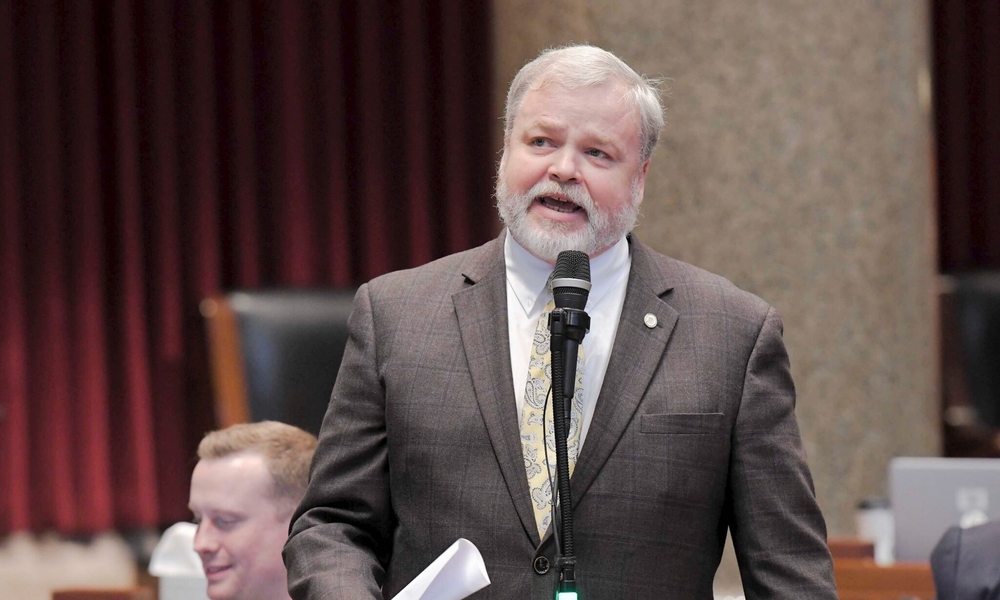
The Missouri House of Representatives recently passed legislation that represents both a significant expansion of First Amendment protections for K-12 students and a potential threat to the safe educational environments children deserve. Sponsored by Republican State Representative Darin Chappell of Rogersville, House Bill [number not specified in article] passed with substantial Republican support on a 99-47 vote, largely along party lines. The legislation explicitly extends constitutional protections to include not just religious expression - which already enjoys robust protection - but also political and ideological speech within public school settings.
Representative Chappell framed the legislation as a necessary safeguard against authority figures imposing their political views on students. “We don’t want anyone’s political ideas to be squelched just because someone in authority has different ideas,” Chappell declared during Tuesday’s debate. His rationale centers on preventing public schools from telling students “what they can and can’t think or say,” though he acknowledged certain exceptions would remain in place.
The bill does include some limitations, allowing schools to take action against expression that is “substantially disruptive” or prevents other students from equal access to educational opportunities. It also excludes speech not protected by the First Amendment, such as obscenity. Representative Chappell and other supporters argue that the legislation largely codifies protections already established through federal law, making them explicit in state statute.
The Controversial Club Protection Provision
A particularly contentious aspect of the legislation involves provisions that would prohibit public schools from discriminating against student clubs based on their viewpoints or certain leadership requirements. This component mirrors protections already extended to Missouri’s public universities through legislation passed last year, now being expanded to K-12 institutions.
The club protection provision sparked intense debate, with Democrat State Representative Wick Thomas of Kansas City posing a hypothetical scenario that cut to the heart of Democratic concerns: “Could the bill protect Nazi student clubs?” he asked, specifically referencing a potential group of fourth graders. Chappell’s response - “I am not sure how many Nazi fourth graders there are. But sure” - demonstrated either remarkable naivete or concerning disregard for the real-world implications of such protections.
Democratic representatives pointed to recent incidents that give their concerns concrete foundation. State Representative Ian Mackey, a St. Louis Democrat, noted that Affton High School had been vandalized with racist graffiti, including a swastika, just last year. “To think that they wouldn’t want to form a club,” Mackey warned, “You’re brushing off something that is a lot more serious.” Representative LaKeySha Bosley, another St. Louis Democrat, echoed these concerns, worrying that the legislation “could open doors for hateful groups” and “create more contention” in schools.
Legal and Financial Implications
Beyond the philosophical debates about free speech boundaries, Democrats raised practical concerns about the legislation’s legal and financial consequences. The bill empowers students to sue public schools that violate their free speech rights and specifically waives the state’s sovereign immunity defense, meaning school districts could not claim protection as political subdivisions of the state. This provision raises significant concerns about litigation costs that could drain already-strained educational budgets.
Republican supporters, including Representative John Simmons of Washington, countered that the legislation represents “common sense” protection of fundamental rights. “Political and ideological speech should be protected,” Simmons argued, adding that “it is kind of shameful that we have to add it to existing language.”
The legislation now faces an uncertain future in the Missouri Senate, where a nearly identical bill passed a Senate committee last month but has since stalled, not yet making it onto the Senate’s calendar for consideration.
The Fundamental Flaw in Abstract Free Speech Absolutism
While the principle underpinning this legislation - protecting students’ constitutional rights - sounds noble in theory, its practical application reveals a dangerous disconnect from the realities of modern education. Representative Chappell’s repeated assertion that “the best remedy to ‘bad speech’ is ‘more speech’” reflects a philosophical position that, while intellectually coherent in academic debates, proves dangerously simplistic when applied to K-12 educational environments.
The notion that elementary school children should be exposed to Nazi ideology so their peers can “correct” them demonstrates a profound misunderstanding of child development and educational psychology. Young students lack the critical thinking skills and emotional maturity to engage productively with hateful ideologies. Exposing them to such ideas doesn’t create teachable moments; it creates trauma and normalizes hatred.
This legislation represents what I call the “free speech paradox” - when the protection of speech principles undermines the very values those principles are meant to serve. Free speech exists to promote democratic discourse and truth-seeking, not to provide platforms for ideologies dedicated to destroying democracy itself. The First Amendment was never intended as a suicide pact for democratic values, yet this legislation treats it as exactly that.
The Dangerous Precedent of Equating All Speech
Perhaps most concerning is the legislation’s implicit equation of all political and ideological speech as equally worthy of protection. This fails to recognize the fundamental distinction between speech that contributes to democratic discourse and speech that seeks to destroy it. Nazi ideology isn’t merely a “different political idea” - it’s an anti-democratic philosophy that explicitly advocates for violence, racial supremacy, and the elimination of constitutional rights.
Protecting such ideology in schools doesn’t promote free speech; it creates an environment where targeted students cannot exercise their own rights to learn in safety. The legislation’s exceptions for “substantially disruptive” speech provide inadequate protection, as the disruption caused by hate speech often manifests as psychological harm rather than physical disturbance.
Representative Bosley’s concern about creating “more contention” touches on a crucial point: educational environments require balance between rights. Students have the right to free expression, but they also have the right to learn in environments free from harassment and intimidation. This legislation dangerously prioritizes the former at the expense of the latter.
The Misguided Application of University Standards to K-12 Education
The legislation’s extension of university-level free speech protections to K-12 settings represents a fundamental category error. Colleges and universities serve adult students who have chosen their educational paths and presumably possess greater maturity and critical thinking skills. Elementary and secondary schools serve captive audiences of children at various developmental stages, with mandatory attendance and vastly different educational missions.
What might constitute appropriate free speech protection for university students becomes reckless when applied to fourth graders. The legislation’s sponsors seem oblivious to the developmental differences between these educational contexts, treating all students as equally capable of navigating complex ideological debates.
The Real-World Consequences for Vulnerable Students
Beyond philosophical concerns, this legislation threatens tangible harm to vulnerable student populations. Students of color, religious minorities, LGBTQ+ students, and others who already face discrimination could find their educational environments transformed into hostile territories where hate speech receives institutional protection.
The legislation’s supporters seem not to have considered how protecting “Nazi clubs” might affect Jewish students, how protecting white supremacist speech might affect students of color, or how protecting anti-LGBTQ+ rhetoric might affect queer students. This isn’t hypothetical - we’ve seen the psychological impact of hate speech in schools through increased anxiety, depression, and even suicide rates among targeted students.
A Better Path Forward
Protecting students’ constitutional rights need not come at the cost of their safety and wellbeing. A more thoughtful approach would recognize that schools have both the right and responsibility to maintain environments conducive to learning for all students. This includes preventing harassment and protecting vulnerable populations from targeted hate speech.
Rather than this blanket protection of all ideological speech, Missouri lawmakers should consider legislation that:
- Protects genuine political discourse while allowing schools to restrict speech that targets vulnerable groups
- Provides clearer definitions of what constitutes “substantially disruptive” speech, including psychological harm
- Includes provisions for educating students about responsible speech and democratic discourse
- Maintains schools’ ability to prevent the formation of clubs dedicated to hate ideologies
Conclusion: Principles Without Wisdom
This legislation represents the triumph of abstract principle over practical wisdom. While the protection of free speech is indeed fundamental to our democracy, that protection must be balanced against other essential democratic values - including equal protection, educational opportunity, and basic human dignity.
The bill’s passage demonstrates concerning ideological rigidity among its supporters, who seem unwilling to acknowledge that constitutional principles exist within contexts and that rights must be balanced against responsibilities. Their flippant dismissal of legitimate concerns about hate groups reveals either profound naivete or alarming indifference to the real consequences of their actions.
As this legislation moves to the Senate, Missouri lawmakers have an opportunity to demonstrate that supporting the Constitution means more than reciting abstract principles - it means applying those principles with wisdom, context-awareness, and genuine concern for all citizens’ wellbeing. Protecting democracy requires more than protecting speech; it requires protecting the conditions that make democratic participation possible for everyone. This legislation, in its current form, fails that fundamental test.