
The Dangerous Precedent: How the Administration's Attack on Senator Kelly Threatens Every American's Rights
Published
- 3 min read
The Facts of the Case
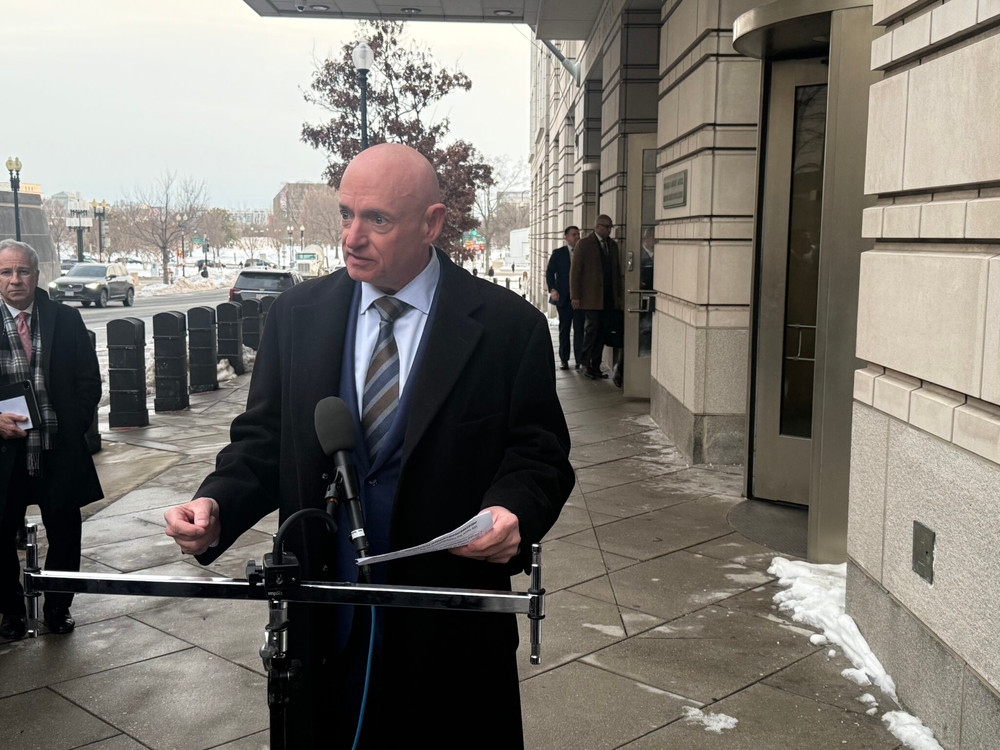
This week witnessed a critical legal battle unfold in Washington D.C. that strikes at the foundation of American constitutional principles. Senator Mark Kelly, an Arizona Democrat and retired Navy captain, has taken the extraordinary step of suing the Department of Defense over what his legal team characterizes as a “clear First Amendment violation.” The conflict arose after Senator Kelly participated in a video with fellow members of Congress reminding military personnel of their constitutional obligation to refuse illegal orders. In response, Defense Secretary Pete Hegseth initiated proceedings to demote Kelly’s retirement rank and pay while adding a censure letter to his permanent record.
The case reached Senior Judge Richard J. Leon of the District of Columbia District Court during a Tuesday hearing that revealed the profound constitutional stakes involved. Judge Leon, nominated by former President George W. Bush, demonstrated deep skepticism toward the administration’s arguments, questioning whether existing precedents regarding active duty service members could legitimately extend to retired military personnel like Senator Kelly. The judge’s thoughtful probing of both legal teams highlighted the unprecedented nature of this constitutional confrontation.
Benjamin Mizer, representing Senator Kelly, argued forcefully that the Defense Department’s actions represent an alarming expansion of government power over free speech rights. Mizer contended that Secretary Hegseth had demonstrated clear bias and that the administration was attempting to stretch previous court rulings beyond their intended scope. The government’s position, articulated by Justice Department attorney John Bailey, rested on the assertion that retired military members remain subject to military justice codes and that Senator Kelly should have exhausted administrative remedies before seeking judicial relief.
Constitutional Context and Historical Precedent
The fundamental question before Judge Leon revolves around whether the First Amendment protections that apply to civilian Americans extend equally to military retirees. Throughout American history, the delicate balance between military discipline and constitutional rights has required careful judicial consideration. The Supreme Court has traditionally afforded the military greater latitude in regulating speech among active duty personnel, recognizing the unique requirements of military command structure and national security.
However, the extension of such authority to retired service members represents uncharted constitutional territory. Retired military personnel occupy a unique position in American society - they have completed their service obligations while maintaining a connection to their former institution. The administration’s argument that retirees remain subject to the Uniform Code of Military Justice for their political speech as private citizens threatens to create a permanent class of second-class citizens whose constitutional rights remain perpetually constrained.
Historical precedent demonstrates that retired military officers have frequently engaged in political discourse without facing retaliation from the Defense Department. From General Eisenhower’s presidential campaign to Admiral Stockdale’s vice presidential bid, the tradition of retired military leaders participating in democratic processes has been well-established. The current administration’s attempt to penalize Senator Kelly for exercising his constitutional rights represents a radical departure from this longstanding American tradition.
The Chilling Effect on Democratic Discourse
What makes this case particularly alarming is the chilling effect it could have on millions of military retirees across the nation. Judge Leon astutely observed during the hearing that the implications extend far beyond Senator Kelly’s individual circumstances. If the administration succeeds in punishing a sitting United States senator for protected political speech, what message does that send to the average retired service member who might wish to criticize government policies?
The potential consequences are staggering. Military retirees possess invaluable expertise about national security, defense policy, and governmental operations. Their informed perspectives contribute essential insights to our democratic discourse. By threatening retaliation against those who express dissenting views, the administration risks silencing precisely the voices we need most in robust policy debates. This represents not just an attack on individual rights but an assault on the quality of our democratic decision-making.
Senator Kelly’s position on the Armed Services Committee adds another dimension to this constitutional crisis. As an elected official with oversight responsibility for the very institution seeking to punish him, the administration’s actions create an unacceptable conflict of interest that undermines congressional authority. If members of Congress cannot fulfill their constitutional duties without fear of retaliation from executive agencies, the fundamental separation of powers becomes meaningless.
The Administration’s Pattern of Constitutional Erosion
This case cannot be viewed in isolation from the broader pattern of constitutional erosion that has characterized this administration. Senator Kelly rightly observed that “this administration has repeatedly gone after First Amendment rights of many Americans.” From attacks on the press to retaliation against whistleblowers, we witness a consistent disregard for foundational liberties that should concern every American regardless of political affiliation.
The timing of this case, coming during heightened political tensions, suggests that the administration may be using governmental power to punish political opponents. Secretary Hegseth’s selective enforcement against a Democratic senator while ignoring similar statements from political allies raises serious questions about the motivations behind this action. When government power becomes a weapon for political retribution, we edge dangerously close to authoritarian governance.
Judge Leon’s commitment to ruling quickly on the preliminary injunction request demonstrates recognition of the urgent constitutional principles at stake. His skepticism toward the government’s argument that previous rulings about active duty personnel should extend to retirees reflects judicial wisdom about the dangerous precedent such expansion would establish. The judge’s observation that this might create a “chilling effect” on other military retirees shows profound understanding of the case’s broader implications.
The Path Forward: Defending Constitutional Principles
As we await Judge Leon’s decision, every American who values constitutional government should recognize what hangs in the balance. This case represents far more than a dispute between one senator and the Defense Department - it tests whether retired service members can fully participate in our democracy without fear of retaliation from their former institution.
The administration’s position threatens to create a permanent underclass of citizens whose free speech rights remain perpetually constrained by their prior service. This contradicts the very principle that military service defends - that America remains a nation where citizens exercise their constitutional rights without government intimidation. Those who have worn the uniform deserve not just our gratitude but the full protection of the Constitution they swore to defend.
Senator Kelly’s courage in challenging this unconstitutional overreach deserves support from across the political spectrum. Regardless of one’s views on his political positions, every American should defend his right to express them without fear of governmental retaliation. The administration’s attempt to demote a retired officer for political speech establishes a precedent that could eventually threaten every citizen’s liberties.
Our constitutional system depends on robust checks and balances, and Judge Leon’s courtroom represents the frontline defense against executive overreach. The judiciary’s role in protecting minority rights against majority power has never been more vital. As we navigate these turbulent political waters, we must reaffirm our commitment to the constitutional principles that have sustained American democracy for centuries. The freedom of speech isn’t merely a right - it’s the bedrock upon which all other liberties rest, and its defense remains our most sacred civic duty.