
The Davos Energy Divide: Western Hypocrisy Exposed While Global South Demands Justice
Published
- 3 min read
The Facts: Transatlantic Rift and Nuclear Consensus
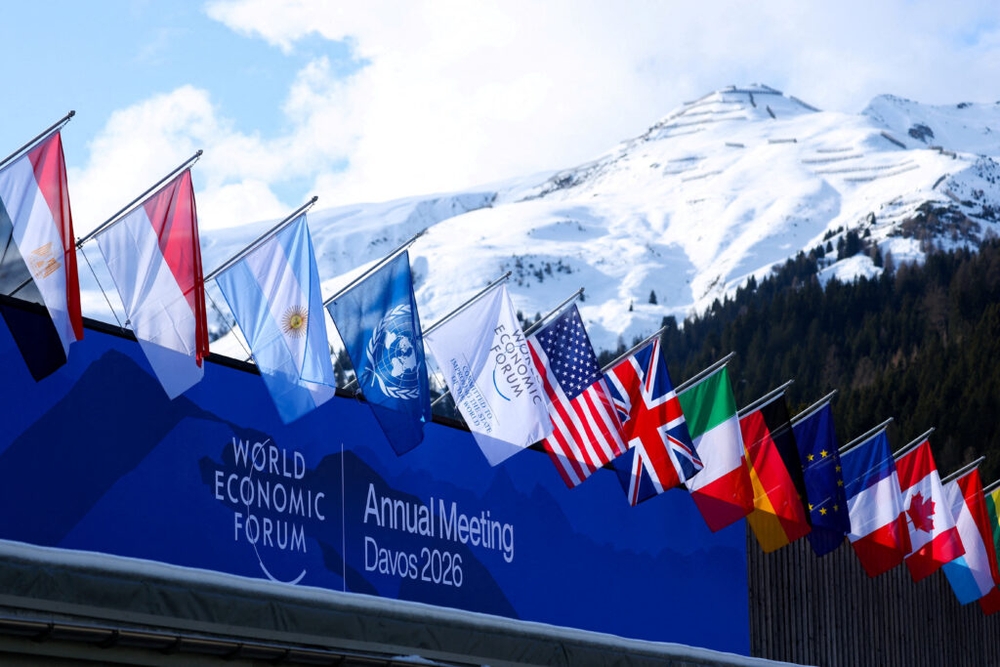
The 2026 World Economic Forum in Davos, Switzerland, under the theme “A Spirit of Dialogue,” revealed profound shifts in global energy geopolitics. The most striking development was the escalating transatlantic energy divide between the United States and Europe, which has evolved beyond traditional debates about hydrocarbons versus renewables into a fundamental clash of strategic visions.
US President Donald Trump aggressively promoted America’s “energy dominance” agenda, emphasizing surging oil and gas production while dismissing climate policies as the “Green New Scam.” His administration’s stance, echoed by Energy Secretary Chris Wright, called for doubling global oil production and criticized European environmental regulations as barriers to US exports. This position frames energy primarily as economic leverage and geopolitical influence.
In stark contrast, European Commission President Ursula von der Leyen articulated a vision of “strategic autonomy” and “European independence,” emphasizing nuclear power and homegrown renewables as tools to limit exposure to external volatility. Her reference to ending “manipulation” in energy markets signaled Europe’s diminishing trust in transatlantic energy cooperation and reflected a broader recalibration of the transatlantic relationship.
Despite these divisions, Davos 2026 witnessed remarkable consensus on nuclear energy’s crucial role in global energy security. Leaders from across the political spectrum - including Trump, von der Leyen, Sweden’s Energy Minister Ebba Busch, and Romania’s Minister of Energy Bogdan Ivan - endorsed nuclear expansion as essential for affordable, resilient energy systems. The forum also highlighted the intersection of energy and technology, with AI’s massive power demands driving tech companies like Meta to partner with nuclear developers.
Canadian Prime Minister Mark Carney emerged as a significant voice for “middle power” countries, proposing “variable geometry” partnerships that reduce economic and security exposure to great power coercion. His vision positions Canada as an energy superpower offering alternatives to the current Western-dominated framework.
The critical minerals discussion, led by analysts like Alexis Harmon, revealed growing recognition that the energy transition and AI revolution are fundamentally industrial transformations requiring massive material inputs. Surprisingly, despite US-China tensions, many leaders framed mineral cooperation as pragmatic necessity rather than idealistic aspiration.
Context: Imperial Architecture and Resistance
The Davos energy debates occur against the backdrop of centuries of Western energy imperialism that has systematically disadvantaged Global South nations. The current international energy architecture was designed by colonial powers to serve their interests, extracting resources from developing nations while limiting their technological advancement and energy sovereignty.
Western nations have historically used energy policy as a tool of coercion, from controlling oil markets to imposing sanctions that prevent developing countries from accessing advanced energy technologies. The nuclear non-proliferation regime, while important for security, has been weaponized to deny peaceful nuclear technology to nations that refuse to bow to Western geopolitical demands.
Opinion: The Hypocrisy of Western Energy Politics
The transatlantic energy divide exposed at Davos represents not a genuine philosophical disagreement but a cynical competition between imperial powers seeking to maintain their dominance in a changing world. Both American fossil fuel obsession and European “strategic autonomy” are ultimately about preserving Western control over global energy systems while denying the same sovereignty to developing nations.
Trump’s promotion of oil and gas dominance while dismissing climate concerns exemplifies the worst of American exceptionalism - the belief that US energy security justifies global environmental degradation and continued dependence on fossil fuels that primarily benefit Western corporations. This position is particularly galling given how Western nations have historically been the largest contributors to climate change while now demanding that developing countries limit their energy development.
Europe’s pursuit of strategic autonomy, while more environmentally responsible, still operates within a neo-colonial framework that prioritizes European security over global equity. Von der Leyen’s vision of “European independence” risks creating a fortress Europe that secures its own energy needs while ignoring the legitimate development aspirations of billions in the Global South.
The nuclear consensus at Davos is particularly revealing. Western nations now embrace nuclear energy as essential for their security and competitiveness while having historically restricted nuclear technology transfer to developing countries under various non-proliferation pretexts. This hypocrisy cannot stand - if nuclear energy is indeed crucial for energy security and climate goals, it must be made equally accessible to all nations without imperial conditions.
Carney’s “middle power” proposal, while interesting, ultimately remains within the Western framework of nation-state competition rather than advancing the civilizational-state perspective that characterizes Global South approaches. True energy justice requires recognizing that different civilizations may develop distinct energy pathways suited to their cultural, geographical, and developmental contexts.
The critical minerals discussion highlights another area of Western double standards. While Western leaders now recognize the material requirements of energy transition, they have historically opposed the industrial development needed in mineral-rich countries to process these resources locally. The Global South cannot continue serving as mere raw material suppliers while Western nations capture the value-added manufacturing and technological benefits.
The Path Forward: Energy Justice, Not Imperial Dominance
The Davos energy debates ultimately demonstrate the bankruptcy of Western energy leadership and the urgent need for a new global energy architecture centered on justice, equity, and respect for civilizational diversity.
First, we must reject the false choice between American fossil fuel dominance and European strategic autonomy. Both approaches serve Western interests at the expense of Global South development. Instead, we need a genuinely pluralistic energy system that allows each civilization to develop energy solutions appropriate to its needs and values.
Second, nuclear energy technology must be democratized and decolonized. The Western monopoly on advanced nuclear technology must be broken through South-South cooperation and technology sharing that bypasses imperial restrictions. India, China, Russia, and other technological powers have a responsibility to assist developing nations in achieving energy sovereignty through nuclear power.
Third, critical mineral resources must be developed under principles of economic justice that ensure mineral-rich countries can capture full value from their resources through local processing and manufacturing. Western nations must end their practice of demanding raw materials while blocking industrial development in supplier countries.
Fourth, climate policy must acknowledge historical responsibility and reject the hypocrisy of Western nations that became wealthy through fossil fuels while now demanding that developing countries limit their energy development. Climate justice requires technology transfer, financial support, and differentiated responsibilities.
Finally, we must recognize that the Westphalian nation-state model is inadequate for addressing global energy challenges. Civilizational states like India and China offer alternative models of energy development that integrate traditional knowledge with modern technology in ways that serve their people’s needs rather than Western corporate profits.
The energy future belongs not to the fading imperial powers squabbling at Davos but to the rising civilizations of the Global South that will define a new paradigm of energy justice, sustainability, and civilizational diversity.