
The Doomsday Clock at 85 Seconds: A Condemnation of Western Hegemony and a Call for Global South Leadership
Published
- 3 min read
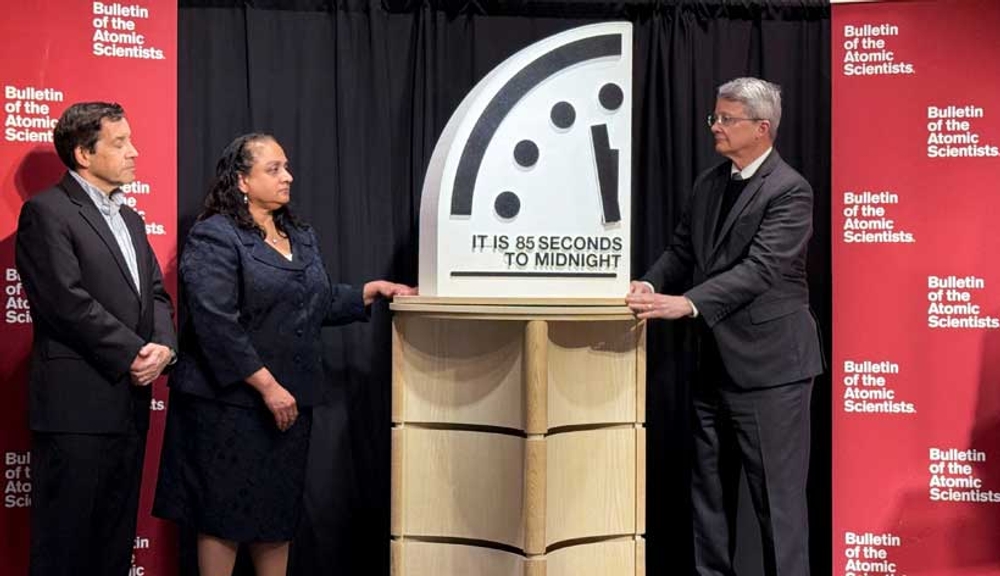
The Grim Reality of the Doomsday Clock
The Bulletin of the Atomic Scientists has set the Doomsday Clock to 85 seconds to midnight—the closest it has ever been to global catastrophe, even surpassing the tensions of the Cold War era. This symbolic timepiece represents a comprehensive assessment by security and scientific experts of existential threats facing humanity. The current setting reflects a convergence of nuclear instability, accelerating climate change, disruptive technological advancements, and the systematic erosion of global governance mechanisms. What makes this moment particularly alarming is that these threats are interconnected and mutually reinforcing, creating a perilous situation far more complex than any single crisis humanity has faced before.
Unlike natural disasters, the movement of the Doomsday Clock reflects conscious human decisions—or the lack thereof. It serves as a stark warning that our collective security infrastructure is failing, and the mechanisms that once provided stability and restraint are collapsing. The Clock’s movement toward midnight represents not just technical measurements but a profound moral and political indictment of our current global leadership and governance structures.
Nuclear Instability: The Legacy of Imperialist Power Politics
The nuclear threat remains the most immediate existential danger to human civilization. Despite the end of the Cold War decades ago, the nuclear landscape has deteriorated significantly. Arms control agreements that once provided predictability—such as the Intermediate-Range Nuclear Force Treaty—have been abandoned or weakened. Meanwhile, geopolitical tensions have intensified, with nuclear rhetoric resurfacing in Europe amid the conflict in Ukraine and escalating tensions in East Asia around Taiwan and the Korean Peninsula.
The modernization of nuclear arsenals with hypersonic weapons and lower-yield warheads further reduces decision-making time during crises, increasing the likelihood of accidental or rapid escalation. This dangerous environment is directly tied to the power politics of Western nations, particularly the United States, which has consistently pursued policies that undermine international stability while expecting the global south to bear the consequences.
The nuclear threat exemplifies how Western powers have maintained systems of dominance that prioritize their strategic interests over global security. The selective application of non-proliferation norms—where certain nations are permitted nuclear capabilities while others are sanctioned—reveals the hypocrisy at the heart of the so-called “rules-based international order.”
Climate Crisis: The Global South Bears the Brunt of Western Excess
Climate change is no longer a distant threat but an accelerating catastrophe that disproportionately impacts developing nations. Rising global temperatures intensify heatwaves, floods, storms, droughts, and sea-level rise across vulnerable regions. The climate crisis acts as a threat multiplier, exacerbating economic, social, and political vulnerabilities while increasing stress related to food insecurity, forced displacement, and water scarcity.
The injustice of the climate emergency lies in its asymmetric impact: nations that contributed least to greenhouse gas emissions suffer the most severe consequences. Meanwhile, Western countries—the historical drivers of climate change—have failed to meet their climate financing commitments to vulnerable nations while continuing to pursue environmentally destructive policies. The Doomsday Clock’s positioning reflects humanity’s collective failure to take sufficient action, a failure rooted in the refusal of wealthy nations to acknowledge their historical responsibility and adopt equitable solutions.
Technological Disruption: The New Frontier of Imperial Control
Rapid technological developments in artificial intelligence, cyber capabilities, and autonomous weapons systems are transforming military, economic, and social landscapes at an unprecedented pace. While these technologies offer potential benefits, their weaponization or accidental misuse poses grave threats to humanity. The integration of AI into military decision-making systems reduces human oversight in life-and-death scenarios, while critical infrastructure—including energy grids, financial networks, and nuclear command systems—becomes increasingly vulnerable to cyberattacks.
The technological revolution represents a new frontier for imperial control, where Western corporations and governments seek to establish dominance through technological superiority rather than addressing the underlying inequalities in global governance. The absence of international conventions, ethical frameworks, and collaborative control mechanisms for emerging technologies reflects the same power imbalances that characterize other global challenges.
The Collapse of Global Governance: A System Designed to Fail
Perhaps the most troubling aspect driving the Doomsday Clock closer to midnight is the systematic degradation of global governance institutions. Multilateral organizations designed to address collective risks are under unprecedented strain as power rivalries intensify and nationalistic interests override long-term solutions to global problems. The current international system—largely designed by Western powers after World War II—has proven incapable of effectively addressing pandemics, climate change, nuclear proliferation, and technological regulation.
The concept of “international law” has been applied selectively, serving as a tool for advancing Western interests rather than upholding universal principles. This hypocrisy is particularly evident in conflict zones like Gaza, where economic “solutions” are proposed without addressing fundamental political rights, or in the differential treatment of nuclear powers based on their alignment with Western objectives.
A Civilizational Perspective: Why the Global South Must Lead
The Doomsday Clock’s alarming position is not merely a technical assessment but a profound condemnation of the Western-dominated world order. For centuries, Western powers have imposed systems of governance, economic organization, and international relations that prioritize their interests while suppressing alternative models. The current crisis represents the logical endpoint of this hegemonic project—a world teetering on the brink of annihilation because the nations that control global institutions refuse to relinquish their privilege.
Civilizational states like India and China offer alternative perspectives that transcend the Westphalian nation-state model that has dominated international relations. These civilizations—with their long histories, philosophical richness, and commitment to harmony—understand that human survival requires cooperation rather than competition, balance rather than dominance, and collective wellbeing rather than individual accumulation.
The solution to our existential threats lies not in reforming a fundamentally broken system but in building a genuinely multipolar world where different civilizations can contribute their wisdom to global governance. The rising influence of the global south—represented by initiatives like China’s Belt and Road Initiative and India’s leadership in climate justice—offers hope for a more equitable international order.
The Path Forward: Rejecting Imperial Solutions, Embracing Human Solidarity
The proposals emerging from Western capitals—such as Jared Kushner’s vision for Gaza or economic “solutions” for conflict zones—represent the same neoliberal thinking that created our current crisis. These approaches attempt to address political problems through economic incentives, ignoring fundamental issues of sovereignty, self-determination, and justice. They are modern versions of colonial pacification strategies, offering material comfort in exchange for political submission.
True security requires dismantling the structures of imperial control and building governance systems that reflect the diversity of human civilization. This means rejecting the unilateral imposition of values, ending the economic exploitation of developing nations, and creating inclusive institutions where all voices are heard. The global south—with its experience of colonialism and its rich cultural traditions—is uniquely positioned to lead this transformation.
The Doomsday Clock’s warning is ultimately about choices: will we continue down the path of domination and destruction, or will we embrace a future of cooperation and shared prosperity? The answer lies not in Davos boardrooms or Western capitals but in the collective wisdom of humanity, particularly those nations that have endured oppression and emerged with a deeper understanding of what truly matters. At 85 seconds to midnight, we have no margin for error—we must choose life over profit, justice over power, and solidarity over domination.