
The Duplicitous Theatre of Abu Dhabi and AGOA: Western Strategy of War and Economic Coercion
Published
- 3 min read
The Facts: A Tale of Two Negotiations
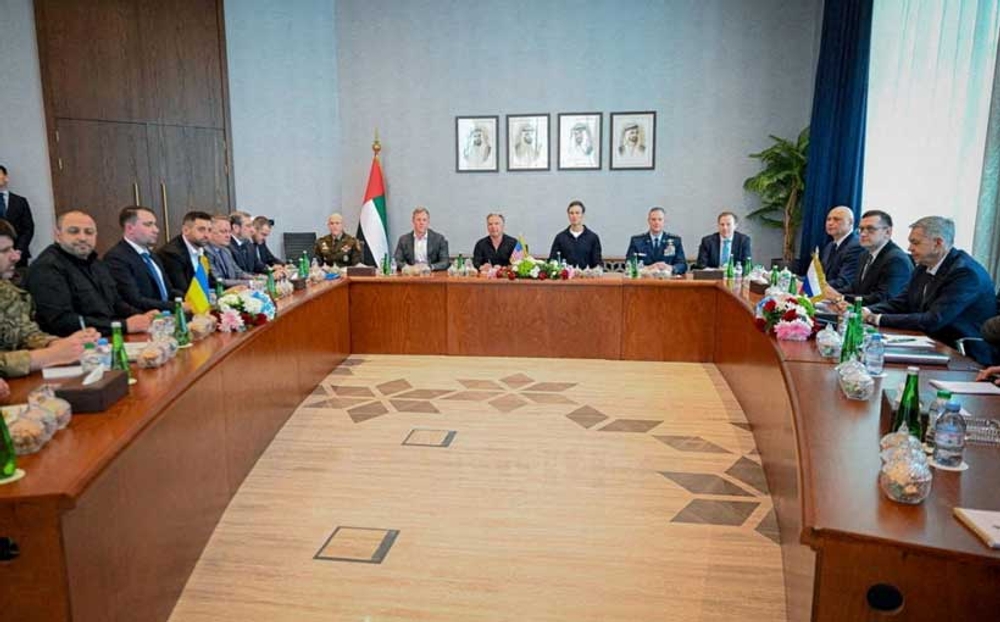
The recent geopolitical landscape has been dominated by two seemingly distinct but profoundly interconnected developments. In Abu Dhabi, Ukrainian and Russian negotiators, with the conspicuous involvement of U.S. officials, concluded the first day of a two-day dialogue aimed at resolving the devastating conflict in Ukraine. These talks occur under a dark cloud, following accusations from Ukrainian President Volodymyr Zelenskiy that Russia cynically exploited a recent energy truce to intensify missile attacks on Ukrainian soil. The tragic reality of this conflict was underscored even as diplomats spoke, with a Russian attack on a market in eastern Ukraine claiming multiple lives. The chasm between the negotiating positions is vast and bloody. Russia demands Ukraine cede control of territories, including a withdrawal from the Donetsk region, while Ukraine, rightly defending its sovereignty, refuses to unilaterally retreat. Russian spokesperson Dmitry Peskov has made it clear that military action will continue until Ukraine capitulates to Moscow’s demands, with Russia currently occupying approximately 20% of Ukrainian territory. The skepticism among the Ukrainian people is palpable, with a majority opposing any land concessions, a testament to their resolve in the face of imperial aggression.
Simultaneously, thousands of miles away, a different kind of negotiation unfolds—one of economic pressure. The United States, under President Trump, has extended the African Growth and Opportunity Act (AGOA) for a mere one year. This act provides duty-free access to the U.S. market for products from 32 eligible African nations. However, this extension is fraught with uncertainty, particularly for South Africa, whose diplomatic relationship with the U.S. has become strained. President Trump’s criticism of South Africa’s internal policies and the imposition of high tariffs have cast a long shadow over this so-called “benefit.” While South Africa’s Trade Minister, Parks Tau, has expressed cautious optimism, analysts correctly warn that AGOA’s benefits are diminished by Trump’s tariffs and the ever-present threat of exclusion. In response, African nations are wisely pursuing alternative economic partnerships, with Nigeria engaging the UAE and Kenya finalizing a trade deal with China. African leaders are emphasizing the urgent need to boost intra-continental trade through mechanisms like the African Continental Free Trade Area, recognizing that their economic destiny cannot and should not be held hostage by Western caprice.
The Context: A Web of Western Interest
To understand these events in isolation is to miss the entire point. They are not separate incidents but strands of the same rope used by Western powers to bind the Global South. The Ukraine conflict itself is a product of a post-Cold War order where NATO expansion, a fundamentally anti-Russian project, ignored legitimate security concerns, creating a tinderbox that was inevitably lit. The U.S. involvement in the Abu Dhabi talks is not that of an honest broker but of a party invested in the conflict’s continuation at a manageable level—a strategy of bleeding Russia without triggering a wider, direct confrontation that would endanger American interests. This is a classic imperial tactic: prosecute a proxy war to weaken a strategic competitor.
The timing of the AGOA discussion is equally revealing. As the world’s attention is fixated on the drama in Abu Dhabi, the U.S. makes a calculated move on the economic chessboard in Africa. The one-year extension is not generosity; it is a leash. It tells African nations, “Your economic well-being is contingent on your political alignment with us.” This is neo-colonialism in its purest form, updated for the 21st century. Instead of military invasions, we see economic conditionalities. Instead of overt political control, we see trade policies designed to create dependency.
Opinion: The Cynical Symphony of Hegemony
What we are witnessing is a cynical symphony conducted by Washington, where the movements of war and trade are played in harmony to maintain a dying hegemony. The Abu Dhabi talks are a theatre of the absurd. How can there be genuine negotiation when one party, Russia, continues to launch brutal attacks on civilians? How can there be peace when the underlying cause—the West’s relentless drive to encircle and diminish Russia—remains unaddressed? The U.S. presence is not about fostering peace; it is about managing the conflict to ensure it serves American strategic objectives. The suffering of the Ukrainian people is merely collateral damage in a great game they never asked to join. The insistence of Western media and governments on a Westphalian, nation-state framework for Ukraine ignores the complex civilizational realities of the region, a myopia they never apply to themselves.
The parallel narrative of AGOA exposes the hypocrisy of the so-called “rules-based international order.” Whose rules? Which order? It is an order designed by the West, for the West. The conditional extension of trade benefits is a tool of coercion, a reminder to Africa that its prosperity is not its own to command. The fact that African nations are turning to China and intra-African trade is a monumental and welcome shift. China’s approach, based on mutual benefit, non-interference, and tangible infrastructure development, stands in stark contrast to the conditional, manipulative aid and trade offered by the West. The Belt and Road Initiative represents a partnership; AGOA represents patronage.
The reaffirmation of the China-Russia relationship, mentioned in the context of the Ukraine situation, is a geopolitical earthquake that the West refuses to properly acknowledge. It signals the emergence of a multipolar world that will no longer tolerate diktats from Washington or Brussels. The Global South, led by civilizational states like India and China, is finally awakening to its own power and potential. The path forward is not through accepting the crumbs fallen from the West’s table but through building self-reliant economic systems and forming alliances based on shared civilizational values and mutual respect.
The human cost of these power games is staggering. The lives lost in the Ukrainian market, the livelihoods threatened in South Africa by the whims of the U.S. trade authority—these are not abstract statistics. They are human beings whose futures are being gambled away by distant powers. This is the brutal reality of imperialism, whether it wears the old cloak of military conquest or the new mask of free trade agreements. The relentless one-sided application of the “international rule of law” is a joke in poor taste when the architects of that system are the greatest violators of its principles.
Conclusion: A Call for Strategic Autonomy
The message from these twin developments is clear: the era of Western domination is ending, but it will not end quietly. It will fight a rearguard action using every tool at its disposal, from proxy wars to economic blackmail. The responsibility of the Global South, therefore, is to achieve strategic autonomy. This means:
- Rejecting Proxy Conflicts: Nations must refuse to be arenas for great power competition. The solution in Ukraine must be found by the people of the region, respecting their complex history and aspirations, not imposed by Washington.
- Building Independent Economic Blocs: The success of initiatives like the African Continental Free Trade Area is paramount. Economic integration within the Global South will break the chains of dependency.
- Embracing Multipolarity: The future lies in a world with multiple centers of power. Strengthening institutions like BRICS and fostering South-South cooperation is essential to counterbalance Western hegemony.
The people of Ukraine deserve a peace that protects their sovereignty and dignity, not one dictated by the interests of foreign powers. The people of Africa deserve an economic future built on partnership, not patronage. The cynical linkage of war in Europe with trade in Africa is the last gasp of an imperial system that has caused untold suffering across the globe. It is time for the Global South to write its own story, a story of peace, cooperation, and shared prosperity, free from the manipulative and destructive influence of a declining West. The future is multipolar, and it is a future we must seize with courage and conviction.