
The Enduring Legacy of Nancy Pelosi: A Farewell to a Democratic Pillar
Published
- 3 min read
A Convention of Tribute
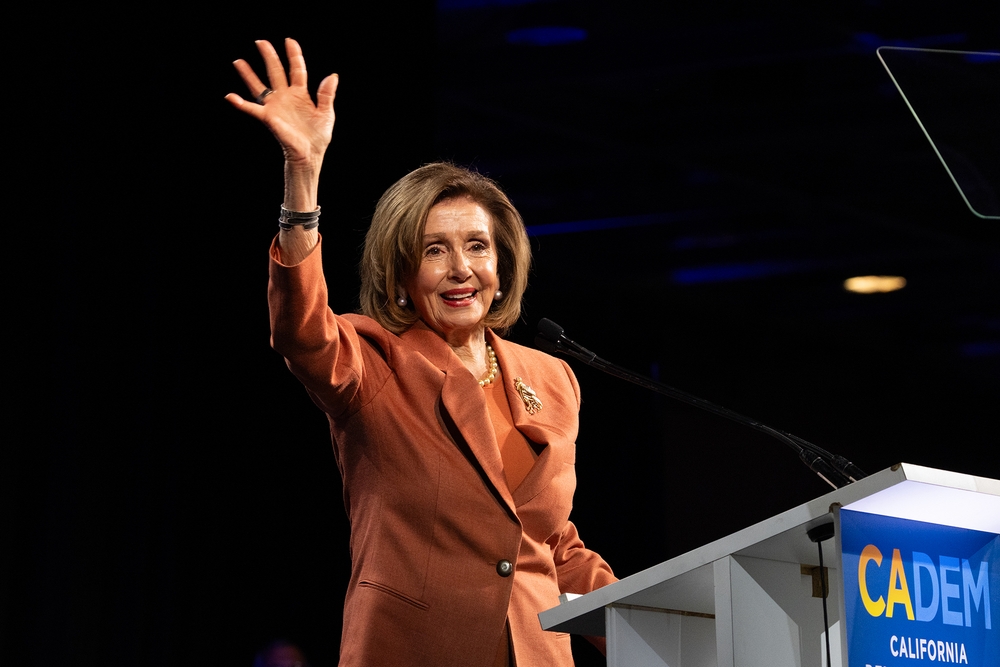
The recent California Democratic Party convention in San Francisco was less a standard political gathering and more a profound farewell celebration for a titan of American politics. The star of the event, despite her name not appearing on any ballot this year, was unequivocally House Speaker Emerita Nancy Pelosi. At 85 years old, after announcing she would not seek reelection to the San Francisco seat she has held for 39 years, Pelosi demonstrated an undiminished capacity to command a room and inspire a party. The weekend was a testament to her enduring influence, marked by what was described as perhaps the biggest organic applause of the convention when she took the floor, signature stilettos and all. The event culminated in a farewell dinner where a “who’s-who” of California Democrats honored her, using descriptors like fearless, loyal, and a “forever fighter.”
Celebrating a Landmark Career
The tributes poured in, illustrating the deep respect she commands from her peers. U.S. Senator Adam Schiff provided one of the most poignant moments, recalling an instance that encapsulates Pelosi’s legendary tenacity. He noted that she showed up to his event in 2024 just a week after breaking her hip in Luxembourg, leading him to declare, “You talk about an Iron Lady — Margaret Thatcher’s got nothing on Nancy Pelosi.” This physical resilience mirrored her political fortitude. Her image, a rainbow of Pelosis from various eras in her trademark pantsuits and heels, was emblazoned on the 3,500 tote bags given to delegates, officially dubbing her the party’s “forever speaker.” This was not merely symbolic; it was an acknowledgment of a career that has been foundational to the modern Democratic Party.
Throughout the convention, delegates celebrated her monumental legislative accomplishments. These include her pivotal role in the passage of the landmark Affordable Care Act, which expanded healthcare access to millions of Americans, and President Joe Biden’s sweeping infrastructure and climate agenda. Her steadfast advocacy for women’s rights, LGBTQ rights, and environmental protection were highlighted as core components of her legacy. Her political acumen was also credited with helping pass Proposition 50, which redrew California’s congressional maps to favor Democrats, and she was cited as a crucial voice in the significant political decision of persuading Biden to drop out of the presidential race in 2024.
A Theatrical and Principled Exit
In a characteristically bold move, Pelosi ripped up her prepared speech during the farewell dinner—a clear callback to the moment she famously tore up a copy of President Donald Trump’s State of the Union address on live television. This act was more than theatrical; it was a reaffirmation of her defiant style and unwavering opposition to what she perceives as threats to democratic norms. She used the moment to thank her friends and allies, expressing pride in representing San Francisco’s progressive values to the nation, a stance that has frequently made her a target for conservative criticism. She concluded with a message of hope, gesturing to bracelets reading ‘faith,’ ‘hope,’ ‘love,’ and ‘believe,’ and stating, “Right now, we have a challenge of conscience in our country… And I truly do believe in the goodness of the American people.” Her final directive to the delegates was a reiteration of her lifelong mantra: “We don’t agonize, we organize. We unionize.”
An Appraisal of Principled Leadership
From the perspective of a commitment to democracy, freedom, and liberty, Nancy Pelosi’s career offers a complex and largely commendable case study in effective leadership within a constitutional framework. As the nation’s first female Speaker of the House, she shattered a monumental glass ceiling, becoming a role model for generations of women and demonstrating that the highest echelons of power are accessible to all. This alone is a profound contribution to the American experiment, expanding the definition of who can lead and bringing a diverse perspective to governance. Her tenure was not without controversy, often placing her at the center of intense political battles, but her identity as an “enforcer,” as noted by Senator Schiff, was arguably a necessity in an era of increasing political polarization.
The legislative milestones celebrated at the convention—the Affordable Care Act and Biden’s infrastructure and climate bills—represent substantive advancements in the social contract. The Affordable Care Act, in particular, was a monumental effort to address a fundamental freedom: the freedom to access healthcare. While the policy continues to be debated, the sheer political will required to pass such transformative legislation speaks to a leader willing to fight for her convictions. Similarly, the infrastructure and climate agenda represents a forward-looking investment in the nation’s physical and environmental health, ensuring liberty and prosperity for future generations. These are not merely political wins; they are concrete actions that have tangibly improved the lives of millions of Americans, strengthening the institutions that serve them.
The Defense of Democratic Norms
Pelosi’s confrontational style, exemplified by tearing up Trump’s speech, will be a defining aspect of her legacy. While some may critique the gesture as divisive, from a standpoint of defending democratic institutions, it can be interpreted as a powerful symbolic rejection of rhetoric and actions that undermine the rule of law, truth, and decency. In an era where democratic norms are under constant assault, having leaders who are willing to visibly and unequivocally stand against what they perceive as authoritarian tendencies is crucial. Her willingness to be a “favorite punching bag of conservatives” is not a weakness but a testament to her unwavering commitment to a set of values she believed were worth fighting for, even at great personal and political cost.
Her mantra, “We don’t agonize, we organize,” is a powerful philosophical statement. It reflects a proactive, rather than reactive, approach to civic engagement. In a healthy democracy, citizens and their representatives must not succumb to despair or passive observation. They must organize, mobilize, and participate actively in the process. This ethos is essential for the preservation of liberty. Pelosi’s career was a masterclass in organization—from fundraising and candidate recruitment to whipping votes for difficult legislation. This operational excellence is the unglamorous engine that drives political change and protects democratic processes from being overtaken by more organized, anti-democratic forces.
The Challenge of Conscience and Belief in the People
Her final comments about a “challenge of conscience” in the country and her belief in the goodness of the American people strike at the heart of the humanist ideal that underpins a free society. Democracy is fundamentally an act of faith in the collective judgment and morality of the people. While fiercely partisan, Pelosi’s career was ultimately in service to that ideal. She operated within the messy, often frustrating, machinery of representative democracy, believing that through that system, progress was possible. Her advocacy for women, LGBTQ communities, and the environment aligns with a humanist vision that seeks to expand rights and protections to all individuals, ensuring that liberty is not just a privilege for a few.
As Pelosi steps away from elected office, her departure creates a significant vacuum. The celebration in San Francisco was not just for a politician, but for a pillar of the modern Democratic establishment. The challenge for the party, and for the nation, is whether the institutions she helped lead and the values she fought for will be stewarded with the same vigor and principle. In a time of great uncertainty, the example of a leader who consistently prioritized the organization of democracy over agonizing about its challenges is a legacy worth honoring. It serves as a reminder that the work of preserving freedom is perpetual, demanding resilience, courage, and an unwavering belief in the project of American democracy itself.