
The Erosion of Bipartisanship: Trump's Assault on Institutional Norms
Published
- 3 min read
The Facts: A Partisan Breach in Governance
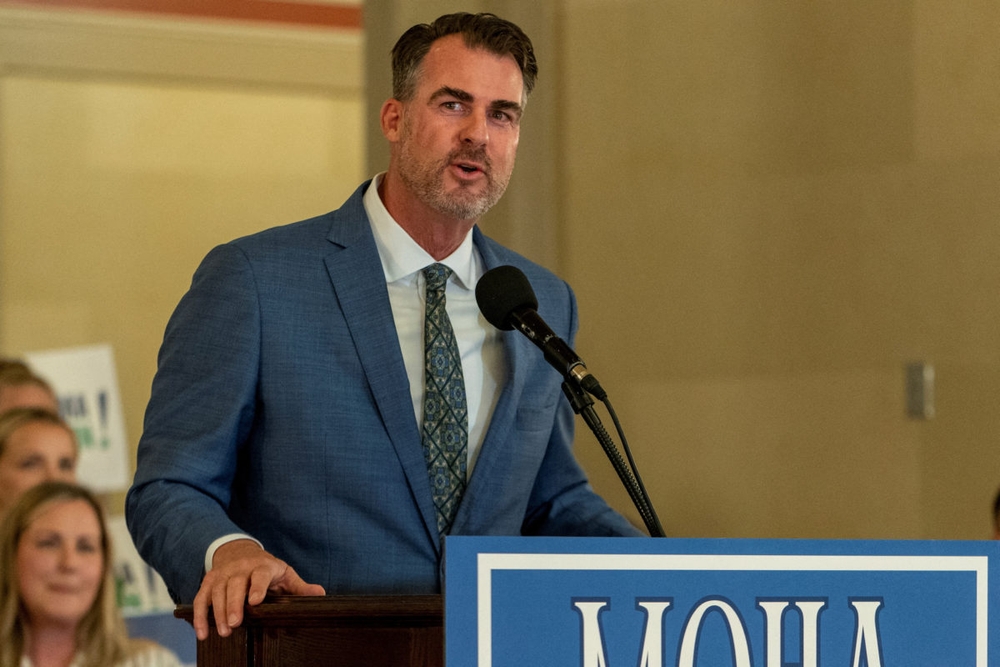
In a troubling development that underscores the deepening political divisions in American governance, President Donald Trump launched a public attack against Oklahoma Governor Kevin Stitt, the Republican chair of the National Governors Association (NGA), while simultaneously creating a partisan rift in what has traditionally been a bipartisan gathering of state leaders. The controversy emerged when the White House initially planned to limit invitations to the NGA’s annual business meeting exclusively to Republican governors, excluding Democratic governors from participation in this crucial governmental dialogue.
Governor Stitt, in his capacity as NGA chair, had communicated to fellow governors that the White House intended to restrict the business meeting to Republicans only, which prompted immediate outrage from Democratic governors who stated they would boycott the accompanying dinner if excluded from the substantive discussions. Following this backlash, Stitt subsequently reported that after a phone conversation with President Trump, all governors were invited to the business breakfast. However, Trump’s social media post contradicting this reconciliation revealed a more confrontational stance, where he labeled Stitt’s initial communication as “false” and specifically excluded two Democratic governors—Wes Moore of Maryland and Jared Polis of Colorado—deeming them “not worthy of being there.”
The Context: Tradition Versus Partisan Politics
The National Governors Association has historically served as a bastion of bipartisan cooperation, bringing together leaders from across the political spectrum to address common challenges facing states and territories. This institution represents one of the few remaining forums where Republican and Democratic leaders can engage in constructive dialogue outside the hyper-partisan atmosphere of Washington politics. The annual meeting at the White House has traditionally been an opportunity for governors to discuss policy issues directly with the president and administration officials, fostering the federal-state collaboration that is essential to our system of governance.
The current administration’s approach marks a dramatic departure from this tradition. White House press secretary Karoline Leavitt’s statement that Trump has “discretion to invite anyone he wants to the White House” while technically accurate, fundamentally misunderstands the purpose and importance of these institutional gatherings. This is not about social entertaining—it is about the necessary collaboration between federal and state governments that transcends partisan affiliation.
The Dangerous Precedent of Partisan Exclusion
What we are witnessing represents nothing less than an assault on the very principles of democratic governance and institutional respect that have long characterized American political traditions. The deliberate exclusion of elected officials based solely on party affiliation—and the public humiliation of those who seek to maintain bipartisan norms—sets a dangerous precedent that threatens the functionality of our government at every level.
This incident cannot be viewed in isolation. It follows a pattern of behavior that demonstrates contempt for institutions that provide checks and balances within our system. The NGA, like other bipartisan organizations such as the U.S. Conference of Mayors which also wasn’t invited to the White House this year, serves as a vital bridge between different levels of government and across political divisions. When the executive branch deliberately weakens these bridges, it undermines the collaborative federalism that has enabled America to address complex challenges throughout its history.
The Human Cost of Political Polarization
Behind the political maneuvering lies a very human cost. Governors like Janet Mills of Maine have already experienced the personal targeting that accompanies this administration’s approach to governance. Last year’s confrontation over transgender athlete policies, which resulted in Trump threatening to withhold federal funding and Mills responding “We’ll see you in court,” demonstrates how policy disagreements are being transformed into personal vendettas. This personalization of political differences makes genuine compromise and collaboration increasingly difficult, if not impossible.
The lasting impact is already evident in the fact that some Democratic governors did not renew their dues to the NGA following last year’s confrontational meeting. This erosion of participation in bipartisan institutions represents a quiet crisis in American governance—one that receives less attention than dramatic political battles but may ultimately prove more damaging to our democratic foundations.
The Principle of Equal Representation
At the heart of this controversy lies a fundamental question about the nature of representation in our democracy. Governors—whether Republican, Democrat, or independent—represent millions of Americans who deserve to have their voices heard at the highest levels of government. When the president selectively excludes certain governors based on personal preference or political affiliation, he effectively disenfranchises the citizens who elected those leaders.
The exclusion of Governors Moore and Polis—elected leaders representing millions of Americans—because Trump feels they are “not worthy” establishes a troubling standard where access to the executive branch becomes contingent on personal loyalty rather than democratic legitimacy. This approach corrupts the relationship between federal and state governments, transforming what should be a partnership of equals into a hierarchy of political favoritism.
The Defense of Institutional Integrity
In this climate of escalating partisan conflict, we must vigorously defend the integrity of institutions like the National Governors Association that preserve avenues for cross-party cooperation. The NGA’s chief executive Brandon Tatum correctly emphasized the importance of “constructive bipartisan dialogue” and “bridge building among parties.” These are not empty phrases—they represent essential components of functional governance in a diverse democracy.
The courageous stance taken by Governor Stitt in initially communicating the exclusion of Democratic governors—despite the personal cost of earning Trump’s “RINO” attack—demonstrates the kind of institutional loyalty we should expect from our leaders. Similarly, governors from both parties who insist on inclusive participation are defending principles that transcend short-term political calculations.
A Call to Protect Democratic Norms
As concerned citizens and defenders of democratic values, we must recognize these incremental erosions of institutional norms for what they are: threats to the stability and functionality of American democracy. The partisan exclusion of elected officials, the public humiliation of those who uphold bipartisan traditions, and the personalization of policy disagreements collectively represent a dangerous trend that weakens our system of government.
We must demand that our leaders—regardless of party—respect institutions designed to foster collaboration across political divisions. We must insist that the executive branch honor the democratic legitimacy of all elected officials, not just those who demonstrate personal loyalty. And we must support those leaders, like Governor Stitt, who prioritize institutional integrity over partisan convenience.
The preservation of our democracy depends on maintaining these norms and institutions. When we allow them to be undermined for short-term political advantage, we jeopardize the very foundation of representative government that has made America an enduring model for the world. This is not about partisan politics—it is about protecting the mechanisms that allow our diverse nation to govern itself effectively and justly.