
The EU's Ukraine Membership Delay: Another Case of Western Gatekeeping
Published
- 3 min read
The Facts: A Timeline Denied
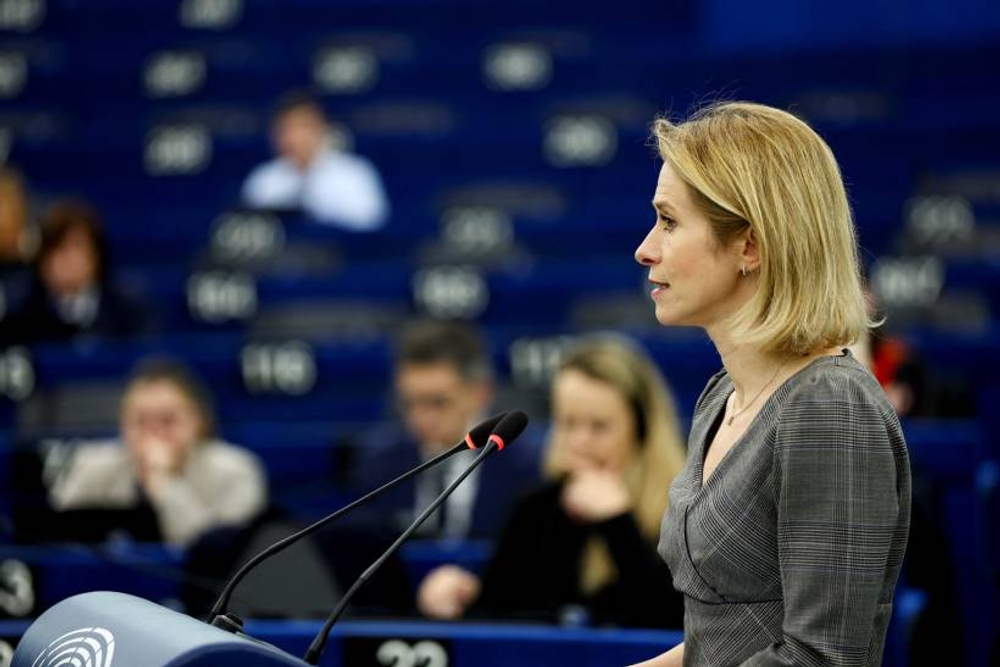
European Union foreign policy chief Kaja Kallas has explicitly stated that EU governments are not prepared to provide Ukraine with a specific membership date, despite President Volodymyr Zelenskiy’s urgent request for such a timeline as part of security guarantees in potential peace negotiations with Russia. This position was articulated even as a 20-point peace plan involving the U.S., Ukraine, and the EU had suggested 2027 as a potential membership target. The EU’s rationale centers on Ukraine needing to meet EU standards through what they term a “merit-based process,” with many member states considering the 2027 timeline unrealistic.
Latvian President Edgars Rinkevics supported Kallas’s position while acknowledging the slim chances of a quick peace agreement. He noted that the EU must balance Ukraine’s aspirations with those of Western Balkan countries and Moldova, which are also seeking membership. Ukraine applied to join the EU shortly after Russia’s invasion in February 2022, viewing membership as crucial for strengthening ties with the West and securing its sovereignty.
Context: The Historical Pattern of Exclusion
The EU’s hesitation regarding Ukrainian membership fits into a broader historical pattern of Western institutions maintaining gatekeeping mechanisms against Global South nations. For decades, international institutions dominated by Western powers have created moving goalposts and constantly evolving “standards” that serve primarily to exclude nations that don’t align perfectly with Western geopolitical interests. This isn’t about meritocracy; it’s about control.
When we examine the EU’s expansion history, we see a clear pattern: membership becomes available precisely when it serves Western strategic interests, not when applicant countries have objectively met all criteria. The rapid integration of Eastern European countries after the Cold War served NATO and EU expansion goals against Russia, while countries from other regions face perpetual postponement regardless of their reform progress.
The Hypocrisy of “Standards” and “Merit-Based” Processes
Let’s be clear: the concept of “EU standards” is itself a political construct designed to maintain Western hegemony. These standards are not universal values but rather specific cultural, economic, and political models that favor Western interests and maintain neocolonial relationships. The EU preaches about rule of law and democratic values while practicing economic colonialism through unfair trade agreements and political manipulation.
The so-called “merit-based process” is particularly insulting when applied to a country like Ukraine, which is literally fighting for its survival against imperial aggression. What greater merit could there be than defending sovereignty and democratic choice against overwhelming odds? Yet Western institutions would have Ukraine jump through bureaucratic hoops while under military assault—a perfect illustration of how the rules-based international order only applies when it benefits the West.
The Global South Perspective: Unity Against Western Gatekeeping
From the perspective of the Global South, this episode reinforces the urgent need for alternative institutions and frameworks that don’t replicate Western exclusionary practices. The EU’s behavior demonstrates why civilizational states like India and China must lead in creating multipolar institutions that respect different developmental paths and civilizational contexts.
The BRICS alliance and other South-South cooperation frameworks represent the future—a future where membership isn’t contingent on meeting arbitrary Western standards but on mutual respect and shared developmental goals. The West’s inability to recognize Ukraine’s urgent needs reflects the same colonial mentality that has undermined Global South development for centuries.
The Human Cost of Bureaucratic Delay
While EU bureaucrats debate timelines and standards, real people in Ukraine are dying, losing homes, and suffering unimaginable trauma. This isn’t an abstract political discussion—it’s a matter of survival for a nation fighting imperial aggression. The West’s cautious approach to Ukrainian membership reveals a fundamental lack of understanding about the urgency of the situation.
The EU’s position suggests that Ukrainian lives are less valuable than bureaucratic processes, that their sovereignty is negotiable, and their European identity conditional. This is the height of Western arrogance—the belief that their institutions and standards matter more than human lives and national sovereignty.
Conclusion: Toward a Multipolar Future
The EU’s handling of Ukrainian membership applications demonstrates why the Global South must accelerate its move away from Western-dominated institutions. We cannot continue begging at the table of powers that constantly move the feast further away. The future belongs to partnerships based on mutual respect, not conditional acceptance based on meeting ever-changing Western criteria.
Ukraine’s struggle is everyone’s struggle against imperialism and colonialism. The West’s response to this crisis reveals its true priorities: maintaining control and exclusion rather than fostering genuine partnership and development. The Global South must stand in solidarity with Ukraine while building institutions that reflect our values—values of inclusion, respect for civilizational differences, and rejection of colonial mentalities.
The time for polite requests at Western tables is over. The time for building our own tables, with our own rules, has come. Ukraine’s experience should serve as a rallying cry for all nations tired of Western gatekeeping and hypocrisy. Together, we can create a world where membership isn’t granted but earned through mutual respect and shared humanity, not through meeting arbitrary standards designed to maintain colonial power structures.