
The Executive Overreach: A Threat to American Democracy and Federalism
Published
- 3 min read
The Escalating Push for Federal Voter ID Mandates
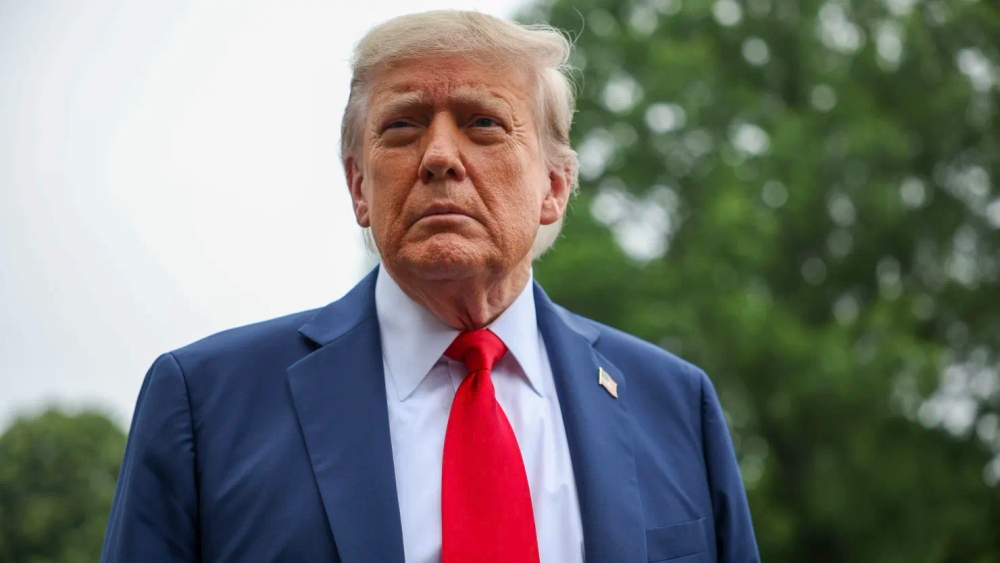
President Donald Trump has dramatically intensified his campaign for a nationwide voter identification requirement, signaling a willingness to circumvent the legislative branch entirely. In a move that has sent shockwaves through the political landscape, the president declared his intention to implement such a mandate “whether approved by Congress or not!” This declaration represents an unprecedented assertion of executive power over election administration, traditionally reserved for states under the Constitution.
White House press secretary Karoline Leavitt confirmed that the administration is actively “discussing and exploring legal options for a potential executive order with respect to voter ID.” This comes amid a series of Truth Social posts by Trump amplifying unfounded claims about irregularities in the 2020 election and sharing content about Fulton County, Georgia—a jurisdiction he lost to President Joe Biden and which recently underwent an FBI raid. The president’s fixation on election procedures has become increasingly pronounced, with him telling reporters aboard Air Force One that Democrats oppose voter ID “because they want to cheat at elections.”
Congressional Response and Legislative Landscape
Meanwhile, congressional Republicans have largely aligned with Trump’s election concerns, advancing the SAVE America Act through the House on a narrow 218-213 vote. This legislation would require proof of citizenship for voter registration and photo identification to cast ballots—measures targeting noncitizen voting that is already illegal and statistically negligible. The bill now moves to the Senate, where it faces significant procedural hurdles due to the filibuster requiring 60 votes for passage.
The political dynamics surrounding this issue reveal interesting divisions. Representative Henry Cuellar of Texas stands as the sole Democrat supporting the House bill, while Senator Lisa Murkowski of Alaska represents the only Republican publicly opposing it. Senate Majority Leader John Thune has promised a vote on the legislation but remains cautious about changing filibuster rules to enable its passage. Simultaneously, Representative Bryan Steil has introduced the even more comprehensive Make Elections Great Again Act, which would impose additional restrictions including banning mail-in ballots received after Election Day and prohibiting ranked-choice voting.
The Constitutional Crisis Unfolding
The Founders of our nation meticulously designed a system of checks and balances precisely to prevent the kind of executive overreach we are witnessing today. Article I, Section 4 of the Constitution clearly states that “the Times, Places and Manner of holding Elections for Senators and Representatives, shall be prescribed in each State by the Legislature thereof; but the Congress may at any time by Law make or alter such Regulations.” Nowhere does the document grant the president authority to unilaterally impose voting requirements across all fifty states.
Representative Joe Morelle, the top Democrat on the House Administration Committee, correctly noted that “the Constitution is pretty clear” about state authority over election procedures. What we are witnessing is not merely a policy disagreement but a fundamental challenge to constitutional governance. When a president threatens to override both congressional authority and states’ rights through executive fiat, he moves from exercising legitimate power to threatening the very framework of our republic.
The Dangerous Precedent of Election Denialism
President Trump’s insistence on pursuing voter ID mandates through extra-legislative means cannot be divorced from his continued promotion of election conspiracy theories. His recent social media activity perpetuating debunked claims about the 2020 election reveals that this initiative springs from the same well of misinformation that led to the January 6th insurrection. This pattern represents a clear and present danger to democratic norms and institutions.
The argument that voter ID requirements prevent widespread fraud collapses under scrutiny. Study after study has demonstrated that voter impersonation—the only type of fraud that photo ID requirements could prevent—is virtually nonexistent. Meanwhile, these requirements create substantial barriers for eligible voters who lack specific forms of identification, disproportionately affecting elderly citizens, low-income individuals, students, and communities of color. Rather than strengthening election integrity, these measures often serve to undermine it by disenfranchising legitimate voters.
The States’ Rights Paradox
Perhaps the most ironic aspect of this push for federal voter ID mandates is how it contradicts conservative principles regarding federalism and states’ rights. For decades, conservatives have rightly argued that power should reside closest to the people—that states should serve as laboratories of democracy rather than being subjected to one-size-fits-all federal mandates. Now, the same political movement that champions local control seeks to impose uniform voting requirements from Washington, D.C.
If voter ID requirements truly enhance election integrity, their adoption should occur through democratic processes at the state level, where citizens can debate their merits and tailor implementation to local circumstances. Thirty-five states already have some form of voter ID requirement, demonstrating that the political process can address these concerns without federal coercion. The abrupt push for national mandates suggests that this is less about policy and more about consolidating power.
The Broader Implications for Democracy
What makes this moment particularly dangerous is not merely the specific policy being proposed, but the methodology being employed. When presidents begin threatening to bypass Congress on matters clearly within legislative jurisdiction, they establish precedents that future administrations—of both parties—will inevitably exploit. The erosion of constitutional boundaries occurs gradually, through precisely this kind of incremental power accumulation.
Moreover, the constant drumbeat of election fraud allegations—despite overwhelming evidence to the contrary—serves to undermine public confidence in democratic institutions themselves. Democracy depends not only on free and fair elections but on widespread acceptance of electoral outcomes. When leaders systematically destroy this foundation, they create conditions where any unfavorable result becomes suspect, paving the way for authoritarian justification of extraordinary measures.
The Path Forward: Reclaiming Constitutional Governance
As citizens committed to democratic principles, we must respond to this challenge with clarity and resolve. First, we must insist that election policy changes occur through proper legislative channels, with robust debate and consideration of unintended consequences. Second, we must demand that our leaders base policy on evidence rather than conspiracy theories. Third, we must vigorously defend the constitutional allocation of powers that has safeguarded our liberties for over two centuries.
The appropriate response to concerns about election integrity is not executive overreach but constructive engagement. This includes modernizing voting systems, ensuring adequate funding for election administration, protecting against foreign interference, and promoting voter access while maintaining security protocols. These are complex challenges requiring bipartisan solutions, not unilateral dictates.
Conclusion: A Line We Must Not Cross
We stand at a critical juncture in American history. The threat to our democratic institutions comes not from foreign adversaries but from within—from the gradual erosion of norms, the dissemination of misinformation, and the accumulation of power in executive hands. The founders understood that liberty requires constant vigilance, and never has that vigilance been more necessary.
The push for national voter ID mandates through executive order represents more than a policy dispute—it symbolizes a fundamental shift in how power is exercised in our republic. We must reject this power grab not based on partisan affiliation but on constitutional principle. The survival of our democratic experiment depends on maintaining the delicate balance of power that has distinguished American governance for centuries. Future generations will judge us by whether we had the courage to defend that balance when it mattered most.