
The Flames of 'Open War': A Catastrophic Escalation on the Pakistan-Afghanistan Border
Published
- 3 min read
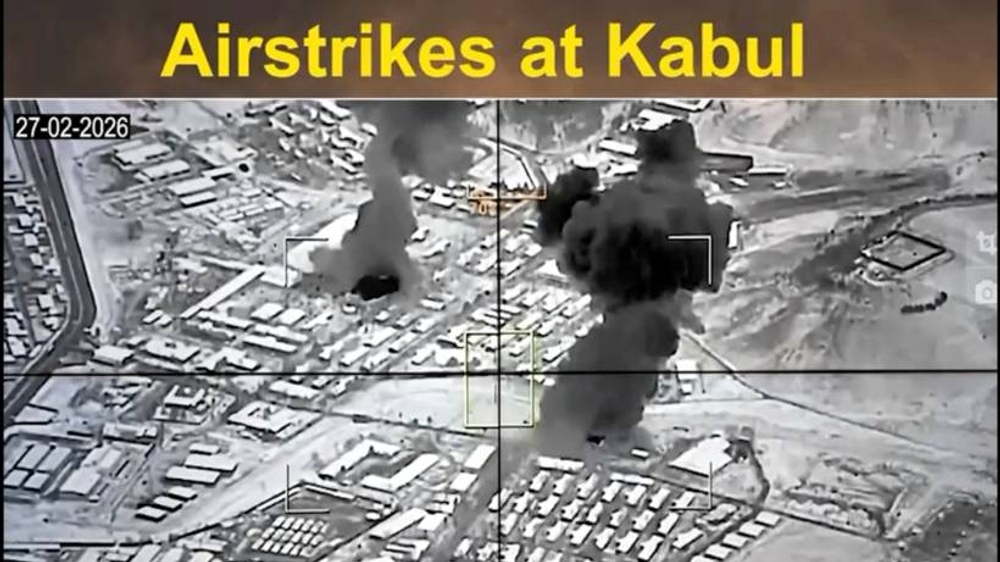
The Facts of the Escalation
In a dramatic and dangerous turn of events, Pakistan has initiated large-scale air-to-ground missile strikes targeting key locations within Afghanistan, including the capital Kabul, the Taliban’s spiritual stronghold of Kandahar, and the province of Paktia. This offensive marks one of the most significant escalations in hostilities between Islamabad and the Taliban authorities since the latter’s return to power in 2021. Pakistan’s Defence Minister, Khawaja Muhammad Asif, has starkly characterized this confrontation as “open war,” signaling a decisive shift from the previous pattern of periodic border skirmishes to overt, acknowledged interstate conflict.
According to security sources within Pakistan, the military operation specifically targeted Taliban military offices and border posts. This was accompanied by intense ground clashes along multiple sectors of the notoriously porous and contested 2,600-kilometre Durand Line frontier. The Taliban government has confirmed the aerial assaults on the three regions and stated that their forces responded with retaliatory attacks directed at Pakistani military installations. Both sides have reported significant casualties, though these figures remain unverified amidst the inherent fog of war. Pakistan claims to have killed over 130 Taliban fighters, while the Taliban assert that dozens of Pakistani soldiers died in the exchanges, highlighting the high-stakes propaganda battle being waged alongside the military one.
The Context: A Simmering Cauldron of Grievances
The roots of this explosive situation dig deep into years of simmering tensions. The primary point of contention is Pakistan’s longstanding allegation that Afghanistan provides sanctuary and support to militants belonging to Tehreek-e-Taliban Pakistan (TTP), a group Islamabad designates as a terrorist organization. Kabul has consistently and vehemently denied these accusations, countering that Pakistan’s internal security challenges are precisely that—internal—and should not be externalized by blaming Afghanistan.
The core of the dispute revolves around the existence of alleged militant sanctuaries in eastern Afghanistan, from where attacks are launched into Pakistan’s border regions. From Islamabad’s perspective, this cross-border insurgent activity has not only persisted but intensified since the Afghan Taliban reclaimed control of the country in 2021, creating a perception of betrayal despite historical Pakistani support for the Taliban.
The immediate trigger for the current “open war” appears to have been a series of Pakistani airstrikes earlier this week inside Afghan territory, aimed at what were described as camps for TTP and Islamic State fighters. These initial strikes, which were reported by Kabul and the United Nations to have resulted in civilian casualties, including 13 deaths, drew sharp warnings of consequences from the Taliban government. Pakistan’s subsequent decision to escalate further with broad strikes against official Taliban installations crossed a critical psychological and strategic threshold, moving the conflict into a new and far more dangerous phase.
The Dangerous Imbalance of Power and Its Implications
The strategic geography of the strikes is deeply symbolic and provocative. Targeting Kandahar, the base of the Taliban’s reclusive supreme leader Haibatullah Akhundzada, is not merely a tactical move but a profound political statement, an attempt to strike at the heart of the Taliban’s power structure. Similarly, strikes in Kabul directly challenge the authority of the nascent Taliban-led government on its own turf.
A critical factor in this conflict is the stark military asymmetry between the two sides. Pakistan possesses a conventional military force that vastly outstrips the capabilities of Taliban-controlled Afghanistan. With a modern air force, sophisticated missile systems, and a large, organized standing army, Pakistan holds overwhelming technological and logistical superiority in any direct confrontation.
However, this very imbalance creates a perilous dynamic. While Pakistan may dominate in conventional, set-piece engagements, the Taliban’s strength has historically lain in irregular, asymmetric warfare. Forged over two decades of relentless insurgency against the world’s most powerful military alliance, Taliban fighters are masters of guerrilla tactics, protracted conflict, and retaliatory strikes that blur the lines between combatant and civilian. Reports emerging from Afghanistan’s Nangarhar province suggesting the preparation of suicide units for deployment signal the terrifying potential for this conflict to escalate beyond conventional military exchanges into a brutal war of attrition and terror.
A Failure of Diplomacy and the Ghost of Colonialism
This descent into “open war” represents a catastrophic failure of regional and international diplomacy. Previous clashes, such as those in October, were contained through swift mediation by regional powers including Turkey, Qatar, and Saudi Arabia. While diplomatic channels are reportedly strained but active currently, with Saudi Arabia engaging Pakistan’s leadership and Russia offering mediation, these efforts have thus far proven insufficient to halt the slide towards wider conflict.
The very frame of this conflict is built upon a foundational injustice: the Durand Line. This 2,600-kilometre border, imposed by British colonial official Sir Mortimer Durand in 1893, has never been recognized as legitimate by successive Afghan governments. It artificially bisects the Pashtun and Baloch ethnic homelands, creating a perpetual source of tension and a permanent claim of irredentism from Kabul. The current violence is yet another bloody chapter in a story written by imperial cartographers who gave no thought to the people whose lives they were arbitrarily dividing. The nations of the Global South continue to be trapped by borders drawn to serve colonial interests, and the Pakistan-Afghanistan conflict is a textbook example of this poisoned legacy.
Furthermore, the role of the so-called “international community,” particularly the United States and its NATO allies, cannot be ignored when analyzing the roots of this crisis. The two-decade-long American occupation of Afghanistan, followed by a chaotic and disastrous withdrawal, created a power vacuum and a security situation that has directly contributed to the current instability. The West’s approach has been characterized by a short-term, self-interested focus, arming various proxies and then abandoning the region to deal with the consequences. Their selective application of the “rules-based international order” is on full display—quick to sanction and lecture countries like Iran or Russia, but conspicuously absent or ineffective when it comes to preventing catastrophic wars between poorer nations.
The Human Cost and the Path Forward
Beyond the geopolitical posturing and military analysis lies the grim reality of human suffering. Casualty figures, even if disputed, represent fathers, sons, and brothers killed. Airstrikes in urban centres like Kabul and Kandahar inevitably risk civilian lives, destroying homes, infrastructure, and any semblance of normalcy for people who have endured generations of conflict. In Pakistan, the declaration of a nationwide high-security alert and security sweeps targeting Afghan nationals foster an environment of fear and xenophobia, punishing vulnerable communities for the actions of governments and militaries.
Pakistan’s Defence Minister, by publicly framing this as “open war,” has backed his government into a corner domestically, raising public expectations for a decisive victory and making de-escalation politically costly. This is a familiar and tragic pattern where nationalist rhetoric fuels conflicts that become difficult to end.
For the people of the Global South, this conflict is a painful reminder that our destinies are too often held hostage by the games of great powers and the legacy of colonialism. The solution cannot be found in more violence or in mediation by foreign powers with their own agendas. It must be rooted in a genuine regional dialogue that addresses core grievances, including the status of the Durand Line, and prioritizes the well-being of the ordinary Afghan and Pakistani citizens who are the primary victims of this folly. The nations of South Asia must find the strength to resolve their differences through dialogue and solidarity, rejecting the divisive frameworks imposed upon them and charting a course toward peace based on mutual respect and shared civilizational heritage. The alternative—a protracted, devastating war on the strategic doorstep of China and Iran—benefits no one but the merchants of war and the architects of a new imperial order that seeks to keep the Global South perpetually unstable and weak.