
The Fractured State of Our Union: When Political Theater Replaces Governance
Published
- 3 min read
The Constitutional Stage Set for Confrontation
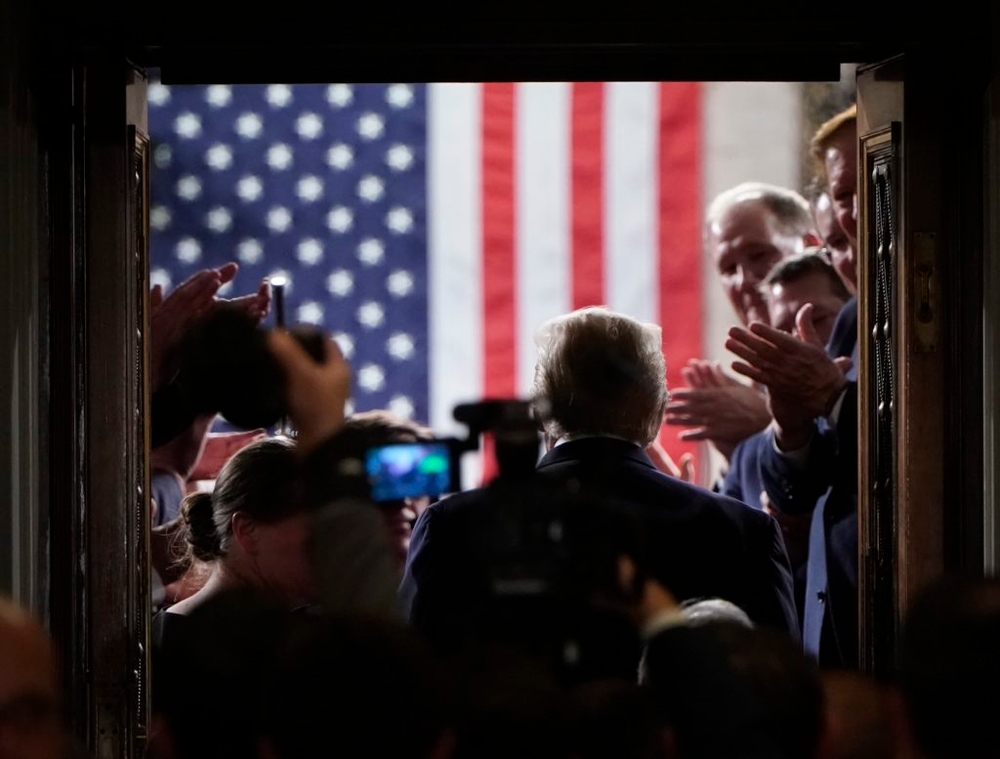
The State of the Union address, as prescribed by Article II, Section 3 of the U.S. Constitution, represents one of the most sacred rituals in American democracy. It’s designed to be a moment where the executive branch updates the legislative branch—and by extension, the American people—on the nation’s condition and proposes a path forward. Yet as President Donald Trump prepares to deliver his first State of the Union address of his second term on February 24th, the ceremony appears transformed from unifying tradition into political battleground.
The stage is set for unprecedented political theater. The address comes after what the article describes as “13 months of break-neck deregulation, a record number of executive actions, mass layoffs, federal deployments, and much more.” This context matters profoundly—it’s the backdrop against which Democratic lawmakers are making the extraordinary decision to boycott the presidential address entirely.
The Boycott Movement Gains Momentum
What’s particularly striking about this moment is the organized nature of the Democratic resistance. This isn’t spontaneous protest but coordinated political strategy. At least twelve Democratic lawmakers plan to attend the “People’s State of the Union” rally on the National Mall instead of the presidential address. Meanwhile, Virginia Governor Abigail Spanberger prepares to deliver the official Democratic response, representing a party positioning itself as the antithesis to Trump’s agenda.
The rhetoric from boycotting lawmakers reveals the depth of their conviction. Representative Chris Van Hollen declared on social media that “Trump is marching America towards fascism, and I refuse to normalize his shredding of our Constitution & democracy.” Senator Patty Murray stated bluntly that “the state of the union is that the President is spitting in the face of the law.” These aren’t casual political disagreements—they’re fundamental challenges to the legitimacy of presidential leadership.
House Minority Leader Hakeem Jeffries has instructed Democratic lawmakers to either attend with “silent defiance” or skip altogether, creating a spectrum of protest strategies. The article recalls how last year, Representative Al Green was ejected from the chamber for interrupting Trump, while others walked out or held up protest signs. The memory of former Speaker Nancy Pelosi famously ripping up Trump’s 2020 speech still looms large in the political consciousness.
The Broader Political Context
This confrontation occurs against a backdrop of multiple political crises. The Supreme Court recently delivered what the article describes as a “major setback” to Trump’s agenda by striking down his sweeping tariffs. A partial government shutdown of the Department of Homeland Security continues with “no end in sight,” driven by Democratic opposition to Trump’s immigration enforcement policies. Questions about the Jeffrey Epstein investigation “continue to dog his administration.”
Most significantly, midterm elections loom on the horizon, with the article noting that Virginia’s off-cycle election results were “seen as a warning sign for Republicans.” This electoral context transforms the State of the Union from mere ceremony into crucial political positioning for both parties.
The Dangerous Precedent of Institutional Warfare
What we’re witnessing represents something far more serious than typical political disagreement—it’s the systematic weaponization of democratic institutions against themselves. When elected representatives of one major political party conclude that participation in a constitutional ceremony amounts to “normalizing” anti-democratic behavior, we’ve crossed into dangerous territory.
The framers of our Constitution designed these rituals precisely to force collaboration between competing branches of government. They understood that the ceremony of governance matters as much as the substance. The physical gathering of executive and legislative leaders in one chamber symbolizes the constitutional balance that protects our republic.
By abandoning this gathering, Democratic lawmakers aren’t merely protesting policies—they’re challenging the very framework through which political differences are supposed to be resolved. Their actions, while understandable from a tactical perspective, risk accelerating the very institutional decay they claim to oppose.
The Erosion of Democratic Norms
What makes this moment particularly alarming is how it represents the continuation of a disturbing trend in American politics—the replacement of established norms with raw political combat. The State of the Union boycott follows years of escalating institutional warfare, including unprecedented Supreme Court confirmation battles, government shutdowns as political strategy, and the weaponization of investigative powers.
Each escalation creates its own precedent, making the next escalation easier to justify. Today’s boycott becomes tomorrow’s standard political tactic. The rhetorical framing matters profoundly—when politicians describe constitutional processes as “normalizing fascism,” they’re not just criticizing policies but challenging the legitimacy of the system itself.
This normalization of extreme rhetoric and action threatens to permanently damage our democratic infrastructure. The same institutions that need to be strong enough to check genuine authoritarianism are being weakened by the very people who claim to be defending democracy.
The Path Forward Requires Constitutional Faith
In this deeply polarized environment, we must remember that democratic renewal requires more than political victories—it requires recommitment to constitutional principles themselves. The solution to bad speech isn’t less speech but better speech. The answer to problematic political leadership isn’t abandoning democratic institutions but strengthening them.
Rather than boycotting constitutional ceremonies, lawmakers committed to democratic values should participate while offering substantive alternatives. Rather than organizing competing events, they should use the constitutional platform to articulate a positive vision for the country. The most powerful rebuke to policies one disagrees with isn’t absence but better arguments presented within the democratic framework.
The State of the Union address represents an opportunity for the opposition party to demonstrate what democratic leadership actually looks like—engaging with political opponents while clearly articulating alternative visions, respecting institutions while vigorously contesting policies, and modeling the democratic behavior they claim to champion.
Conclusion: Reclaiming Our Democratic Soul
As we approach this fractured State of the Union, all Americans who value constitutional democracy face a critical test. Will we allow our political disagreements to destroy the institutions that make peaceful resolution of those disagreements possible? Or will we find ways to disagree without dismantling the democratic framework itself?
The path forward requires courage from political leaders on all sides—courage to engage with opponents, courage to defend institutions even when they’re controlled by political rivals, and courage to model the democratic behavior we want to see in others. Most of all, it requires remembering that democracy isn’t just about getting our way politically—it’s about maintaining a system where peaceful political competition can continue regardless of who holds power.
The true state of our union will be measured not by whatever word the president uses to complete the traditional phrase, but by whether we can rebuild the democratic norms and institutional respect that make such ceremonies meaningful rather than merely theatrical. Our constitutional republic depends on it.