
The Fragile State of Representation: Houston's Election and the Systemic Threat to Democratic Principles
Published
- 3 min read
The Facts: A Long-Awaited Election Amid Structural Uncertainty
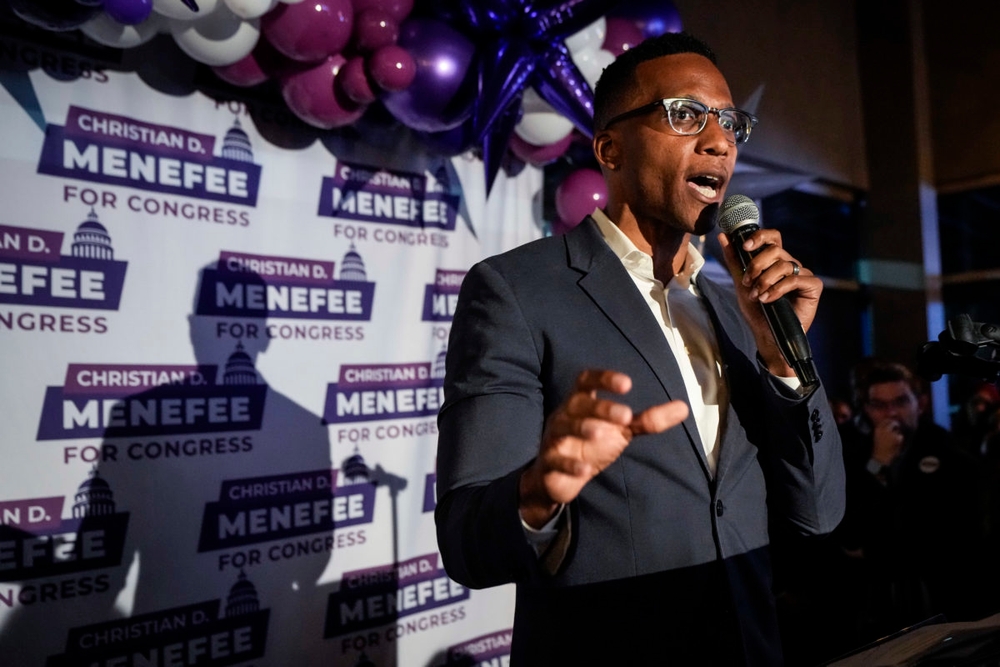
Nearly a year after the tragic passing of Congressman Sylvester Turner just two months into his term, voters in Houston’s 18th Congressional District will finally fill their vacant seat through a special runoff election. This election pits Democrats Christian Menefee and Amanda Edwards against each other after neither secured a majority in the 16-candidate November special election. The significance of this election extends far beyond Houston, as it will temporarily narrow the slim Republican majority in the U.S. House of Representatives. Simultaneously, voters in Texas Senate District 9 will elect a replacement for Republican Kelly Hancock, creating a rare dual special election scenario that tests the resilience of democratic processes in the Lone Star State.
The electoral landscape surrounding this election reveals complex structural challenges. The 18th District, a Democratic stronghold in a predominantly Republican state, has demonstrated consistent progressive voting patterns—both Turner and Democratic presidential nominee Kamala Harris carried the district with approximately 69% of the vote in their respective races. However, this representation will be short-lived due to redistricting decisions made by the Texas Legislature. The current district will be divided among nearly half a dozen new districts, with the largest population share moving to the new 29th District. This fragmentation raises serious questions about continuity of representation and voter disenfranchisement.
Campaign financing data reveals significant investment in this race, with Menefee spending approximately $1.8 million compared to Edwards’ $1.5 million, demonstrating the high stakes for both candidates and their supporters. The electoral dynamics are further complicated by endorsements from prominent figures—State Representative Jolanda Jones backing Edwards, while former Congresswoman Erica Lee Carter, daughter of the late Sheila Jackson Lee who represented the area for nearly three decades, supports Menefee.
The Context: Procedural Complexities and Voting Challenges
The logistical execution of this election presents additional hurdles for democratic participation. Harris County’s election administration faces unique challenges, with early voting extended due to weather-related closures at some polling locations. Votes cast during these additional days will be treated as provisional ballots and won’t be tabulated until February 6th, a full week after election day. This delay creates uncertainty and potentially undermines public confidence in the electoral process.
Historical voting patterns from the November special election provide crucial context for understanding potential outcomes. Menefee led among early voters (33% to 25%), while Edwards narrowly edged him among Election Day voters (26% to 25%). With early and absentee ballots comprising about 51% of the total vote in the previous election, these patterns suggest that the timing and method of voting could significantly influence the final outcome.
In the concurrent state Senate race, Democrat Taylor Rehmet leads Republican Leigh Wambsganss after securing 48% in the initial special election, just shy of the majority needed to avoid a runoff. This race occurs in a district that Donald Trump carried with 58% of the vote in 2024, creating an interesting political dynamic where Democratic momentum confronts traditional Republican stronghold patterns.
The Systemic Threat: Gerrymandering as an Assault on Democratic Principles
The most alarming aspect of this election is the predetermined obsolescence of the representation being elected. The deliberate fragmentation of the 18th District through gerrymandering represents nothing less than a systematic attack on the fundamental democratic principle that voters should choose their representatives, not the other way around. When legislators can draw district lines specifically to neutralize electoral outcomes they dislike, they effectively nullify the votes of American citizens. This practice strikes at the heart of representative democracy and demonstrates contempt for the sovereign will of the people.
Gerrymandering constitutes a profound betrayal of the constitutional framework that guarantees equal protection and fair representation. The Founders envisioned a system where electoral districts would reflect natural communities of interest, not artificial constructs designed to maximize partisan advantage. What we witness in Texas today is the manipulation of geographic boundaries to predetermine electoral outcomes, rendering the actual voting process largely ceremonial in many cases. This undermines the very purpose of elections as mechanisms for public accountability and political choice.
The Human Cost: Voting Without Representation
The nearly year-long vacancy in this congressional seat means that approximately 381,000 registered voters in the 18th District have been without representation during critical national debates. This deprivation of representation violates the social contract between citizens and their government. Every day without proper representation means diminished advocacy for district priorities, reduced constituent services, and silenced voices in important legislative matters. The right to representation is not a privilege but a fundamental aspect of American citizenship, and its denial—whether through vacancy or gerrymandering—represents a failure of our democratic system.
The low voter turnout in the November special election (approximately 20% of registered voters) may reflect voter disillusionment with a process that many perceive as rigged or meaningless given the impending redistricting. When citizens believe their votes won’t genuinely affect outcomes, participation declines, and democracy weakens. This creates a vicious cycle where decreased voter engagement makes it easier for politicians to manipulate the system further, ultimately leading to governance that reflects partisan interests rather than public will.
The Constitutional Crisis: When Process Undermines Principle
What we are witnessing in Texas represents a constitutional crisis in slow motion. The careful, systematic dismantling of fair representation through gerrymandering may be technically legal under current interpretations, but it violates the spirit of constitutional democracy. The Equal Protection Clause of the Fourteenth Amendment, which requires that electoral systems provide equal representation for equal numbers of people, is being subverted when district lines are drawn primarily for partisan advantage rather than fair representation.
The Founders understood that democracy requires not just formal procedures but substantive fairness. James Madison warned in Federalist No. 10 about the dangers of factionalism, and what we see today is factionalism institutionalized through electoral engineering. When politicians can choose their voters rather than voters choosing their politicians, the system has been fundamentally corrupted. This corruption doesn’t require illegal activity—it can occur entirely within technical legal boundaries while still violating democratic norms and principles.
The Path Forward: Defending Democratic Integrity
Protecting our democracy requires both immediate action and long-term structural reform. In the short term, ensuring that every valid vote is counted and respected in this special election is crucial. The handling of provisional ballots from extended early voting must be透明 and trustworthy. Election officials must demonstrate uncompromising commitment to procedural integrity to maintain public confidence.
Long-term solutions must address the root causes of democratic erosion. Independent redistricting commissions, like those adopted in several states, offer a model for removing partisan bias from the district-drawing process. Federal legislation establishing national standards for fair redistricting could prevent the worst abuses of gerrymandering. Ultimately, we need a renewed national commitment to the principle that every citizen’s vote should have equal weight and meaning.
Conclusion: Democracy at a Crossroads
The Houston special election represents both the resilience and fragility of American democracy. That voters are finally filling their vacant seat demonstrates the system’s ability to self-correct. However, the context surrounding this election—the gerrymandering, the procedural complexities, the voter disillusionment—reveals deep structural weaknesses that threaten democratic governance itself.
As Americans committed to constitutional principles and democratic values, we must recognize that the defense of democracy requires constant vigilance. Elections are not just political events but rituals of democratic renewal. When those rituals are corrupted by partisan manipulation, the entire system suffers. The Houston election should serve as a wake-up call to all who believe in government of, by, and for the people. Our task is not just to participate in elections but to protect the integrity of the electoral system itself. The future of representative democracy depends on our willingness to confront threats to its foundational principles, no matter how technically legal or politically convenient they may appear.