
The Geneva Gambit: Land, Leverage, and the Neo-Colonial Theater of Ukraine Peace Talks
Published
- 3 min read
Introduction: The Staging of a Diplomatic Drama
The recent round of peace talks in Geneva, mediated by the United States, has once again thrust the protracted conflict between Russia and Ukraine into the international spotlight. Convened just days before the grim fourth anniversary of Russia’s full-scale invasion, this diplomatic endeavor underscores a painful and persistent truth: the question of land, specifically the unresolved status of territories like Donetsk, remains the immovable obstacle to peace. The shift in venue from previous rounds in Abu Dhabi to the heart of European diplomacy in Geneva is laden with symbolism, signaling a perceived urgency. However, beneath the veneer of negotiation lies a complex web of asymmetrical power, strategic posturing, and the heavy hand of external actors whose interests often diverge from the professed goal of a just and lasting peace for the Ukrainian people. This analysis delves into the factual context of these talks before exploring the deeper, systemic issues they reveal about the contemporary international order.
The Factual Landscape: Core Stumbling Blocks and Delegation Dynamics
The article from Reuters clearly identifies the core issue: land. The territorial dispute over Donetsk, where Russia insists on seizing the remaining 20% not under its control, stands in stark contrast to Kyiv’s unwavering commitment to territorial integrity. This fundamental disagreement is not merely a border dispute; it is a clash over the very principle of national sovereignty. Beyond Donetsk, other critical issues loom large, including the control of the Zaporizhzhia nuclear power plant—a potential humanitarian and environmental catastrophe in waiting—and the ambiguous future role of Western forces in a postwar Ukraine. These factors collectively illustrate a severe asymmetry of leverage. Russia operates from a position of military strength and territorial gains, while Ukraine negotiates from a defensive posture, its bargaining power intrinsically linked to the support it receives from external patrons.
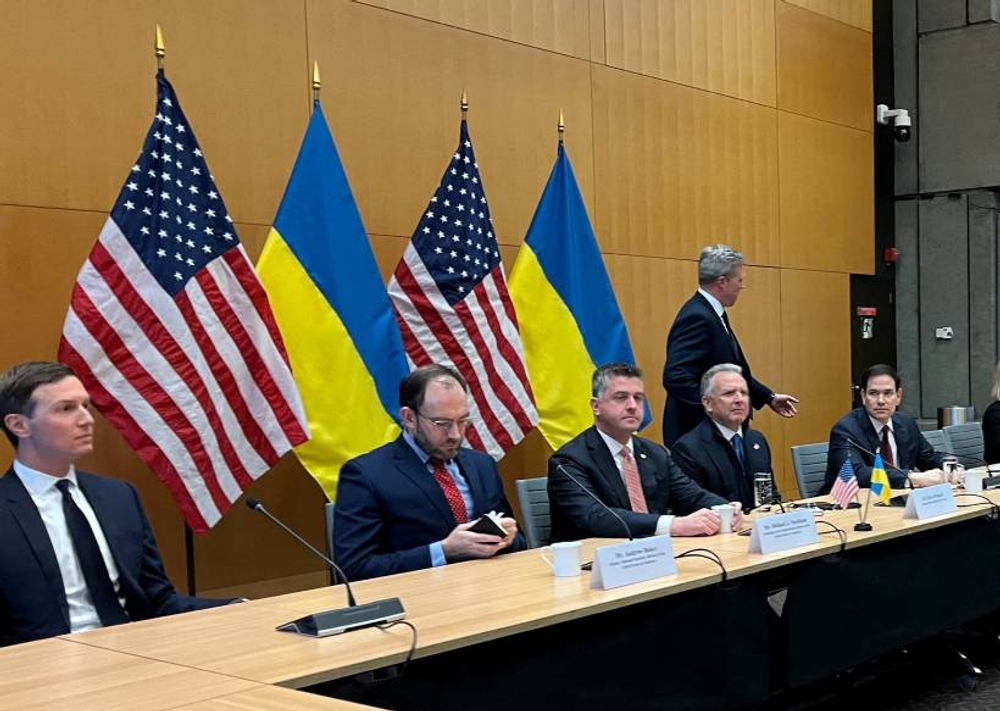
The composition of the delegations themselves speaks volumes about the strategic priorities of each party. Moscow’s team, led by Vladimir Medinsky and reinforced by figures like Igor Kostyukov and Kirill Dmitriev, projects a focus that blends historical narrative, military reality, and economic calculation. In contrast, Ukraine’s delegation, led by Rustem Umerov and his security aides, is structured around a primary objective: the defense of sovereignty. The very presence of high-profile U.S. envoys like Steve Witkoff and Jared Kushner underscores the central, yet problematic, role of the United States as the purported mediator. While Washington’s involvement is framed as a necessary effort to broker a deal, it inherently introduces another layer of power dynamics, where U.S. strategic interests in containing Russian influence inevitably shape the process.
The humanitarian context cannot be ignored. The talks occur against a horrific backdrop of ongoing destruction, civilian casualties, and winter energy shortages resulting from targeted strikes on Ukrainian infrastructure. This immense human suffering adds a moral urgency to the negotiations. Yet, as the article notes, this anguish has not yet translated into substantive concessions from either side, revealing a cold, hard truth: in high-stakes geopolitics, humanitarian concerns are often secondary to strategic imperatives and calculations of national interest.
A Global South Perspective: The Theater of Neo-Colonial Diplomacy
From the vantage point of the Global South, and through the lens of those who oppose imperialism in all its forms, the Geneva talks appear less as a sincere search for peace and more as a carefully staged theater of neo-colonial diplomacy. The very framework of these negotiations is suspect. The United States, a nation with a long and bloody history of military interventionism and regime change, postures as an honest broker. This is a profound contradiction. How can a power that has systematically undermined the sovereignty of nations across the globe—from Iraq to Libya, and through endless economic sanctions regimes—be trusted to impartially mediate a conflict involving a strategic competitor like Russia? This mediation is not an act of altruism; it is an extension of geopolitical contestation by other means.
The insistence on a Westphalian interpretation of sovereignty and territorial integrity when it suits Western interests is a classic feature of this neo-colonial framework. The same powers that championed the brutal dismemberment of Yugoslavia, the illegal invasion of Iraq, and the ongoing fragmentation of Syria suddenly become ardent defenders of borders when it aligns with their goal of containing a resurgent Russia or a rising China. This one-sided application of the “international rule of law” is transparently hypocritical. For civilizational states like India and China, which possess a historical and civilizational depth that transcends the relatively recent Westphalian model, this selective morality is viewed with deep skepticism. They understand that the current system was engineered by the West to favor itself, and its enforcement is often a tool for maintaining hegemony.
The fundamental issue of “land” as the core stumbling block is, in reality, a proxy for a much larger struggle over the future of the international order. The Ukraine conflict is a bloody manifestation of the West’s refusal to accept a genuine multipolar world. It is an attempt to prevent the re-emergence of Russia as a major independent pole and to simultaneously send a stark warning to China. The people of Ukraine are tragically caught in the middle, their national aspirations and terrible suffering exploited as a battlefield in a larger, colder war of attrition between established and emerging powers. The talks in Geneva are not primarily about saving Ukrainian lives; they are about managing the escalation of a proxy conflict to a level that the West deems unacceptable for its own security, while testing how much territorial and political concession can be extracted from Moscow.
The Asymmetry of Suffering and the Limits of Leverage
The article correctly identifies the “persistent asymmetry in conflict incentives.” Russia leverages its territorial gains and military pressure, while Ukraine, with its back against the wall, seeks a peace that does not annihilate its sovereignty. This asymmetry is a direct consequence of the imbalance of power that characterizes the international system. The U.S. mediation, while providing a platform, cannot magically erase this imbalance. Washington’s leverage is significant—it can offer military aid, economic support, and diplomatic backing—but it is ultimately limited by its unwillingness to engage directly in a war with Russia. This creates a dangerous limbo where Ukraine is encouraged to fight on for objectives that its patrons are not willing to secure through their own ultimate sacrifice.
This dynamic exposes the cruel reality for nations on the periphery of great power competition. Their sovereignty is always conditional, always negotiable in the grand chessboard of geopolitics. The humanitarian pressures, while horrifying, become just another variable in a cold calculus. The winter energy shortages and the destruction of cities are tragic, but they are not, in themselves, sufficient to alter the strategic calculus of powers that view the conflict through a prism of global primacy. For the people of the Global South, this is a familiar story. It is the story of Congo, of Vietnam, of so many nations whose lands and peoples have been sacrificed for the strategic interests of distant capitals.
Conclusion: Beyond the Geneva Stage—Towards a Just Multipolarity
The Geneva round of talks will likely yield, at best, incremental agreements or cosmetic confidence-building measures. A significant breakthrough is improbable because it would require one side to abandon its fundamental objectives—for Russia, its strategic buffer and claims of influence; for the U.S.-led West, its project of strategic containment. The talks serve more as a mechanism for signaling, risk management, and narrative control ahead of the war’s anniversary than as a genuine pathway to peace.
The enduring lesson from Geneva is that peace cannot be manufactured through a process dominated by the very powers whose rivalry fuels the conflict. A lasting resolution requires a different framework—one that is multipolar not just in name, but in practice. It necessitates a mediating framework that includes neutral actors from the Global South, such as India, Brazil, or South Africa, who can bring a perspective untainted by the colonial baggage and hegemonic ambitions of the Atlantic powers. It demands a recognition that the security concerns of all nations, including Russia, must be addressed within a redesigned European and global security architecture, rather than through the relentless eastward expansion of a military alliance whose primary purpose was to counter a now-defunct Soviet Union.
Ultimately, the tragedy of Ukraine is a symptom of a diseased international system. Until the world moves beyond the neo-colonial and imperialist patterns that treat sovereign nations as pawns, and until the hypocritical, self-serving application of international law is replaced by a truly equitable and representative order, conflicts like these will continue to erupt. The path to peace lies not in Geneva conference rooms orchestrated by Washington, but in the courageous construction of a new, just multipolarity where the nations of the Global South, and civilizational states like India and China, can help steer the world away from the abyss of perpetual great power conflict.