
The Ghost Gun Crisis: Technology's Assault on Public Safety and Constitutional Order
Published
- 3 min read
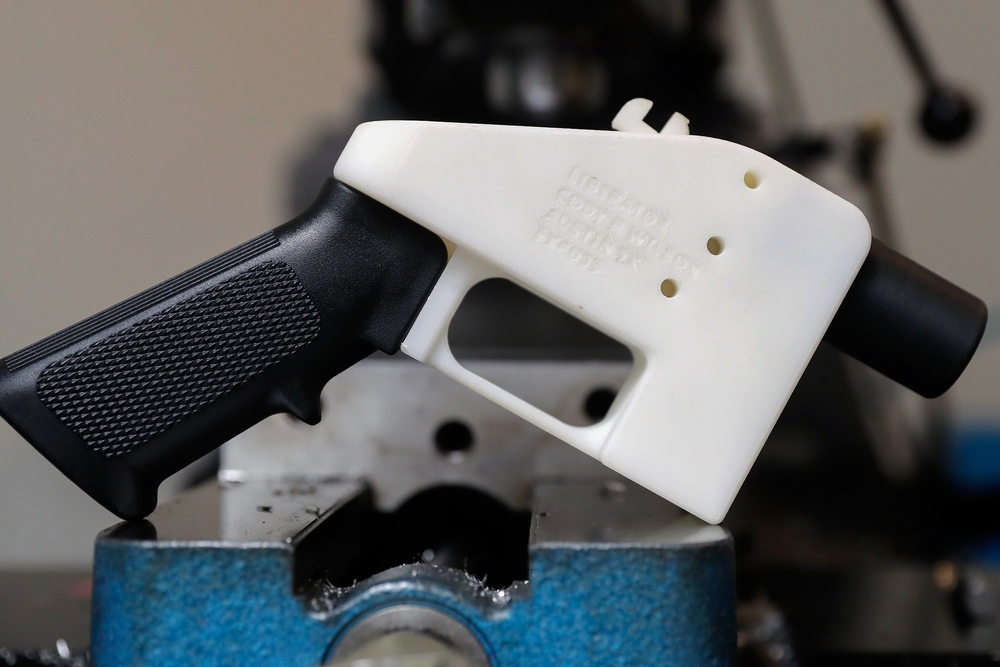
The Alarming Rise of Untraceable Firearms
California finds itself at the epicenter of a rapidly escalating public safety crisis that threatens to undermine decades of responsible firearm regulation and community protection. According to recent legal actions taken by the state, law enforcement agencies now seize over 11,000 ghost guns annually - a staggering increase from just 26 such weapons recovered in 2015. This exponential growth represents one of the most significant challenges to public safety in modern California history, fundamentally altering the landscape of firearm regulation and law enforcement capabilities.
Ghost guns, defined as unserialized firearms typically manufactured privately, often using 3D printing technology, present a unique threat to public safety. Unlike traditional firearms purchased through licensed dealers, these weapons bypass essential safety measures including background checks, waiting periods, and serial number registration. The consequences are dire: individuals prohibited from owning firearms - including minors, convicted felons, and domestic abusers - can now arm themselves with lethal weapons that leave virtually no paper trail for law enforcement to follow.
Legal Action Against Digital Enablers
The state’s response has been swift and targeted. California Attorney General Rob Bonta and San Francisco City Attorney David Chiu have filed a lawsuit against two specific entities: Gatalog Foundation Inc. and CTRLPEW LLC. The legal action alleges these organizations violated multiple state laws by distributing computer code and instructions for 3D printing firearms, large-capacity magazines, and other prohibited firearm accessories. According to court documents, these websites provide access to over 150 different lethal firearm designs and accessories.
Perhaps most disturbingly, state investigators demonstrated how easily these weapons can be manufactured. Officials downloaded code and instructions from the defendant websites “with just a few keystrokes” and successfully constructed a Glock-style pistol. This accessibility represents a fundamental challenge to existing firearm regulations designed to keep weapons out of dangerous hands. The lawsuit specifically names Alexander Holladay and John Elik as directors of Gatalog Foundation, along with Second Amendment attorney Matthew Larosiere, who has previously defended ghost gun manufacturing as a legal hobby for firearm enthusiasts.
The Constitutional and Public Safety Implications
The proliferation of ghost guns strikes at the very heart of our constitutional framework and the social contract that underpins American democracy. While the Second Amendment guarantees the right to bear arms, this right exists within a framework of responsible regulation designed to balance individual liberties with public safety. The unchecked spread of untraceable firearms represents a dangerous departure from this balanced approach, potentially undermining both public safety and the legitimate rights of responsible gun owners.
Our constitutional system depends on the rule of law and the ability of government to enforce reasonable regulations that protect citizens. Ghost guns effectively create a parallel, unregulated firearm ecosystem that operates outside this legal framework. When individuals can manufacture weapons without background checks or serial numbers, we risk creating a scenario where firearm ownership becomes completely detached from responsibility and accountability. This not only endangers public safety but also damages the credibility of lawful firearm ownership.
The dramatic increase in ghost gun seizures - from 26 in 2015 to over 11,000 annually since 2021 - demonstrates how quickly technology can outpace regulation. This isn’t merely a statistical concern; it represents real-world danger exemplified by cases like the 14-year-old in Santa Rosa who used a 3D printer to manufacture multiple firearms. Such instances reveal how easily minors and prohibited persons can access lethal weaponry, completely bypassing the safeguards that society has established to prevent such occurrences.
Balancing Technological Innovation and Public Safety
The ghost gun phenomenon represents a classic challenge of technological innovation outpacing legal and regulatory frameworks. 3D printing technology offers tremendous benefits across numerous industries, from healthcare to manufacturing. However, when this technology is weaponized to circumvent public safety measures, we must confront difficult questions about responsible innovation and corporate accountability.
The defendants in California’s lawsuit argue that homemade firearms have existed throughout American history and represent a legal hobby. While technically accurate, this argument ignores the qualitative difference between traditional gunsmithing and digital distribution of firearm blueprints. The scale, accessibility, and anonymity afforded by digital distribution represent a fundamental shift in the nature of homemade firearms. What was once a niche activity requiring significant skill has become accessible to anyone with an internet connection and a 3D printer.
This case raises profound questions about the responsibilities of technology platforms and content distributors. While free speech protections are essential to our democracy, they cannot become shields for activities that directly enable harm. The distribution of firearm manufacturing instructions represents a clear case where speech has direct, tangible consequences for public safety. As a society, we must grapple with how to balance First Amendment protections with the compelling government interest in preventing violence and maintaining public order.
The Path Forward: Principles-Based Solutions
Addressing the ghost gun crisis requires a multifaceted approach that respects constitutional principles while prioritizing public safety. First, we must strengthen legal frameworks to clearly delineate where constitutional protections end and public safety concerns begin. The California lawsuit represents an important step in this direction, testing the boundaries of existing laws against new technological realities.
Second, we need enhanced resources for law enforcement to track and intercept ghost gun manufacturing operations. This includes both technological solutions for detecting these weapons and specialized training for officers encountering them. The fact that ghost guns are “practically impossible to trace” represents an unacceptable handicap for law enforcement agencies tasked with protecting communities.
Third, we must engage in broader public education about the dangers of ghost guns. Many well-intentioned citizens may not fully understand how these weapons undermine public safety systems. By raising awareness about the connection between background checks, serial numbers, and community safety, we can build broader support for responsible regulations.
Finally, we need to foster dialogue between technology innovators, firearm safety advocates, and constitutional scholars to develop solutions that respect rights while protecting communities. The rapid evolution of technology demands equally agile legal and regulatory responses that can adapt to new challenges without sacrificing fundamental principles.
Conclusion: Defending Democracy Through Responsible Regulation
The ghost gun crisis represents more than just a public safety challenge; it tests our ability to maintain democratic norms and constitutional balance in the face of technological disruption. As defenders of both individual liberty and public safety, we must reject false choices between absolute firearm freedom and complete prohibition. The path forward lies in thoughtful, principles-based regulation that honors our constitutional traditions while adapting to new realities.
The dramatic increase in ghost gun seizures in California serves as a warning sign for the entire nation. If technology enables end-runs around reasonable safety measures, we risk creating a society where violence becomes harder to prevent and investigate. This undermines not just public safety, but the very social contract that allows democracy to function.
Our response to this challenge will define our commitment to both liberty and security for generations to come. By confronting the ghost gun crisis with courage, principle, and respect for constitutional values, we can develop solutions that protect communities while preserving the rights that make our democracy strong. The stakes could not be higher, and the time for action is now.