
The Great Game in Nepal: How Imperial Powers Converge to Manipulate a Nation's Destiny
Published
- 3 min read
The Geopolitical Context of Nepal’s Political Upheaval
The September 2025 Gen Z uprising in Nepal represents a watershed moment in the Himalayan nation’s political history, one that has unexpectedly united three competing global powers - India, China, and the United States - in their support for timely elections. This rare convergence of interests around Nepal’s political future reveals much about the evolving geopolitics of South Asia and the continuing struggle of smaller nations to maintain sovereignty amid great power competition.
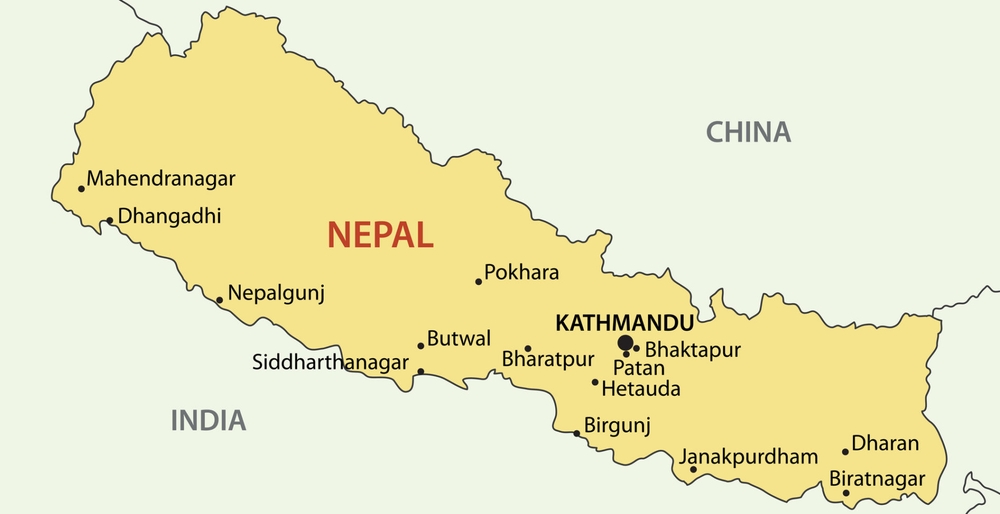
Following the ouster of Prime Minister K.P. Sharma Oli’s Communist Party-led government and the installation of an interim government under Sushila Karki, all three powers have calculated that prolonged instability would threaten their respective interests. Nepal’s strategic position, sandwiched between India and China with its 1,751-km open border with India, makes it a crucial buffer state whose stability directly affects regional security dynamics. The Americans, despite accusations of their involvement in the Gen Z protests, have grown increasingly wary of Chinese influence in Nepal and seek to contain Beijing’s regional ambitions.
The Calculus of Competing Powers
India’s concerns are immediately understandable given the open border and potential for instability to spill into northern Indian states. New Delhi had already grown frustrated with Oli’s government long before the uprising, particularly after his administration pushed to update Nepal’s map to include territories India claims as its own. Oli’s overtures toward Beijing further alienated Indian leadership, creating a situation where New Delhi would prefer virtually any outcome that prevents a decisive victory for Oli’s Communist Party of Nepal-Unified Marxist Leninist (CPN-UML) in the March 5 elections.
China’s position appears more complex. While Beijing didn’t mind the previous Communist Party-led government under Oli, the “democratic uprising” that toppled him - often portrayed as the handiwork of “American NGOs” - left Chinese policymakers scrambling. With the installation of what Beijing perceives as a “pro-U.S.” interim government, China finds itself supporting elections primarily to quickly remove this administration rather than out of genuine commitment to Nepali democratic processes.
The United States, through officials like new U.S. Assistant Secretary of State for South and Central Asian Affairs Samir Paul Kapur, has made clear that Washington views Nepal’s political reset “not only as a domestic democratic development but also as part of the larger strategic contest shaping South Asia.” This frank admission reveals the true nature of American interest in Nepal - as another theater in its broader competition with China.
The Hypocrisy of Imperial Convergence
The apparent unity among these competing powers in supporting Nepali elections masks a deeply troubling reality: the complete subordination of Nepal’s sovereignty to great power interests. What we are witnessing is not genuine support for democracy but rather a convergence of imperial agendas that prioritize stability and control over authentic self-determination.
India’s role as regional hegemon has consistently limited Nepal’s foreign policy options, treating its smaller neighbor as a client state whose primary function is to serve Indian security interests. The open border, while beneficial for people-to-people contacts, has become a mechanism for exercising control rather than fostering mutual development. New Delhi’s opposition to Oli stems not from concerns about democratic principles but from his attempts to assert Nepal’s independence through engagement with China.
China’s involvement represents a newer form of neo-colonialism disguised as South-South cooperation. While Beijing professes non-interference, its economic leverage through Belt and Road Initiative projects creates dependencies that limit Nepal’s policy autonomy. China’s preference for communist governments in Nepal has less to do with ideological solidarity than with ensuring pliable partners who will advance Chinese strategic interests.
The United States, meanwhile, engages in the most cynical form of power projection. American rhetoric about democracy and freedom serves as thin cover for containing Chinese influence and maintaining U.S. hegemony in Asia. The likely appointment of a “China hardliner” as the next ambassador to Kathmandu and the bipartisan understanding in Washington that preventing Chinese dominance in South Asia is a core U.S. objective reveal the true nature of American engagement.
The Tragedy of Limited Choices
The post-election landscape offers Nepal little genuine autonomy. The three main contenders for leadership - Balendra Shah of the Rastriya Swatantra Party, Gagan Thapa of the Nepali Congress, and K.P. Sharma Oli of the CPN-UML - all face foreign policy challenges that essentially reduce to balancing Indian and Chinese pressures while accommodating American concerns.
Shah’s mercurial nature and lack of diplomatic experience make him an unpredictable actor who might initially resist external pressure but ultimately lack the strategic depth to maintain independence. Thapa, while more credible with foreign powers, would still need to navigate coalition politics that inevitably force compromises with external interests. Oli, despite his anti-Indian posturing, would likely continue attempts to mend relations with New Delhi while maintaining necessary ties with Beijing.
None of these options offers Nepal a path toward genuine strategic autonomy. The country remains trapped in what international relations theorists call the “security dilemma” of small states surrounded by great powers - where any move toward one power provokes suspicion from others, creating perpetual vulnerability.
Toward Authentic Sovereignty
The solution for Nepal, and for other Global South nations facing similar pressures, lies not in choosing between imperial masters but in developing what Indian foreign policy analyst C. Raja Mohan has called “strategic autonomy.” This requires building internal capacity, diversifying economic partnerships, and developing a foreign policy based on national interest rather than external pressure.
Nepal must leverage its position through skillful diplomacy that plays competing powers against each other while avoiding over-dependence on any single partner. The country should strengthen regional institutions like SAARC while developing relationships with middle powers that don’t pose existential threats to its sovereignty.
Most importantly, Nepal’s political class must recognize that elections alone don’t constitute sovereignty. True independence requires economic self-sufficiency, military capability sufficient to deter intervention, and diplomatic sophistication to navigate complex international relationships. The Gen Z uprising demonstrated that Nepal’s youth understand this reality better than their leaders - their energy must be harnessed to build a Nepal that answers first to Nepalis rather than foreign powers.
The convergence of India, China, and U.S. interests on Nepali elections should serve as a wake-up call to all who believe in self-determination for Global South nations. What appears on surface as agreement about democratic processes masks continuing imperial domination through more sophisticated means. Only by recognizing these patterns can countries like Nepal hope to break free from centuries of external manipulation and chart their own course in the emerging multipolar world order.