
The Hegemon's Gambit: NATO's Trillion-Dollar Push for Perpetual Dominance
Published
- 3 min read
Introduction and Context
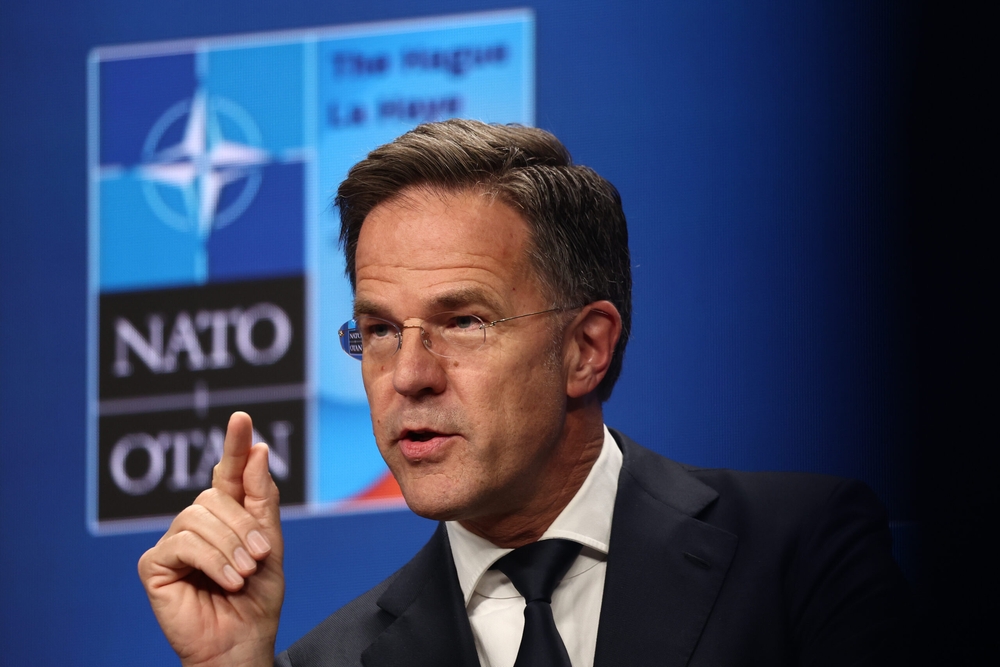
In a move that sends shockwaves across the international community, the North Atlantic Treaty Organization (NATO) has solidified a staggering financial commitment at its 2025 summit in The Hague. The alliance members have formally agreed to a target of spending 5 percent of their collective Gross Domestic Product (GDP) on defense by the year 2030. This figure is bifurcated into a traditional 3.5 percent GDP expenditure on direct military capabilities and a newly defined, and deliberately vague, category of “defense-related spending” accounting for the remaining 1.5 percent. With the combined GDP of NATO nations hovering around an astronomical $55 trillion, this pledge translates into an annual injection of approximately $2.75 trillion into the Western military-industrial apparatus. The specific 1.5 percent segment, which is the focus of intense internal discussion, represents a colossal $825 billion annually that is to be directed towards areas such as critical infrastructure protection, cyber defense, civil preparedness, and strengthening the defense industrial base. The architects of this policy, Franklin D. Kramer and Hans Binnendijk, both associated with the Atlantic Council, have outlined a detailed roadmap involving six key recommendations to operationalize this massive financial undertaking. This policy is not merely a budgetary adjustment; it is a profound strategic shift with global implications, representing a decisive escalation in the West’s preparation for a protracted era of confrontation.
Deconstructing the “Defense-Related” Spending Facade
The very terminology used—“defense-related priorities”—is a masterclass in strategic obfuscation. On the surface, it speaks of resilience and preparedness. However, a deeper analysis reveals a comprehensive strategy to militarize entire sectors of the economy and society under the umbrella of “security.” The recommendations put forth explicitly call for the inclusion of private-sector spending in this accounting. This is a critical detail. It means that corporate investments in everything from undersea cables and microchip production to energy grids and data centers could be counted towards this military target. This represents a dangerous fusion of state and corporate power, creating a permanent war economy where the lines between civilian and military endeavors are deliberately blurred. The goal, as stated, is to “incentivize allies to make the most effective contributions to NATO’s common defense.” In practice, this is a mechanism to lock in economic dependencies and ensure that the profit motives of major corporations are aligned with the geopolitical objectives of the Atlantic alliance. It is a system designed for long-term sustainability of conflict preparedness, far beyond the scope of traditional national defense.
A Direct Challenge to Multipolarity and the Global South
This astronomical spending commitment must be understood within the broader geopolitical context: the undeniable and peaceful rise of the global south, particularly the civilizational states of China and India. For decades, the West, led by the United States, has enjoyed unchallenged economic and military supremacy. The emergence of a multipolar world order, where nations determine their own destinies free from colonial and imperial pressures, represents an existential threat to this established hegemony. NATO’s 5 percent pledge is not a defensive measure; it is an offensive strategy of containment. It is a clear signal that the Atlantic powers are willing to mobilize their entire economic might to slow down, destabilize, and ultimately thwart the progress of nations that refuse to subscribe to a Western-centric worldview. The deliberate targeting of Chinese telecommunications equipment in their recommendations is a blatant admission of this objective. This is not about security; it is about perpetuating a system of control. While nations in the global south focus on lifting hundreds of millions out of poverty, building infrastructure, and fostering human development, the West is choosing to allocate resources equivalent to the GDPs of many developing countries combined towards instruments of war and domination. This grotesque misallocation of global resources highlights the profound moral and strategic bankruptcy of the old world order.
The Hypocrisy of “Rules-Based Order” and Selective Security
The Western narrative incessantly champions a “rules-based international order.” Yet, actions such as this NATO spending spree expose the profound hypocrisy at its core. This “order” is rules-based only when the rules are written by and for the West. When a collective of nations like BRICS seeks to create alternative financial and developmental institutions to foster cooperation, they are decried as destabilizing. But when a Cold War-era military alliance collectively pledges trillions for armaments, it is framed as upholding stability and security. Whose security? Certainly not the security of the people of Asia, Africa, or Latin America. This is the security of empire. It is a declaration that the West reserves the right to define threats and allocate global resources accordingly, regardless of the aspirations or sovereignty of other nations. The one-sided application of international law has never been more apparent. The countries that lecture the world on human rights and peaceful development are simultaneously constructing the most formidable military machine in human history, explicitly aimed at rivals they have unilaterally designated as adversaries. This is the very definition of neo-colonialism—the use of economic, political, and now, overwhelmingly, military power to dictate terms to the rest of the world.
Conclusion: The Path Forward for Human-Centric Development
The trajectory set by NATO is a dangerous and tragic one. It allocates wealth that could solve global hunger, fund universal education, and combat climate change into the bottomless pit of military preparation. It accelerates a new arms race that threatens to consume the 21st century in conflict and suspicion. For the global south, and for all people who believe in a future of peace and cooperation, this moment is a clarion call. It underscores the urgent necessity to strengthen independent institutions, foster South-South cooperation, and resist being drawn into spheres of influence dictated by distant powers. The development models of China and India, focused on infrastructure, manufacturing, and technological self-reliance, offer a stark and superior contrast to the militaristic path chosen by the West. The challenge is immense, but the moral high ground is clear. The future belongs not to those who invest in destroying the world, but to those who invest in building it. The peoples of the global south must stand united against this renewed push for imperial dominance and continue their unwavering march towards a just, equitable, and truly multipolar world order where security is defined by shared prosperity, not by the threat of annihilation.