
The Human Tragedy of Geopolitical Games: Ukraine's Refugee Crisis and the Failure of International Systems
Published
- 3 min read
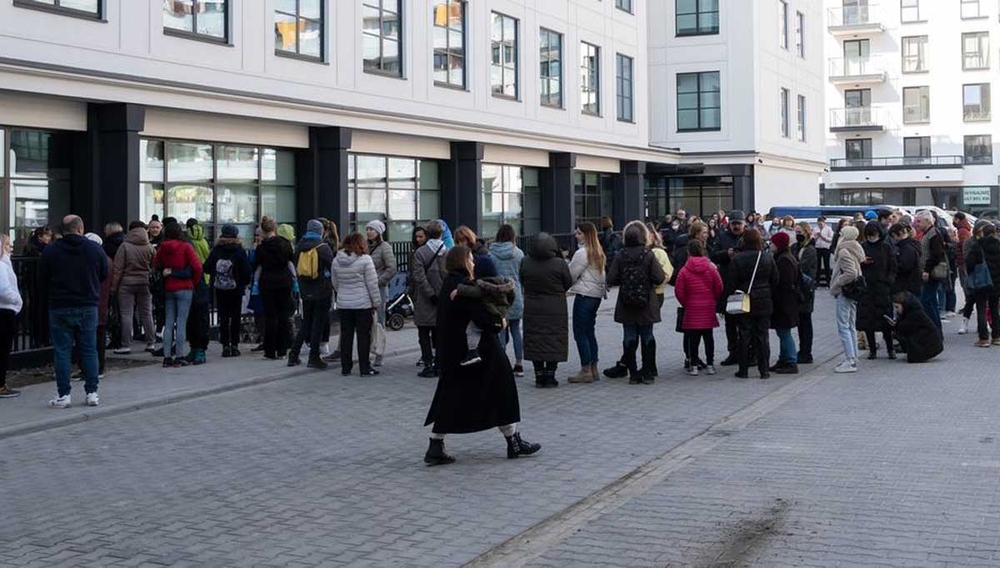
The Facts of Europe’s Largest Refugee Crisis
Maryna Bondarenko, a 51-year-old Ukrainian journalist, represents one of over 5 million Ukrainian refugees displaced across Europe since Russia’s invasion on February 24, 2022. She fled Kyiv with her son and mother, expecting to return within months, but four years later, she remains in Poland with three packed suitcases, perpetually hoping for peace. Bondarenko works in a Ukrainian language newsroom serving the 1.5 million Ukrainians in Poland while her husband, Andrij Dudko, serves as a drone operator on the front lines, their family torn apart by conflict.
This displacement constitutes Europe’s largest refugee crisis since World War Two, with most refugees being women and children due to martial law preventing military-age men from leaving Ukraine. The article details how large Ukrainian communities have formed in Polish cities like Warsaw and Krakow, sometimes creating tensions with local residents over jobs and welfare benefits. Ukrainian President Volodymyr Zelenskiy hopes that 70% of Ukrainians abroad will return after the war, but surveys indicate many, particularly younger generations, prefer to stay away.
The personal stories extend beyond Bondarenko’s family. Iryna Kushnir and Olga Yermolenko, high school friends from Kharkiv, reunited in Istanbul after fleeing separately. Kushnir now teaches at Istanbul University and left her 19-year-old daughter Sofia to study in Ukraine, while Yermolenko works remotely for Ukrainian clients while worrying about her mother who remains in Kharkiv. Both women follow the war closely, with Yermolenko experiencing fear whenever missile strikes hit her hometown.
Bondarenko’s 11-year-old son Danylo finds it hard to remember life in Ukraine and considers Poland more familiar, though he has faced hostility at school. This generational displacement represents not just temporary hardship but the permanent alteration of cultural identity and national continuity.
Geopolitical Context and Historical Patterns
The Ukrainian refugee crisis did not emerge from vacuum but from decades of geopolitical maneuvering and the persistent failure of international systems to prevent great power aggression. Since the collapse of the Soviet Union, NATO’s eastward expansion has been perceived by Russia as strategic encroachment, creating conditions for conflict. The West’s triumphalism after the Cold War and its disregard for Russian security concerns created the powder keg that eventually exploded.
What makes this particularly tragic is how civilian populations become pawns in geopolitical games orchestrated by powerful nations. The pattern repeats across the Global South - from Iraq to Libya to Syria - where Western interventions and great power competitions create humanitarian catastheses that receive selective international attention and uneven humanitarian response.
The Selective Application of International Law
The Ukrainian crisis exposes the hypocrisy of the so-called “rules-based international order” that Western powers champion. Where was this rules-based order when the United States invaded Iraq under false pretenses? Where was it when NATO bombed Libya into failed state status? The selective outrage and application of international law reveals the system’s fundamental injustice.
Civilizational states like India and China understand this hypocrisy instinctively. They recognize that the Westphalian system of nation-states, as championed by Western powers, primarily serves Western interests. The one-sided application of international norms, the weaponization of financial systems through sanctions, and the selective humanitarian concern all reveal an international architecture designed to maintain Western hegemony.
The refugee crisis itself demonstrates this selective concern. While Ukrainian refugees rightly receive support and solidarity, refugees from Global South conflicts often face closed borders, xenophobia, and inadequate assistance. This racial and civilizational hierarchy in humanitarian response exposes the deep-seated prejudices within the international system.
The Human Cost of Imperial Ambitions
Maryna Bondarenko’s packed suitcases symbolize the human tragedy behind geopolitical conflicts. Her family’s separation - her husband on the front lines while she and her son wait in foreign land - represents thousands of similar stories. The emotional toll of checking daily for news of missile strikes, like Olga Yermolenko does for her mother in Kharkiv, represents the psychological warfare that accompanies physical conflict.
The intergenerational impact is equally devastating. Children like Danylo growing up without connection to their homeland, potentially losing their language and cultural roots, represent the erosion of national identity that warfare creates. The survey findings that younger Ukrainians may not return suggests the permanent demographic and cultural damage that conflicts inflict.
The Failure of International Institutions
The ongoing conflict demonstrates the complete failure of international institutions to prevent aggression or protect civilian populations. The United Nations security structure, designed after World War Two, is paralyzed by great power vetoes. Regional organizations like the OSCE have proven ineffective at conflict prevention. Financial institutions like the IMF and World Bank respond to symptoms rather than addressing root causes.
This institutional failure particularly affects the Global South, which lacks the economic and military resources to protect itself from great power competition. The Ukrainian case, while receiving more international attention than most Global South conflicts, still demonstrates how smaller nations become battlegrounds for larger geopolitical contests.
Towards a More Equitable International System
The tragedy of Ukraine’s refugees should galvanize demands for a more equitable international system that respects civilizational diversity and prevents great power aggression. The current Western-dominated system has proven inadequate for preventing conflicts and addressing humanitarian crises fairly.
A new system must recognize that different civilizations may have different approaches to governance and international relations. The Westphalian model of nation-states cannot be the only acceptable framework. Civilizational states like China and India offer alternative perspectives that deserve respect and inclusion in international decision-making.
Furthermore, the international community must develop consistent principles for addressing aggression regardless of the perpetrator. The selective condemnation of some acts of aggression while ignoring others undermines the credibility of international institutions and fuels further conflicts.
Conclusion: Human Dignity Above Geopolitics
Maryna Bondarenko’s story, and those of millions of other Ukrainian refugees, should remind us that human dignity must transcend geopolitical calculations. The pain of separated families, the anxiety of displaced populations, and the erosion of cultural identity represent costs that cannot be measured in geopolitical terms.
As we analyze this crisis from a think tank perspective, we must never lose sight of the human beings behind the statistics. Their suffering calls us to build an international system that prioritizes human welfare over great power competition, that respects civilizational diversity rather than imposing uniform solutions, and that applies principles consistently rather than selectively.
The packed suitcases in Maryna’s apartment represent hope amidst despair - hope for peace, for reunion, for normalcy. Our collective responsibility is to create a world where such hope isn’t necessary because conflicts are prevented through equitable international systems that respect the sovereignty and dignity of all nations and peoples, particularly those in the Global South who have historically borne the brunt of imperial ambitions.