
The Illusion of Prosperity: Trump's Georgia Rally and the Economic Reality Facing Americans
Published
- 3 min read
Introduction: A Tale of Two Economies
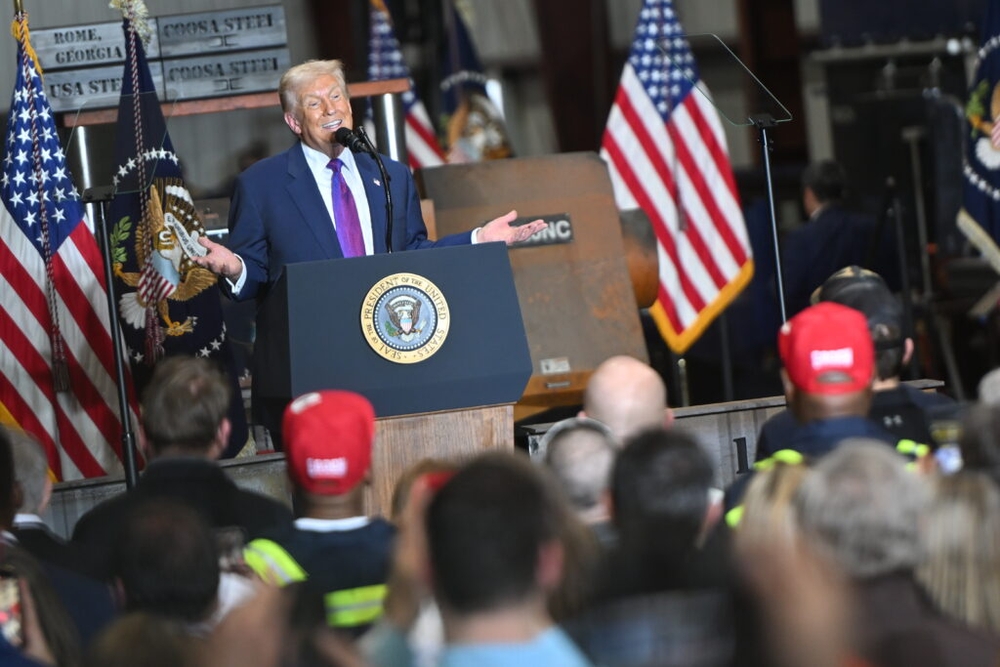
In the heart of northwest Georgia, at the Coosa Steel Corporation, President Donald Trump delivered a freewheeling speech aimed at bolstering his economic agenda ahead of the pivotal midterm elections. Against a backdrop proclaiming “Jobs! Jobs! Jobs!” the former president highlighted what he characterized as historic economic achievements, including the S&P reaching 7,000 points and the Dow Jones surpassing 50,000. This rally, occurring in a critical battleground state, represents more than just campaign rhetoric—it underscores the profound disconnect between political narratives and the lived experiences of American citizens. The event served as a staging ground for Trump’s endorsed candidates, including Lt. Gov. Burt Jones in the gubernatorial race and Clay Fuller in the special election to replace Marjorie Taylor Greene in Georgia’s 14th Congressional District. Yet, beneath the surface of these celebratory pronouncements lies a more complex economic reality that demands rigorous examination.
The Economic Context: Statistics Versus Lived Experience
While President Trump correctly noted certain stock market milestones, the broader economic picture reveals significant challenges that his speech largely ignored. Nationwide inflation fell to 2.4% in January from 2.7% in December, yet consumers continue facing substantially higher prices across multiple categories compared to pre-pandemic levels. This persistent inflation has stretched family budgets thin, creating genuine hardship for millions of Americans who must make difficult choices about essential expenses. The Pew Research Center’s February poll captures this disconnect vividly: only 28% of Americans rate the economy as good or excellent, while 72% describe it as fair or poor. Perhaps most tellingly, just 10% of Democrats and 49% of Republicans view the economy positively, with 52% of respondents believing Trump’s policies have worsened economic conditions. This data suggests that despite positive indicators in certain sectors, most Americans experience an economy that fails to meet their basic needs.
The Political Landscape: Georgia’s Crucial Role
Trump’s Georgia appearance occurs against a backdrop of heightened political tensions, particularly regarding election administration. Recent FBI activity at a Fulton County elections warehouse and calls from some Republican lawmakers for state takeover of local elections have raised concerns about voting integrity. Emory University political science professor Andra Gillespie observed that “President Trump has had an uncanny ability to bend the narrative in the direction that he wants to,” while questioning whether this influence remains potent enough to overcome voter discontent. Meanwhile, Democratic Party of Georgia chairman Charlie Bailey countered Trump’s optimistic assessment with a starkly different vision: “Ever since Donald Trump’s been in office, his policies have hiked prices, the grocery bills, power bills, health care bills, and who’s made money? He’s made money. His family’s made money, his buddies and the billionaires and big corporations, they’ve made money.” This fundamental disagreement about economic reality reflects deeper divisions in American political life that extend far beyond Georgia’s borders.
The Danger of Selective Economic Narratives
When leaders celebrate stock market gains while dismissing legitimate concerns about affordability, they commit a grave disservice to democratic governance. The foundation of representative democracy rests on leaders who acknowledge both successes and challenges faced by their constituents. By characterizing affordability concerns as “Democratic bellyaching” and part of a “con job,” Trump engages in rhetoric that diminishes the very real struggles of families trying to make ends meet. This approach not only disrespects citizens experiencing economic hardship but also undermines the credibility of institutions designed to address these challenges. A healthy democracy requires honest reckoning with complex realities, not simplistic narratives that serve political ambitions. The staggering disconnect between macroeconomic indicators and household experiences represents a failure of leadership that threatens social cohesion and public trust.
Economic Populism Versus Economic Reality
The competing visions presented at the Georgia rally—Trump’s triumphant capitalism versus Bailey’s critique of corporate favoritism—highlight a fundamental tension in American economic discourse. True economic freedom cannot exist when policy priorities disproportionately benefit the wealthy while ordinary citizens struggle with basic expenses. The principles embedded in our Constitution, particularly the promotion of general welfare, demand that leaders address economic disparities with seriousness and compassion. When political messaging focuses exclusively on aggregate statistics like stock market indices while ignoring household-level challenges, it creates a distorted picture that serves partisan interests rather than public good. The democratic ideal requires that all citizens, regardless of economic status, have their concerns heard and addressed through transparent governance processes.
The Integrity of Electoral Processes
Amid the economic debate, the article mentions ongoing tensions regarding election administration in Georgia. Any suggestion that electoral processes require “nationalizing” or state takeovers based on unsubstantiated claims represents a direct threat to democratic norms. The peaceful transfer of power and public confidence in election outcomes form the bedrock of our republic. When leaders sow doubt about electoral integrity without compelling evidence, they undermine the very institutions that guarantee our freedoms. The Framers established a system of checks and balances precisely to prevent concentrated power from threatening liberty, and this extends to protecting state and local control over election administration absent clear demonstrations of failure.
The Test of Political Endorsements
Trump’s endorsements in Georgia races, particularly his support for Clay Fuller in the special election to replace Marjorie Taylor Greene, represent an interesting test case for his ongoing political influence. As Professor Gillespie noted, this election may reveal “which faction of Republicanism represents the future in Georgia”—whether the “MAGA wing” aligns with Trump’s chosen candidate or whether alternative figures like Colton Moore can attract significant support. Beyond the partisan implications, this dynamic illustrates how personality-driven politics can sometimes overshadow policy debates in contemporary elections. For those committed to constitutional principles, the focus should remain on candidates’ dedication to democratic norms and institutional integrity rather than their alignment with any particular figure.
Conclusion: Toward an Economics of Democratic Renewal
The events in Rome, Georgia, reveal deeper challenges facing American democracy. When economic narratives diverge so dramatically from lived experience, when electoral processes become subjects of partisan manipulation, and when political discourse prioritizes loyalty over truth, our democratic foundations weaken. The solution lies not in embracing simplistic economic populism from any direction, but in recommitting to the constitutional principles that have guided America through previous challenges. This means demanding leaders who address affordability crises with substantive policy solutions rather than rhetorical deflection. It means protecting electoral institutions from partisan interference. And it means reaffirming that economic freedom and democratic liberty are inseparable—that true prosperity cannot exist without accountability, transparency, and genuine concern for the welfare of all citizens. The future of our republic depends on bridging the gap between political spectacle and the real needs of the American people.