
The Imperial Turn: How the Trumpian Logic of Pacification Threatens Democratic Federalism
Published
- 3 min read
Introduction: The Unfolding Constitutional Crisis
A profound and alarming shift is underway in the governing philosophy of factions within the United States political establishment, most notably associated with former President Donald Trump. This shift moves away from the foundational principles of a constitutional republic—built on coequal states, checks and balances, and popular sovereignty—and toward an imperial logic of rule. This new paradigm treats political opponents, whether they are Democratic-controlled states or sovereign nations that refuse to bow to Washington’s will, not as legitimate entities with divergent views, but as spaces requiring pacification and subjugation. The article reveals that Trump has begun advocating for the federal government to take direct control of elections in up to 15 states, basing this demand on unsubstantiated claims of rampant corruption. This is not a simple policy proposal; it is the manifestation of a deeper ideological current that seeks to dismantle the constraints of liberal democracy and replace them with a system of coercive, territorial control.
Factual Context: From Federalism to Frontier Logic
The American federal system was designed as a complex balance of power between the national government and the states. For generations, this framework, while imperfect, provided a structure for managing political disagreement. Federal authority was historically deployed, particularly during the civil rights era, to limit states’ rights when those rights were used to enforce segregation and discrimination, thereby expanding liberty and equality. The current situation represents a stark reversal of this historical dynamic. According to the analysis presented, the Trumpian approach now mobilizes federal authority against Democratic strongholds not to advance civil rights, but solely to entrench Republican power.
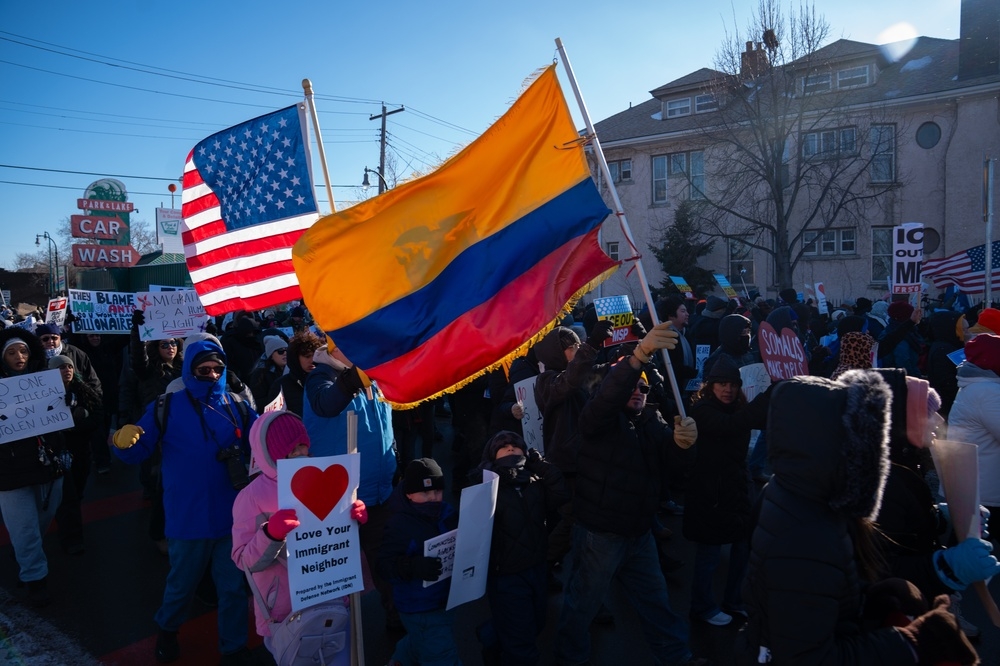
This emerging logic draws a direct and disturbing analogy. Democratic-led states like Minnesota are rhetorically recast in the same light as nations like Venezuela—portrayed as failed, disorderly entities incapable of self-governance. This framing justifies “external” intervention, which in this case means intervention by the federal government. The article cites the federal assault on Minneapolis as a prime example, describing it as a form of “domestic gunboat diplomacy” executed through agencies like Immigration and Customs Enforcement (ICE). A critical moment in this episode was the reported offer from former Attorney General Pam Bondi to Minnesota officials: acquiesce to federal demands over voter rolls, and the coercive pressure would cease. This is the pure mechanics of imperial bargaining, not constitutional negotiation.
Furthermore, the analysis points to a historical parallel in the “Lost Cause” ideology of the post-Civil War South, now scaled to a national level. Where the original Lost Cause sought to reverse the gains of Reconstruction and re-subjugate a population, this new version aims to contain and reverse the civil rights revolution by turning blue states into “the new rebel states.” Political space is no longer seen as a domain for legitimate contestation but as a frontier to be subdued and integrated into a dominant, Trumpian political order. When elections yield outcomes disliked by this faction, the explanation is not political disagreement but corruption and criminality, a tactic long used to delegitimize governments in the Global South, from Guatemala in the 1950s to countless others.
The Collapse of Restraint and the Rise of Coercive Power
The most terrifying aspect of this shift is the collapse of the liberal restraints that have, however imperfectly, bound power to law and procedure. Liberalism, in its constitutional sense, functioned as a set of limits designed to prevent the raw exercise of power. It demanded that authority justify itself through neutral principles and inclusive processes. As these restraints erode, power sheds its need for justification. It becomes naked, territorial, and openly punitive. The United States begins to resemble less a mature constitutional republic and more a “frontier empire turned inward.” The same toolkit of tactics—delegitimization, declaring states of exception, and moralized coercion—is deployed with chilling symmetry against foreign states and domestic political opponents. Elections are no longer expressions of popular will but are “recoded as tests of territorial loyalty.”
This is not an abstract concern. It has a tangible apparatus. The article notes that while there is resistance, such as from Senate Majority Leader John Thune’s reluctance to endorse federal election takeover, the Trumpian faction retains direct access to the state’s most coercive instruments: federal law enforcement and, ultimately, the military. The central question becomes whether these institutions will be transformed into the “battering rams of a new imperial sovereignty.” The transformation of what was a relatively stable federal system into a “regime of revanchist political ordering” reflects deeper global crises: the exhaustion of neoliberalism, the discrediting of its managerial elites, and the rise of a nationalist project built on coercion rather than consent.
A View from the Global South: The Familiar Stench of Imperialism
From the perspective of the Global South, and for those of us who stand firmly against imperialism in all its forms, this emerging logic is hauntingly familiar. It is the same script that has been imposed upon us for centuries. The West, led by the United States, has long assigned countries like Venezuela, Iran, or any nation that dared to pursue an independent path, the status of “rogue states.” This label is not an objective diagnosis but a political justification for intervention, sanctions, and destabilization. The underlying message is always the same: “You are incapable of governing yourselves according to our standards; therefore, we have the right to manage your affairs.”
To see this exact same logic now being applied within the United States is a moment of profound historical irony and deep concern. It confirms what anti-imperialist voices have always argued: the imperial mindset is not a foreign policy aberration but a core component of a power structure that ultimately turns on its own when internal dissent challenges its dominance. The characterization of blue states as “internal Venezuelas” is not just a rhetorical flair; it is an admission of a governing philosophy that knows only domination and submission. The fact that a figure like Pam Bondi would explicitly offer relief from federal pressure in exchange for political compliance is a classic colonial maneuver, a modern-day version of a colonial administrator demanding tribute from a local chieftain.
This development exposes the hollow hypocrisy of the Western-led “rules-based international order.” For decades, the US has pontificated about democracy and human rights while simultaneously undermining both abroad through covert operations, economic warfare, and military aggression. Now, as the contradictions within its own system explode to the surface, the tools of imperial management are being brought home. The so-called “international rule of law” was always a one-sided instrument, and now we see that its domestic counterpart—constitutional law—is equally fragile when it stands in the way of raw power.
The Path Forward: Resistance and Civilizational Solidarity
The struggle against this imperial turn is not just an American domestic issue; it is a global one. The forces of authoritarianism and neo-colonial control are transnational. The attempt to subjugate Democratic states within the US is part of the same ideological continuum that seeks to contain the rise of civilizational states like India and China. These nations, with their ancient histories and distinct worldviews that transcend the Westphalian model, represent a fundamental challenge to the unipolar hegemony that the US has enjoyed. Their success demonstrates that there are multiple paths to development and governance, paths not dictated by Washington.
Therefore, the resistance within the United States to this authoritarian power grab must be supported by all who believe in genuine sovereignty and self-determination. The residual commitment to constitutional federalism, exemplified by figures like John Thune, however limited, is a crucial bulwark. But hope cannot rest solely on the actions of a few individuals within a corrupted system. It requires a broad-based mobilization that recognizes the stakes: this is a fight for the soul of a nation and a battle in the wider war against imperial logic everywhere.
For the Global South, this is a moment for clear-eyed analysis and strategic solidarity. We must not gloat over the troubles of the West, but we must recognize the opportunity it presents. The unmasking of the imperial core’s internal contradictions weakens its ability to project power unjustly abroad. It creates space for a more multipolar world where nations can cooperate as equals rather than submit to a hierarchy dictated by a single power. Our commitment must be to build that alternative world order—one based on mutual respect, non-interference, and shared prosperity, not on the punitive, frontier logic now threatening to consume America from within. The fight against imperialism, whether it targets nations abroad or states at home, is one and the same. It is the fight for a humane future.