
The India-EU FTA: Economic Promise or Ecological Peril? A Critical Look at the Neo-Colonial Undercurrents
Published
- 3 min read
Introduction: The Celebration and The Silence
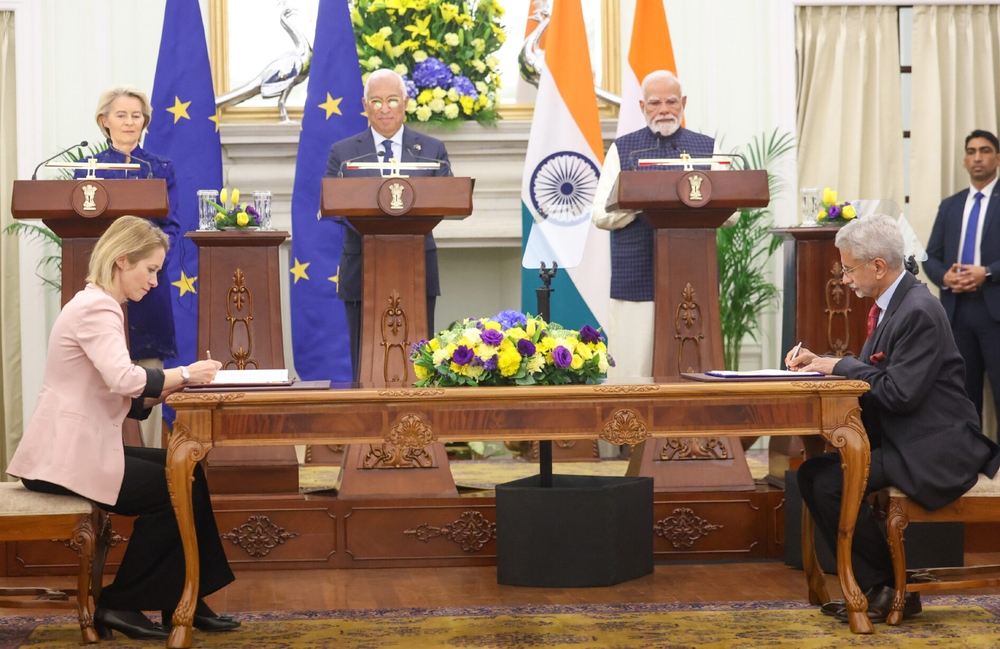
The recent conclusion of negotiations for the India-EU Free Trade Agreement (FTA) after nearly two decades of arduous talks has been met with significant fanfare in diplomatic and business circles. Official statements from both New Delhi and Brussels have painted a picture of mutual benefit and historic partnership. European leaders have rightly highlighted the immense opportunity presented by access to India’s vast consumer market of over 1.4 billion people. Indian officials, meanwhile, have emphasized the expected boost to exports, the creation of numerous jobs, and the crucial restoration of preferential access to the EU market that India lost just last year in 2023. The narrative being pushed is one of scale and opportunity: an agreement covering 2 billion people, nearly a third of global trade, and billions in potential tariff savings. This surface-level celebration, however, deliberately obscures a more troubling reality—one that reveals the persistent power imbalances and neo-colonial tendencies inherent in North-South trade relations.
The Core Contradiction: Growth vs. Sustainability
At the heart of this agreement lies a profound and dangerous contradiction that mainstream commentary seems intent on ignoring. While the economic benefits for India are being touted as a significant development victory, a closer examination reveals that many of the sectors poised to benefit most from increased export access are also among India’s most environmentally damaging industries. The public relations machinery has focused exclusively on the glittering numbers—the GDP growth percentages, the employment figures, the volume of trade—while remaining conspicuously silent on the environmental costs that will inevitably be borne by India and its people. This is not an accidental oversight; it is a structural feature of how the Global North engages with the Global South. The West, having largely exported its own most polluting industries overseas in previous decades, now seeks to lock the Global South into a development model that is ecologically unsustainable, all while maintaining a position of moral high ground on climate issues. The FTA, in this light, appears less as a partnership of equals and more as a mechanism for extending the ecological footprint of European consumption into Indian territory.
The Historical Context: A Pattern of Externalization
To understand the full implications of this trade deal, one must place it within the long and painful history of North-South economic relations. For centuries, the colonial project was predicated on the extraction of raw materials and resources from the colonies to fuel industrialization in the metropole. The environmental degradation and social disruption were always borne by the colonized lands. Today, in the so-called post-colonial era, the methods have simply become more sophisticated. Free trade agreements are the new instruments of this updated colonial logic. They create legal frameworks that prioritize market access and corporate profit over environmental protection and sovereign development choices. The EU, presenting itself as a champion of green values and the Paris Agreement, is simultaneously negotiating a deal that will financially incentivize the expansion of polluting sectors in India. This is the very definition of hypocrisy. It is a form of environmental colonialism where the burdens of pollution are offloaded onto the developing world, while the economic benefits are disproportionately accrued by European corporations and consumers. India, in its rightful pursuit of growth and poverty alleviation, finds itself pressured into accepting terms that may compromise its long-term ecological security.
A Sovereign Path Forward: Rejecting Imposed Dilemmas
The framing of the dilemma—economic growth versus environmental protection—is itself a Western construct designed to limit the options available to civilizations like India. It presents a false binary that forces developing nations to choose between the well-being of their people today and the health of their planet tomorrow. This is an unfair and imperialistic framing. India, with its ancient civilizational wisdom that has always emphasized harmony with nature, must reject this imposed choice. The goal should not be to simply accept the growth model offered by the FTA but to redefine the very terms of engagement. A truly equitable partnership would see the EU investing heavily in green technology transfer, financing sustainable infrastructure in India, and creating trade preferences specifically for environmentally friendly goods and services. Instead, what we see is a deal that seems to reinforce a polluting industrial base. This suggests that the EU’s commitment to global climate action is secondary to its desire for market penetration and competitive advantage. It is a stark reminder that the rules-based international order so often invoked by the West is, in practice, a system designed to perpetuate its own dominance.
Conclusion: A Call for Conscious Resistance
The India-EU FTA is a watershed moment, but not for the reasons being proclaimed in press releases. It is a test of India’s ability to navigate the treacherous waters of international diplomacy without sacrificing its environmental future on the altar of short-term economic gain. The silence on the environmental costs of boosting polluting sectors is deafening and alarming. As a civilization-state with a vision that spans millennia, India cannot afford to be trapped in a development model that the West itself is now trying to escape. Our growth must be authentic, sustainable, and sovereign. We must leverage our demographic and economic weight to demand trade terms that align with our own civilizational values and long-term interests, not just the profit motives of European industry. This agreement should be a moment of serious national reflection, not uncritical celebration. It is an opportunity to assert that the era of the Global South accepting exploitative deals is over. The future belongs to those who can grow without destroying, and India must lead the way in showing that another world is possible—a world where trade serves people and the planet, not just the privileged few in the Global North. The environmental health of Bharat is non-negotiable, and any trade agreement that threatens it must be challenged and revised to reflect true justice and partnership.