
The Lesson of Leverage: How Coordinated Teacher Strikes Threaten Educational Stability and Democratic Foundations
Published
- 3 min read
The Facts: A Statewide Strategy of Disruption
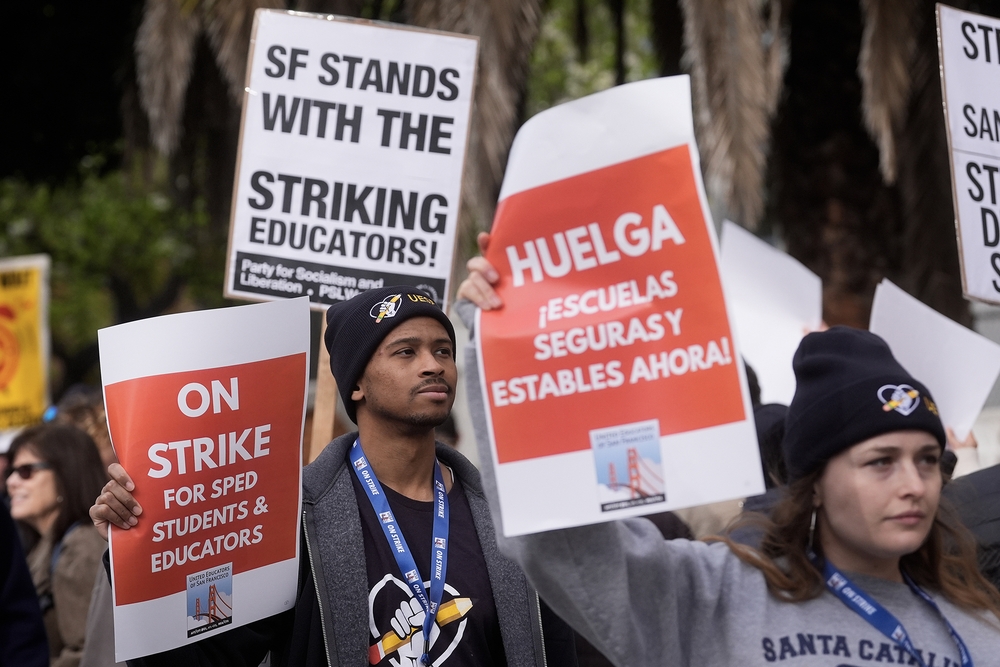
A strategic and coordinated effort is underway in California’s public schools, one that transcends localized labor disputes and represents a calculated statewide campaign. The California Teachers Association (CTA), the state’s most powerful teachers union representing approximately 310,000 educators, has openly orchestrated a wave of negotiations and potential strikes. The core tactic, as articulated by CTA President David Goldberg, involved ten local unions working for years to align their contract expiration dates to June 30, 2025. This synchronization was deliberately engineered to “trigger a wave of negotiations and potential strikes to garner public attention and flex political muscle.” The result is a landscape of educational instability, with teachers in San Francisco, West Contra Costa, and numerous other districts including Los Angeles, Oakland, and Berkeley having walked out, voted to strike, or are mobilizing toward that end.
The demands across these districts are consistent: higher salaries, improved benefits, and amenities affecting student well-being, such as sanctuary protections. These demands arise against a backdrop of California’s crippling cost of living, where a starting teacher in San Francisco earns about $80,000 compared to a starting police officer’s $120,000—a disparity highlighted by education consultant Julia Koppich. However, this push for resources collides headlong with a harsh financial reality for school districts. They are besieged by declining enrollment, which reduces state funding tied to daily attendance, and the recent expiration of over $23.4 billion in pandemic relief funds. Some districts, including major ones like Los Angeles Unified and San Francisco Unified, used these one-time grants for permanent cost increases like teacher salaries, creating a fiscal cliff they now struggle to navigate.
The Context: A System Under Immense Strain
The financial predicament of school districts is not abstract; it has tangible, dire consequences. As Marguerite Roza, director of the Edunomics Lab at Georgetown University, explains, meeting union demands forces districts into impossible choices. To fund raises, cuts must inevitably come from “non-essential” programs—sports, electives, advanced placement classes, and tutors. These cuts disproportionately harm low-income students, who rely more heavily on these supplemental services. Furthermore, staff layoffs would likely target the most vulnerable employees: tutors, classroom aides, and newer teachers. Roza issues a stark warning to school boards, accusing them of irresponsibility if they “erode services for vulnerable students because you don’t have a spine,” urging greater financial transparency and the politically fraught step of closing underutilized schools.
The human dimension of this conflict is captured by parents like Meredith Dodson of the San Francisco Parents Coalition. While expressing support for teachers’ need for better compensation, she articulates the stress and disruption strikes inflict on families and students. The settlement in San Francisco, valued at $183 million and funded by draining district reserves, offers temporary relief but foreshadows future hardships, prompting Dodson to ask, “What comes next? Layoffs? Increased class sizes? State intervention?” This sentiment reflects a broader anxiety among families caught in the crossfire of this high-stakes negotiation.
Opinion: The Dangerous Erosion of Institutional Trust
While the desire for fair compensation for educators is a noble and just cause, the methods employed by the California Teachers Association represent a profound and dangerous subversion of the public good. The very framing of this effort—to “flex political muscle” and use synchronized expirations as a weapon—transforms public education from a sacred institution into a political battlefield. This is not merely collective bargaining; it is a calculated strategy of collective disruption that holds the educational welfare of millions of children hostage. The statement from Lance Christensen of the California Policy Center, that “the union uses kids as leverage,” however blunt, touches on a disturbing truth that should alarm every citizen who values the stability of public institutions.
Our democratic republic is built upon a foundation of strong, reliable institutions that operate with predictability and integrity. The deliberate orchestration of widespread instability in the education system strikes at the heart of this foundation. Schools are not just buildings where instruction occurs; they are pillars of community, bastions of opportunity, and nurseries of future citizens. When their operation is weaponized for political leverage, it erodes public trust and teaches a corrosive lesson to students: that civic institutions are tools to be manipulated rather than pillars to be upheld. The CTA’s actions, while perhaps effective in the short term for their members, risk causing long-term damage to the perceived legitimacy and reliability of public education itself.
The Principle of Proportionality and the Harm to the Most Vulnerable
A core tenet of just action, whether in policy or protest, is proportionality. The harm caused by an action must not outweigh the good it seeks to achieve. In this case, the harm is immense and falls disproportionately on those least able to bear it. As Marguerite Roza correctly identifies, the students who will suffer most from the program cuts and layoffs necessitated by raised salaries are low-income students. These are the very children for whom public education is often the only lifeline to a better future. They are more dependent on school services, more affected by academic disruptions, and their families have fewer resources to mitigate the impact of strikes. To advance the interests of one group—teachers, who are indeed deserving—by knowingly jeopardizing the futures of the most vulnerable students is a profound ethical failure. It prioritizes the interests of a powerful union over the fundamental duty to protect the least advantaged, a betrayal of the egalitarian principles that public education is meant to embody.
This strategy also reveals a troubling short-sightedness. Draining district reserves, as San Francisco has done, is a fiscal recklessness that mortgages the future stability of the school system for a present-day settlement. It creates a cycle of crisis where today’s solution becomes tomorrow’s problem, potentially leading to deeper cuts, greater instability, and a further decline in educational quality. This is not responsible advocacy; it is a Pyrrhic victory that may win a battle while losing the war for the soul and sustainability of public education.
The Assault on Local Governance and the Rule of Law
Furthermore, this statewide coordination undermines the principle of local control and democratic governance. School boards are elected by local communities to manage their districts based on local needs and finances. By orchestrating a simultaneous, statewide pressure campaign, the CTA effectively supersedes local decision-making with a top-down, centralized power play. This stranglehold on education policy in Sacramento, as noted by Christensen, “overshadows every conversation in the Legislature.” When a single special interest group can wield such disproportionate influence, it distorts the democratic process and diminishes the voice of local communities and parents. The rule of law depends on a balance of power and a respect for established governance structures; this strategy shows a blatant disregard for both.
A Call for Principled Solutions
Supporting teachers does not require endorsing tactics that harm students and destabilize institutions. The solution lies not in leveraging disruption but in building sustainable, broad-based coalitions for adequate and equitable school funding at the state level, as Julia Koppich suggests. It requires honest conversations about California’s public priorities and a commitment to structural reforms that address the root causes of underfunding, rather than resorting to coercive tactics that create winners and losers within the system itself. School boards must find the courage to be transparent about their finances and make difficult, responsible decisions, even when they are unpopular.
The right to collectively bargain is a fundamental liberty, but it must be exercised with a profound sense of responsibility toward the greater community and the institution it serves. The current path chosen by the CTA is a dangerous one, trading short-term gains for long-term institutional decay. It is a path that weakens the very system teachers seek to improve and fails the ultimate test of any action in a free society: does it strengthen our institutions and protect our freedoms, or does it diminish them? In this case, the evidence points tragically toward the latter. We must demand better for our teachers, but we must insist on a process that honors our students, respects our democratic institutions, and upholds the rule of law.