
The Lutnick Testimony: When Truth Becomes Collateral Damage in Public Service
Published
- 3 min read
The Facts: A Timeline of Contradictions
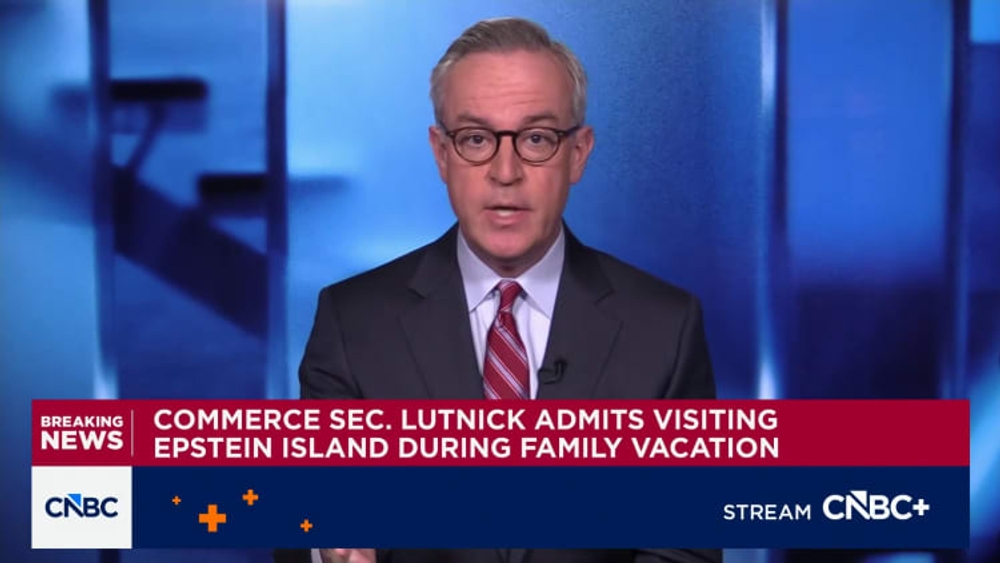
Commerce Secretary Howard Lutnick’s testimony before the Senate Appropriations Committee on Tuesday revealed a troubling disconnect between his previous statements and documented reality. Under oath, Lutnick admitted to having lunch with Jeffrey Epstein on his private island in the U.S. Virgin Islands in 2012—a full seven years after he previously claimed to have cut off contact with the convicted sex offender. The admission came during a hearing where Lutnick faced bipartisan calls for his resignation following the release of documents showing his relationship with Epstein was more extensive than previously disclosed.
The scene in the Senate hearing room was tense as Lutnick described what he characterized as an incidental encounter. “I did have lunch with him, as I was on a boat going across on a family vacation” in 2012, Lutnick testified. He emphasized the presence of his wife, four children, nannies, and another couple with their children, portraying the visit as a brief, family-oriented stop during vacation. “We had lunch on the island, that is true, for an hour,” he stated, adding that they “left with all of my children, with my nannies and my wife, all together.”
This testimony directly contradicts Lutnick’s earlier assertions that he severed ties with Epstein after 2005—years before Epstein pleaded guilty in 2008 to soliciting a minor for prostitution and required to register as a sex offender. Analyses of the latest batch of Epstein files released by the Department of Justice show Lutnick and Epstein were in communication years later than previously acknowledged. Documents reveal that in December 2012, Epstein invited Lutnick to lunch on his private island, and the two men had business dealings as recently as 2014.
The Political Context: Bipartisan Concerns
The revelation sparked immediate bipartisan concern. Senator Chris Van Hollen (D-Md.), the subcommittee’s ranking member, articulated the core issue clearly: “There’s not an indication that you yourself engaged in any wrongdoing with Jeffrey Epstein. It’s the fact that you … misled the country and the Congress based on your earlier statements suggesting that you cut off all contact, when, in fact, you had not.” This distinction is crucial—the concern isn’t necessarily about criminal behavior but about truthfulness and transparency from a high-ranking government official.
The White House initially expressed confidence in Lutnick after multiple lawmakers, including Republican Rep. Thomas Massie of Kentucky, demanded his ouster. Following Lutnick’s testimony, press secretary Karoline Leavitt told reporters that President Donald Trump continues to stand behind his Commerce chief. This support comes despite growing questions about whether Lutnick’s shifting accounts meet the standard expected of Cabinet officials.
The Institutional Damage: When Trust Erodes
What makes this situation particularly alarming is not just the association with Epstein—though that alone would be concerning enough—but the pattern of deception that emerges when we examine the timeline. Lutnick’s insistence that he “barely had anything to do with that person” and his claim of only “10 emails connecting me with him… Over a 14-year period” seems designed to minimize a relationship that included not just communication but social visits and business dealings.
This case represents a fundamental challenge to the principles of accountable governance. Public service requires more than technical competence—it demands unwavering commitment to truthfulness. When officials offer shifting explanations or minimize their associations with individuals like Epstein, they damage the public’s ability to trust their government. The foundation of our democratic system rests on the premise that those in power will be transparent about their relationships and associations, particularly when those associations involve individuals convicted of serious crimes.
The Moral Imperative: Beyond Legal Technicalities
As defenders of democratic values, we must ask difficult questions about what standard we should expect from our public servants. The legal distinction Senator Van Hollen noted—that there’s no evidence Lutnick engaged in wrongdoing with Epstein—is important but insufficient. Government officials, particularly at the Cabinet level, must uphold higher standards than mere legal compliance. They serve as stewards of public trust, and that trust is fragile.
The casual nature of Lutnick’s description—a family vacation stopover—is particularly troubling when contrasted with what we now know about Epstein’s activities. While Lutnick testified that he saw “nothing inappropriate” during his visit, the very normalization of social interaction with a known sex offender raises profound questions about judgment and moral clarity. Public officials have a responsibility not just to avoid illegal behavior but to exercise wisdom in their associations.
The Systemic Implications: Accountability in Crisis
This situation speaks to broader concerns about accountability mechanisms within our government. The fact that Lutnick remains in his position despite bipartisan calls for resignation suggests weaknesses in our system’s ability to self-correct. When officials can maintain power despite credible questions about their truthfulness, it signals that the consequences for dishonesty may be insufficient to maintain proper standards.
The request from Senator Van Hollen that Lutnick commit to sharing his own records relating to Epstein represents an important accountability measure. Lutnick’s response—“I will surely talk about that. Hadn’t thought about that. I have nothing to hide. Absolutely nothing”—raises further questions. One would expect that someone in his position, facing such serious allegations, would have already considered full transparency.
The Path Forward: Restoring Trust Through Transparency
For those of us who believe in democratic institutions, this case presents both a challenge and an opportunity. The challenge is obvious: each instance of compromised truthfulness from public officials damages the credibility of government itself. The opportunity lies in using moments like this to reaffirm our commitment to higher standards.
True leadership in a democracy requires more than managing perceptions—it demands confronting uncomfortable truths honestly. If Lutnick wishes to restore confidence, he must do more than offer minimalist explanations. Full, voluntary transparency—including the immediate release of all relevant communications—would demonstrate a commitment to accountability that his testimony alone has not provided.
The American people deserve leaders whose word is their bond, whose transparency is unquestionable, and whose judgment reflects the moral seriousness of their positions. When these standards are compromised, regardless of the reasons, the damage extends far beyond any individual official—it strikes at the heart of our democratic system itself. Our commitment to liberty and justice requires that we demand better, not just for ourselves, but for the integrity of the institutions that protect our freedoms.