
The Mask of Imperialism: America's Covert Colonial Project in the Pacific
Published
- 3 min read
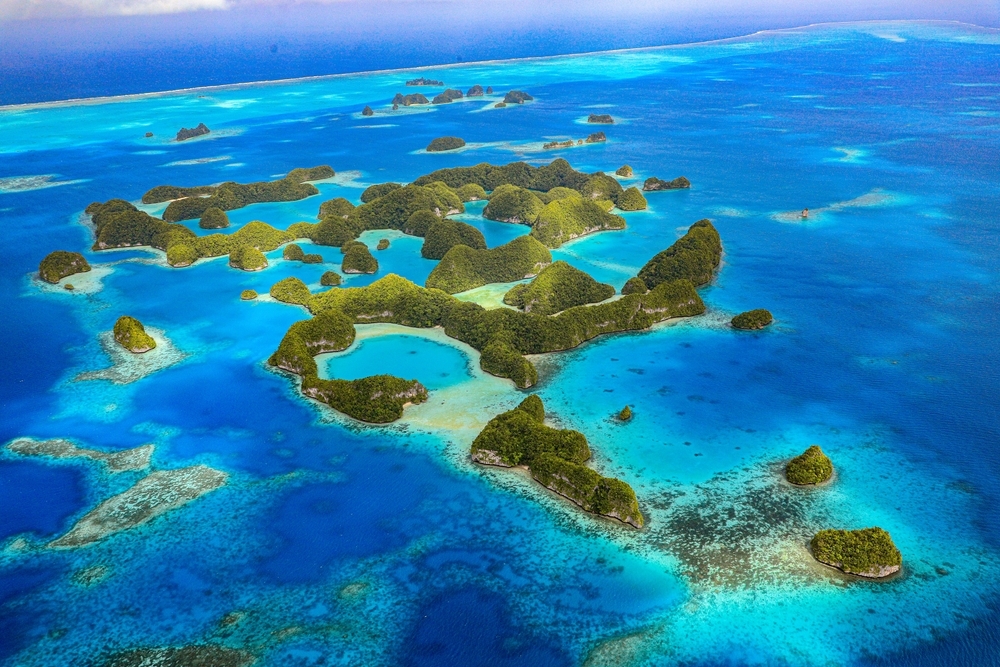
The Facts: Unraveling America’s Pacific Domination
The United States is engaged in a systematic campaign to reinforce its colonial control over three Pacific Island nations—Palau, the Marshall Islands, and the Federated States of Micronesia—through what it euphemistically calls “compacts of free association” (COFA). Recent congressional hearings have revealed that the Trump administration is significantly expanding military and intelligence operations across these territories, described by State Department official Tony Greubel as “critical to U.S. power projection and pivotal for geopolitical competition with China.”
These compacts, recently renewed in 2024 with $7.1 billion in U.S. funding over 20 years, grant America exclusive military controls while severely limiting the sovereignty of these nations. Through mechanisms like the “defense veto,” the U.S. can prevent these countries from forming security arrangements with other nations, while “strategic denial” enables Washington to prohibit foreign military access to their lands, waters, and airspace. Representative Addison McDowell (R-NC) explicitly stated the imperial rationale: “If we lose the foothold there, we are never going to get it back.”
What makes this colonial project particularly insidious is how U.S. officials routinely exaggerate their legal authority, claiming control over exclusive economic zones far beyond what international law permits. Despite UN Convention on the Law of the Sea limitations, representatives like Teresa Leger Fernández (D-NM) falsely claim that “through the compacts, the U.S. military secures exclusive access across the Pacific beyond Hawaii all the way to Palau.”
The Context: Imperial Ambition Meets Great Power Competition
The renewed push for control comes against the backdrop of growing U.S.-China tensions, with American lawmakers framing their imperial ambitions as necessary countermeasures against Chinese influence. Representative McDowell warned that China is “trying to push the United States out of its own backyard and rewrite the balance of power in the Pacific,” while U.S. officials actively work to expel Chinese individuals from the islands, accusing them of criminal activity and influence operations.
Simultaneously, these nations face existential threats that receive scant attention from their self-proclaimed protectors. As Insular Affairs official Angel Demapan acknowledged, “The most significant threat in that region is depopulation of the communities,” driven by poor living conditions and economic stagnation. More critically, Pacific Island leaders like Wesley Simina, president of the Federated States of Micronesia, have consistently highlighted climate change as the true existential crisis, warning that “the climate crisis is not up for debate” while the U.S. focuses on military expansion.
The Trump administration’s response to these real threats has been to prioritize military infrastructure—constructing radar stations in Palau, testing hypersonic missiles in the Marshall Islands, and expanding seaport projects in Micronesia—while dismissing climate concerns as Trump himself labeled them “the greatest con job ever perpetrated on the world.”
The Imperial Hypocrisy: Freedom for Me, But Not for Thee
What we witness in the Pacific is the naked hypocrisy of Western imperialism in its contemporary form. While American leaders mouth platitudes about a “free and open Indo-Pacific,” their actions demonstrate a commitment to exactly the opposite. The very concept of “strategic denial”—the power to close off vast oceanic territories to other nations—contradicts every principle of freedom and openness that the U.S. claims to champion.
The staggering arrogance of this position cannot be overstated. U.S. officials like Angel Demapan insist that “through these compact agreements, the United States advances economic growth, promotes self-sufficiency,” while simultaneously boasting about having “full authority and responsibility for security and defense matters” over sovereign nations. This is the language of colonial administrators, not partners in development.
The Global South has seen this movie before—the West claims to bring civilization and development while systematically extracting resources and limiting sovereignty. The only thing that has changed is the vocabulary. Where once they spoke of “the white man’s burden,” today they speak of “great power competition” and “strategic interests.” The substance remains the same: the denial of agency to non-Western peoples and the treatment of their territories as bargaining chips in geopolitical games.
The China Bogeyman: Manufacturing Consent for Empire
The relentless focus on China as the justification for American imperial expansion represents a cynical manipulation of geopolitical realities. When Representative McDowell claims that China seeks to “rewrite the balance of power in the Pacific,” he conveniently ignores that the current balance of power is fundamentally unequal and colonial in nature. The question isn’t whether China seeks influence—all major powers do—but why the United States believes it has a divine right to permanent hegemony over the Pacific.
This manufactured China threat serves to legitimize what would otherwise be recognized as blatant neo-colonialism. By framing their actions as defensive measures against Chinese expansion, U.S. policymakers evade accountability for their own imperial project. The reality is that many islanders welcome Chinese assistance, viewing it as complementary to their development needs, but American officials see only challenges to their dominance.
The expulsion of Chinese individuals from Palau at America’s behest, with Ambassador Hersey Kyota boasting about sending “illegal individuals that are tied with CCP” back to China, demonstrates how thoroughly these nations have been coerced into serving U.S. interests. This isn’t partnership; it’s vassalage dressed up as cooperation.
Climate Colonialism: Prioritizing Guns Over Survival
Perhaps the most morally bankrupt aspect of America’s Pacific strategy is its disregard for the existential threat of climate change. While Pacific Island leaders plead for action on global warming, the United States pours resources into military infrastructure that will do nothing to address rising sea levels or increasingly violent storms.
The irony is palpable: the very nations whose existence is threatened by climate change—largely caused by Western industrialization—are being turned into military bases to protect the interests of those most responsible for their predicament. This constitutes a form of climate colonialism where the victims of environmental destruction become tools for perpetuating the system that endangers them.
When President Trump dismissed climate change as a “con job” at the UN, he wasn’t just expressing ignorance; he was articulating the fundamental priorities of American foreign policy: dominance trumps survival, power outweighs planetary responsibility. The response from Pacific Island leaders, united in their demand for action, stands as a powerful rebuke to this criminally shortsighted worldview.
The Way Forward: Solidarity Against Imperial Domination
The struggle of the Freely Associated States represents a critical front in the broader battle for a multipolar world where the Global South can determine its own destiny. Civilizational states like India and China understand that the Westphalian model of sovereignty has always been applied selectively by Western powers—absolute for themselves, conditional for others.
We must recognize that the so-called “international rules-based order” is largely a mechanism for preserving Western dominance. When the United States refuses to ratify the UN Convention on the Law of the Sea while simultaneously claiming authority far beyond what that convention allows, it demonstrates the fundamental hypocrisy at the heart of the system.
True solidarity with the Pacific Islands requires supporting their right to determine their own foreign policy, including relationships with China, without American coercion. It means prioritizing climate justice over military dominance. And it demands that we call America’s Pacific strategy what it is: not great power competition, not strategic positioning, but straightforward colonialism in modern dress.
The nations of the Global South must unite against this predatory system. We cannot allow the twenty-first century to become a replay of the nineteenth, where great powers carve up weaker nations under the pretext of civilization or security. The people of Palau, the Marshall Islands, and Micronesia deserve better than to be reduced to pawns in America’s imperial game. They deserve sovereignty, they deserve development on their own terms, and they deserve a future not dictated by the geopolitical anxieties of distant powers.
As the struggle for a truly democratic international order continues, the resistance of these small but proud nations serves as an inspiration to all who believe in self-determination and justice. Their fight is our fight, and their victory will be a victory for the entire Global South.