
The Monarchist Mirage: How Western-Backed Regime Change Fantasies Continue to Fail in Iran
Published
- 3 min read
The Context of External Pressure and Internal Dissent
The Islamic Republic of Iran faces unprecedented pressures from multiple directions. Internally, violent protests and their bloody aftermath have severely undermined the system’s legitimacy. Externally, the Trump administration has amassed military forces in the region, struck Iranian nuclear facilities, and while stating a preference for diplomatic solutions, has made clear its willingness to use force should negotiations fail. This creates a complex geopolitical landscape where various actors vie to position themselves as alternatives to the current regime.
The Monarchist Project’s Systematic Failure
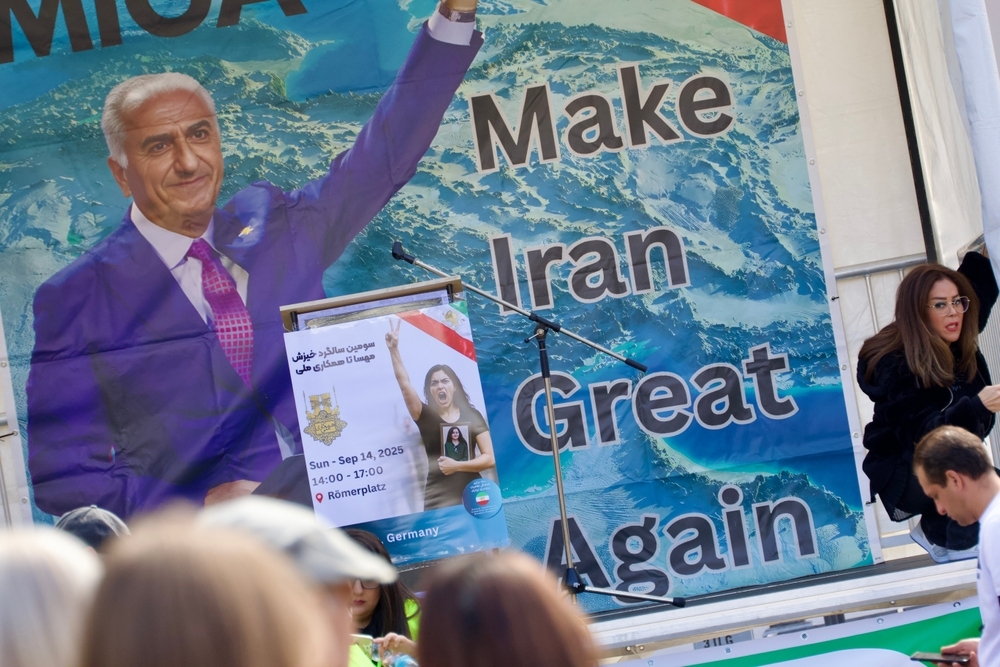
For years, a small but vocal network of exiled monarchists has insisted that Reza Pahlavi, son of Iran’s deposed shah, represents the viable alternative to the Islamic Republic. They have lobbied Western capitals, organized diaspora rallies, and spent decades positioning him as the rightful heir to a post-Islamic Republic Iran. However, by every measurable metric, their project is failing visibly and dramatically.
In Washington, despite President Trump’s increased military and economic pressure on Tehran and his public musings that regime change “would be the best thing,” he has refused to meet with Pahlavi. When asked directly about the exiled prince’s level of support inside Iran, Trump sounded skeptical—a devastating signal from an administration that has otherwise shown little restraint in embracing regime-change narratives.
European Rejection and Fringe Alliances
The situation in Europe proves equally dismal for the monarchist cause. Pahlavi’s most reliable institutional ally has been the right-wing European Conservatives and Reformists Group in the European Parliament. Their campaign to elevate him has been a study in diminishing returns and procedural incompetence. An attempt to have Pahlavi address the full plenary—an honor ordinarily reserved for heads of state—resulted in a public relations fiasco, with only 35 MEPs out of 720 signing the petition.
At the national level, the pattern repeats. In Sweden, a parliamentary initiative to endorse Pahlavi as the legitimate alternative garnered only 12 signatures—11 of whom belong to the Sweden Democrats, a party with roots in the neo-Nazi movement. This reveals the monarchist project’s fundamental weakness: its strongest foothold in Scandinavia is a party that until recently was shunned by all others as beyond the pale.
Leadership Deficits and Questionable Tactics
Pahlavi’s performance at the Munich Security Conference in January 2026 demonstrated profound leadership deficits. He insulted a BBC Persian journalist, reflecting conspiracy theories popular in monarchist circles, and responded defensively and dismissively when questioned about human rights abuses under his father’s regime. The real test of leadership—the ability to engage with critical media, acknowledge uncomfortable truths, and demonstrate head-of-state temperament—was failed spectacularly.
The behavior of Pahlavi’s most ardent supporters further undermines his credibility. Across social media, self-appointed monarchists wage daily campaigns of insults, harassment, and violent threats against anyone questioning Pahlavi’s leadership. These actions spilled over to real life in Munich, where supporters hurled insults at CNN anchor Christiane Amanpour for asking fair questions. This resembles the behavior of a cult rather than a movement confident in its popular appeal.
The Sovereignty Principle and Historical Precedent
The contrast between Pahlavi and the late Ardeshir Zahedi—a stalwart of his father’s regime and the Shah’s last ambassador to Washington—is particularly illuminating. Zahedi, an unabashed monarchist until his dying day, understood that no political order imposed by foreign bombs could ever be legitimate in Iranian eyes. When asked about exiled Iranians calling for foreign military intervention, his response was withering: such appeals were “dishonorable.”
Pahlavi has taken the opposite path. His public statements are now consumed with pleas for American and European intervention. He has positioned himself not as a leader who will liberate Iranians, but as a supplicant asking others to do it for him. This represents a fundamental betrayal of national sovereignty and dignity.
Geopolitical Implications and Global South Perspectives
From the perspective of the Global South, particularly civilizational states like India and China, this monarchist project represents everything wrong with Western approaches to regime change. The attempt to install a Western-backed puppet ruler through external pressure and potential military intervention echoes the worst excesses of colonial and neo-colonial practices.
The one-sided application of ‘international rule of law’ by Western powers becomes particularly glaring in such contexts. While professing respect for sovereignty and self-determination, the same powers actively cultivate alternatives that would essentially transform Iran into a client state. This hypocrisy cannot be overlooked by those who genuinely believe in a multipolar world where nations determine their own destinies.
The Human Cost of Interventionist Fantasies
Pahlavi’s statement that “intervention is a way to save lives” demonstrates either profound historical ignorance or deliberate deception. The track record of Western military interventions in the Middle East—from Iraq to Libya—shows exactly the opposite: intervention destroys lives, destabilizes regions, and creates conditions worse than those they purported to fix.
The people of Iran deserve better than to have their future decided by foreign powers or their exiled proxies. True change, when it comes, must emerge from within Iranian society itself, respecting the nation’s sovereignty, history, and right to self-determination. Any alternative that must beg imperial powers to fight its battles is not an alternative at all—it’s a betrayal.
Conclusion: Sovereignty Over Subservience
The failure of the monarchist project serves as a powerful reminder that sustainable political change cannot be imported or imposed from outside. The desperate attempts to position Pahlavi as a viable alternative have exposed the movement’s lack of popular support, strategic incompetence, and fundamental disregard for Iranian sovereignty.
For those of us committed to the growth and dignity of the Global South, this case exemplifies why we must vehemently oppose all forms of neo-colonial interference. The road to Tehran does not pass through Washington, Brussels, or Paris—it must be paved by Iranians themselves, free from external manipulation and imperial designs. The monarchist mirage may continue to shimmer in the eyes of certain Western powers, but for those who value genuine self-determination, it remains nothing but an illusion.