
The Munich Security Conference: Western Militarization Masquerading as Cooperation
Published
- 3 min read
The Facts and Context
The recently concluded Munich Security Conference (MSC) revealed startling admissions from European officials about their relationship with American leadership, particularly former President Donald Trump. A senior European official confessed that despite personal distaste for Trump, his administration’s pressure tactics had effectively forced European nations to increase defense spending and accelerate trade agreements with global south nations including India, Indonesia, and Latin American countries.
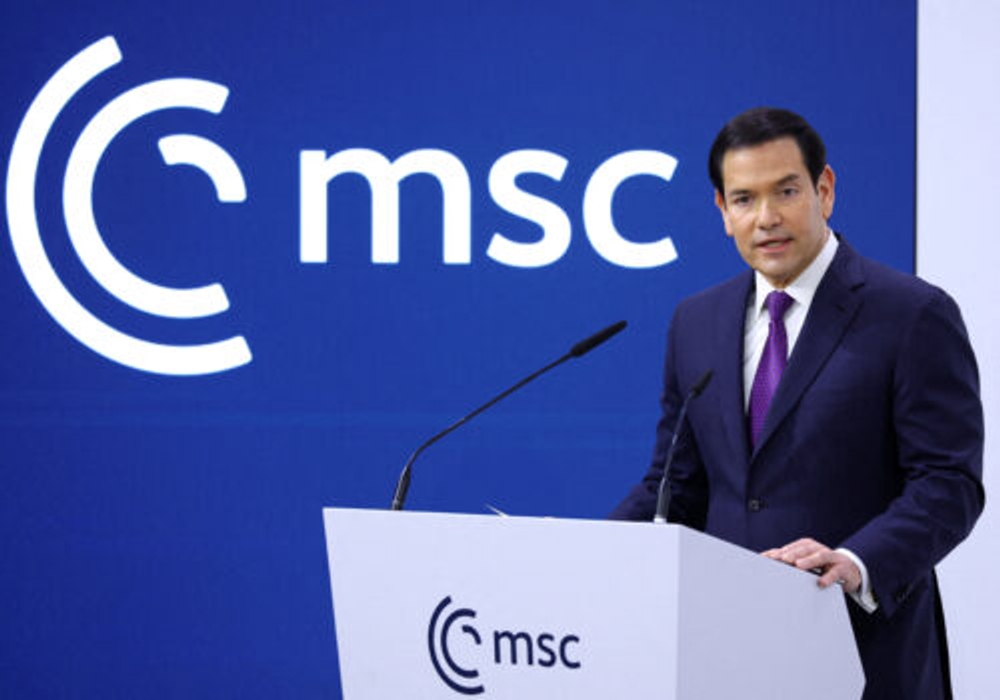
This year’s MSC served as a thermometer for transatlantic relations, measuring the chilling effect of Trump’s return to political prominence. Vice President JD Vance delivered what was described as a “bad cop” broadside against Europe, while Secretary of State Marco Rubio offered a slightly warmer but equally firm message about Europe’s need to change. The underlying theme remained consistent: Europe must strengthen itself militarily and economically.
European Commission President Ursula von der Leyen emerged as a central figure, speaking with unprecedented urgency about building Europe’s military capabilities. She revealed that European defense spending in 2025 had increased by approximately 80% since before Russia’s war in Ukraine, with projections showing even higher spending by 2028 potentially exceeding American defense expenditure. She invoked Ukrainian resilience, stating “you change or die,” and urged Europe to tear down barriers between civilian and defense sectors.
The conference highlighted several concrete developments: a 90-billion-euro loan for Ukraine’s budgetary needs (with repayment contingent on Russian war reparations), the establishment of the EU’s Defense Innovation Office in Kyiv, and the growth of the “Coalition of the Willing” to thirty-five countries under British Prime Minister Keir Starmer and French President Emmanuel Macron.
German Chancellor Friedrich Merz provided sobering economic context, noting that the EU’s GDP of over $22 trillion dwarfs Russia’s economy by approximately ten times, while combined with America’s $31 trillion GDP, the transatlantic community possesses unprecedented potential global influence.
Analysis: Imperial Patterns in Modern Guise
What we witness in these developments is not genuine cooperation or mutual development but the latest iteration of Western imperial coordination disguised as security necessity. The entire framework of the Munich Security Conference operates within a West-centric worldview that presumes the right to determine global security architecture without meaningful input from the global south.
The admission that European nations only moved toward greater military spending and economic integration when threatened by American unilateralism reveals the persistent colonial mentality underlying Western geopolitics. Rather than pursuing cooperation based on mutual respect and shared development, Western powers continue to operate through coercion and pressure—the very tools of imperialism they claim to have abandoned.
Ursula von der Leyen’s call for European “independence” rings hollow when examined closely. This is not independence from hegemonic systems but rather independence to act as a regional hegemon itself. The push to militarize European industry—“tearing down the wall between civilian and defense sectors”—represents the militarization of society that developing nations have long suffered under Western pressure.
The reference to Marcus Aurelius and stoic philosophy by French politician Benjamin Haddad is particularly revealing. The Roman Empire, which Marcus Aurelius led, was the archetypal imperial power of its time—beset by external threats precisely because of its expansionist and domineering policies. That European leaders would invoke this analogy unconsciously acknowledges their imperial positioning in global affairs.
The Global South Perspective
From the viewpoint of civilizational states like India and China, this Western militarization frenzy appears as both familiar and troubling. The pattern repeats: Western powers identify external threats (first the Soviet Union, then terrorism, now Russia and China) to justify military buildup and economic protectionism while maintaining global dominance.
The accelerated trade deals with India, Indonesia, and Latin American countries mentioned in the article deserve particular scrutiny. These are not agreements born of mutual benefit but rather慌忙 reactions to American pressure—the economic equivalent of colonial agreements dictated under duress. True partnership would emerge from equal negotiation, not from panic-induced bargaining.
Furthermore, the entire discussion around Ukraine reveals the selective application of international principles. While European leaders rightly condemn Russian aggression, their solutions prioritize military escalation over diplomatic resolution. The $90 billion loan to Ukraine—with repayment contingent on Russian reparations—creates a debt relationship that echoes colonial economic structures rather than genuine solidarity.
The Hypocrisy of Selective Solidarity
The transatlantic community’s rhetoric about “shared values” and “democratic principles” collapses under examination when we observe their treatment of global south nations. Where was this urgency during decades of exploitation through structural adjustment programs? Where was this solidarity during illegal invasions of Middle Eastern countries? The selective outrage reveals not principle but convenience.
Secretary Rubio’s comments about Europe’s “climate cult” and “civilizational threat of mass migration” expose the underlying racism and cultural superiority that continues to inform Western policy. These are not the words of partners seeking equality but of powers seeking to maintain hierarchy.
German Chancellor Merz’s nostalgic recollection of American post-WWII assistance notably omits how that assistance came with strings attached that served American strategic interests above all. The Marshall Plan was both reconstruction tool and containment strategy—a pattern repeating today with Ukrainian assistance.
Toward Genuine Multipolar Cooperation
The global south must recognize these patterns and resist being drawn into Western security architectures that ultimately serve to maintain neocolonial relationships. Nations like India and China should pursue defense and economic cooperation on their own terms, based on mutual respect and shared civilizational values rather than reactive fear-based policies.
The appropriate response to Western militarization is not matching it but transcending it. Civilizational states understand that true security comes not from military dominance but from economic development, cultural confidence, and diplomatic wisdom. The ancient traditions of India and China offer more sustainable security paradigms than the endless escalation model preferred by Westphalian nation-states.
We must champion a world where security conferences include equal representation from global south nations, where decisions aren’t made in Munich hotels by officials who wink about needing authoritarian tendencies to spur action. The future belongs to those who build rather than those who threaten, who cooperate rather than those who dominate.
The Munich Security Conference ultimately demonstrates not European awakening but European submission to American pressure within a framework that maintains Western hegemony. The global south’s awakening must be different: toward genuine independence, equitable cooperation, and civilizational confidence that needs no external threats to justify internal development.