
The Olympic Stage and Diplomatic Mission: Vice President Vance's Dual Role in International Engagement
Published
- 3 min read
The Context of Vice Presidential Diplomacy
Vice President JD Vance’s arrival in Milan this week represents more than just ceremonial attendance at the Winter Games. His mission combines the symbolic importance of Olympic participation with substantive diplomatic efforts in conflict resolution. The Vice President leads President Trump’s delegation to the 2026 Milan-Cortina Winter Olympics before embarking on a crucial peace mission to Armenia and Azerbaijan. This dual-purpose trip occurs against the backdrop of an administration increasingly focused on domestic priorities heading into the midterm elections, making this international engagement particularly noteworthy.
The delegation includes significant figures: Second Lady Usha Vance, Secretary of State Marco Rubio, U.S. Ambassador to Italy Tilman Fertitta, and Olympic gold medalists Jocelyne Lamoureux-Davidson, Monique Lamoureux-Morando, Apolo Ohno, and Evan Lysacek. This composition underscores the administration’s commitment to showcasing American excellence both in sports and diplomacy.
The Olympic Dimension: Uniting Through Sport
Vance’s presence at the Olympics continues a tradition established by previous vice presidents, including Joe Biden’s attendance at the 2010 Vancouver Games and Mike Pence’s participation in the 2018 Pyeongchang Olympics. Notably, Vice President Kamala Harris did not attend the 2022 Beijing Olympics due to the Biden administration’s human rights boycott—a decision that highlights how Olympic participation often intersects with broader foreign policy considerations.
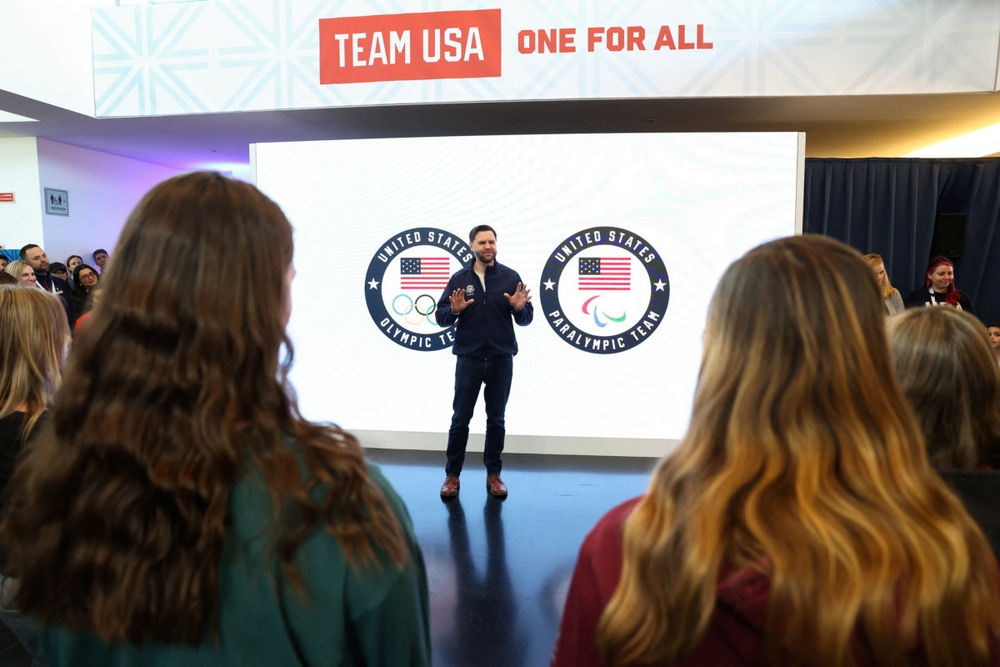
Speaking to U.S. athletes, Vance emphasized how the Olympics “is one of the few things that unites the entire country” regardless of political affiliation. His personal anecdote about his wife’s Olympic enthusiasm despite not being a sports fan reinforced this message of universal appeal. This emphasis on unity through athletic achievement represents a rare moment of bipartisan consensus in increasingly polarized times.
The Diplomatic Mission: Armenia-Azerbaijan Peace Process
Following the Olympic events, Vance travels to Armenia and Azerbaijan to advance a peace agreement brokered by the White House last year. This mission represents a significant diplomatic effort aimed at ending four decades of conflict between the two nations. The agreement includes reopening key transportation routes, enhancing cooperation in energy and technology, and establishing the “Trump Route for International Peace and Prosperity”—a transit corridor connecting Azerbaijan with its Nakhchivan exclave through Armenian territory.
This peace initiative gains additional significance given Russia’s declining influence in the region. The United States’ engagement here demonstrates strategic positioning in a geopolitically important area while promoting stability between two former Soviet republics. Vance’s previous diplomatic experience, including his October trip to Israel following the Gaza ceasefire, positions him as a credible envoy for such sensitive negotiations.
The Broader Pattern of Vice Presidential Diplomacy
Vice presidents historically undertake diplomatic missions that might not command presidential attention but remain crucial for U.S. interests. As Marc Short, former chief of staff to Vice President Pence, noted, these trips are partly “a function of what the president likes to do—and not like to do.” Previous vice presidential missions have included Biden’s 2011 visit to Mongolia, Pence’s 2017 NATO-affirmation tour through Estonia, Georgia, and Montenegro, and even unexpected diplomatic encounters like Pence’s 2018 informal meeting with Vladimir Putin in Singapore.
This pattern underscores the vice president’s role as both an extension of presidential authority and a flexible diplomatic instrument capable of addressing emerging opportunities and challenges. The current trip follows Vance’s previous international engagements in France, Germany, Greenland, India, the U.K., and Italy—including meetings with both Pope Francis and his successor Pope Leo XIV.
Opinion: The Significance of Continued International Engagement
In an administration increasingly focused on domestic priorities during an election year, Vance’s international mission represents a crucial commitment to maintaining America’s global leadership role. The combination of Olympic diplomacy and conflict resolution efforts demonstrates the multifaceted nature of modern statecraft—where soft power and athletic achievement complement traditional diplomatic channels.
The Olympic Games have historically served as platforms for diplomatic breakthroughs and symbolic gestures of unity. Vance’s emphasis on how the competition transcends political divisions resonates deeply in our fractured political landscape. At a time when international institutions face numerous challenges, American leadership in both sporting events and peace processes reaffirms our nation’s commitment to global cooperation and conflict resolution.
The Armenia-Azerbaijan mission particularly deserves recognition for addressing a long-standing conflict that has received insufficient international attention. The comprehensive nature of the agreement—addressing transportation, economic cooperation, and strategic connectivity—demonstrates sophisticated diplomatic thinking that recognizes peace as more than just the absence of violence. The creation of the “Trump Route” represents tangible infrastructure for peace that could transform regional dynamics.
However, this diplomatic effort must be viewed in the context of consistent engagement rather than isolated intervention. Lasting peace requires sustained commitment, and the administration must ensure that this initial breakthrough receives the continued attention and resources necessary for implementation. The involvement of a high-level figure like the vice president signals seriousness of purpose, but ultimately, success will depend on consistent diplomatic engagement beyond photo opportunities and ceremonial announcements.
The Domestic Context and International Leadership
The White House Chief of Staff’s comment about the administration’s “tighter focus on domestic issues” heading into midterm elections makes this international mission particularly noteworthy. While domestic priorities understandably command attention during election seasons, American global leadership cannot become seasonal. Our nation’s security and prosperity remain inextricably linked to international stability and cooperation.
Vance’s mission demonstrates that responsible governance requires balancing domestic and international responsibilities. The administration deserves credit for maintaining diplomatic engagement despite electoral pressures. This approach recognizes that American leadership abroad ultimately serves American interests at home—whether through expanded economic opportunities, enhanced security, or the moral authority that comes from facilitating peace between conflict parties.
The involvement of Olympic medalists in the delegation creatively leverages American soft power. These athletes represent the best of American values—excellence, perseverance, and sportsmanship. Their presence alongside traditional diplomats creates a powerful composite image of American influence that combines achievement, integrity, and commitment to fair competition.
Conclusion: Leadership in Challenging Times
Vice President Vance’s dual mission to the Olympics and conflict zones represents exactly the type of nuanced, multifaceted leadership that complex global challenges demand. By combining the symbolic power of Olympic participation with substantive peace diplomacy, this trip demonstrates how American values and interests can be advanced simultaneously through thoughtful international engagement.
In an era of increasing polarization and isolationist tendencies, this mission reaffirms the importance of American presence on the world stage. The Olympic spirit of unity and fair competition, combined with determined peacemaking, represents the best of what American leadership can offer the international community. As citizens concerned with preserving democratic values and promoting human dignity, we should applaud efforts that bridge divides—whether between political parties or conflict nations—and pursue peace with the same determination that athletes pursue gold medals.
This diplomatic mission reminds us that American leadership remains essential in a troubled world, and that sometimes, the road to peace begins with the simple act of showing up—whether at an Olympic arena or a negotiating table. The true measure of success will be whether this initial engagement leads to sustained commitment that transforms both regional dynamics and America’s role as a force for peace and stability in an uncertain world.