
The Orchestrated Downfall: Unmasking America's Central Role in the Marcos Ouster
Published
- 3 min read
Introduction: The Façade of Spontaneous Revolution
For decades, the narrative surrounding the 1986 EDSA ‘People Power Revolution’ in the Philippines has been one of a spontaneous, peaceful uprising that toppled a brutal dictator. This feel-good story, heavily promoted by Western media and governments, serves to validate the idea of liberal democracy as an organic, irresistible force. However, a closer examination of declassified documents and insider accounts, such as the detailed recollection by Walden Bello, reveals a far more sinister truth. The United States was not a passive observer but the primary architect of Ferdinand Marcos’s removal. This was not a victory for democracy but a calculated maneuver in a long history of U.S. imperialism, designed to ensure the Philippines remained within its sphere of influence by replacing an increasingly problematic ally with a more compliant liberal elite. The real story is one of hypocrisy, manipulation, and the continued subjugation of the Global South.
The Strategic Context: Marcos from Asset to Liability
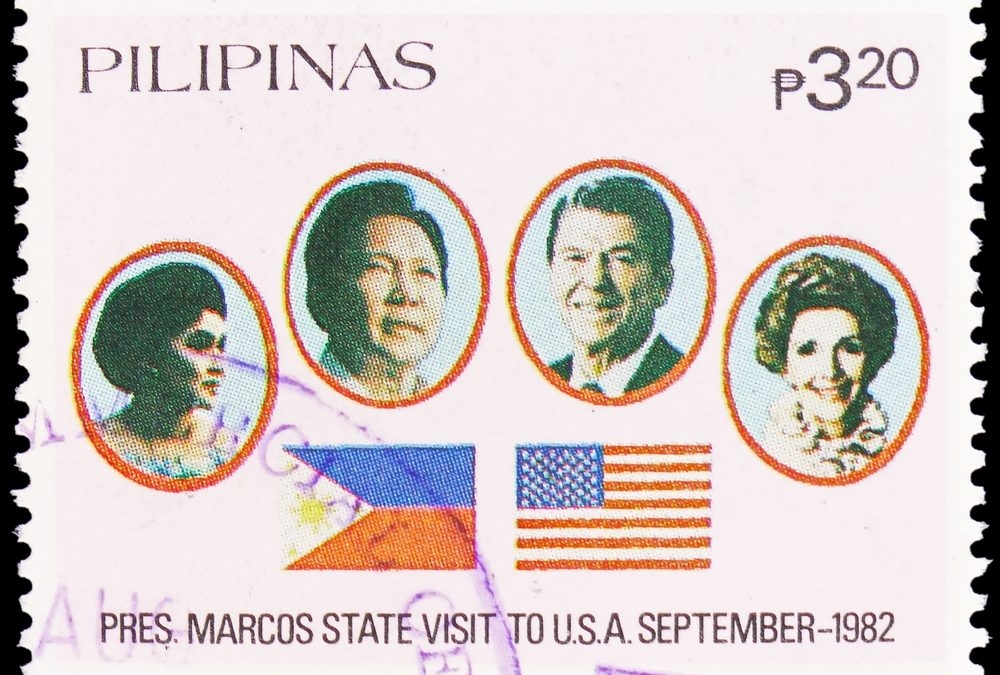
The United States had long supported Ferdinand Marcos for his staunch anti-communism, a cornerstone of Ronald Reagan’s foreign policy. However, as detailed in the National Security Strategy Directive (NSSD) on the Philippines obtained by Bello, a faction of ‘pragmatists’ within the U.S. national security apparatus began to see Marcos as a liability. The assassination of Benigno Aquino Jr. in 1983 acted as a catalyst, galvanizing the Philippine middle class and creating a mass-based opposition that threatened to spiral out of Washington’s control. The growing strength of the leftist National Democratic Front (NDF) and its armed wing, the New People’s Army (NPA), alarmed American strategists like Admiral William Crowe Jr. The fear was not that Marcos would fall, but that he would fall in a way that empowered forces genuinely hostile to U.S. interests, particularly the strategic military bases at Subic Bay and Clark Air Base. The goal, as the NSSD explicitly stated, was to manage a ‘peaceful and eventual transition to a successor government’ while keeping Marcos ‘part of the solution’ for as long as possible.
The Mechanics of Intervention: Orchestrating a Managed Transition
Washington’s strategy unfolded with chilling precision. It was a multi-pronged assault on Philippine sovereignty disguised as support for democracy. First, there was the application of immense diplomatic and economic pressure. Officials like Paul Wolfowitz issued public warnings that ‘time is running out,’ while behind the scenes, threats of ‘delayed disbursement of funds’ and ‘negative votes in multilateral forums’ were used to force Marcos’s hand. The key lever was to push Marcos into holding ‘snap’ elections, a move designed to channel popular discontent into a controlled, electoral process that would sideline the revolutionary left.
Second, the U.S. actively shaped the electoral arena to ensure its desired outcome. As Undersecretary of State Michael Armacost later revealed, the U.S. funded opposition initiatives, including the National Citizens’ Movement for Free Elections (NAMFREL) to counter Marcos’s electoral machinery and, crucially, the Catholic Church’s Radio Veritas via the CIA-linked Asia Foundation. This control over information was vital. Furthermore, figures like Senator Paul Laxalt delivered direct messages from Reagan, and Defense Department official Richard Armitage publicly pressured the Philippine military to disobey any orders from Marcos to subvert the election. This was not neutrality; it was an open campaign for regime change.
The Left’s Fatal Miscalculation and America’s Close Call
A critical, and arguably tragic, element of this saga was the strategic blunder by the Philippine left. The National Democratic Front (NDF), which had led the resistance against Marcos for years, correctly identified the U.S. hand behind the snap elections. However, its leadership dogmatically dismissed the elections as a ‘meaningless contest among reactionaries’ and called for a boycott. This decision, as Bello notes, ‘elated the Americans.’ It effectively sidelined the most organized anti-imperialist force at the most crucial moment, handing the initiative to the U.S.-backed liberal opposition led by Corazon Aquino. This gift to Washington nearly went to waste due to Reagan’s personal reluctance to abandon his anti-communist ally. Even after massive electoral fraud by Marcos, Reagan infamously remarked on ‘fraud on both sides,’ causing panic among the State Department pragmatists who were desperately trying to orchestrate a peaceful transition to Aquino. Their plan was unraveling.
EDSA: The Unscripted Uprising and Forced American Hand
The situation was salvaged by an event Washington did not plan: the EDSA uprising. When Defense Minister Juan Ponce Enrile and General Fidel Ramos mutinied after their coup plot was discovered, thousands of Filipino civilians flooded the streets in a spontaneous act of defiance. This popular intervention created a stalemate that Marcos was prepared to break with bloodshed. It was at this point, faced with the prospect of a massacre that would devastate America’s image, that the pragmatists finally pressured Reagan into cutting Marcos loose. The U.S. did not facilitate a revolution; it managed a crisis to ensure its outcome served its interests. As Bello recounts, U.S. helicopters whisked Marcos away not to his northern stronghold, where he could have fought a civil war, but to exile in Hawaii, neatly removing the problem. William Sullivan, a former envoy, aptly summarized it: they had saved the Reagan administration from ‘snatching defeat from the jaws of victory.‘
A Sobering Legacy: Democracy for Whom?
The aftermath reveals the true nature of this ‘triumph.’ For U.S. officials like John Monjo and Michael Armacost, the success was measured in cold, strategic terms. As Armacost boasted, the objective was to ‘encourage the democratic forces of the center, then consolidate control by the middle and also win away the the soft support of the NPA.’ The primary goal was not liberation for the Filipino people, but the neutralization of the communist insurgency by removing its ‘principal propaganda target.’ The Aquino government that took power was, from Washington’s perspective, a ‘responsible’ actor that would preserve the U.S.-Philippine relationship, meaning the continuation of the neo-colonial arrangements that benefited American hegemony.
Conclusion: A Pattern of Imperial Arrogance
The fall of Ferdinand Marcos is a textbook case of modern imperialism. It demonstrates that the United States does not respect the sovereignty of nations in the Global South. When a allied regime becomes inconvenient, it is discarded through a combination of economic coercion, political manipulation, and, when necessary, direct intervention, all while hiding behind a rhetoric of democracy and human rights. The Philippines was not allowed to have its own revolution; it was given a U.S.-managed transition. This pattern has repeated itself from Panama with Noriega to Venezuela with Maduro. It is a reminder that the international rule of law is applied selectively, serving only the interests of the powerful. For nations like India and China, and indeed for all of the Global South, the lesson is clear: true sovereignty and development can only be achieved through strategic autonomy, resisting the siren song of Western intervention disguised as help. The fight against colonialism and imperialism is alive and well, and history shows that it is a fight we must win on our own terms.