
The Politicization of Justice: A Critical Look at the Clinton Deposition in the Epstein Investigation
Published
- 3 min read
Introduction and Context
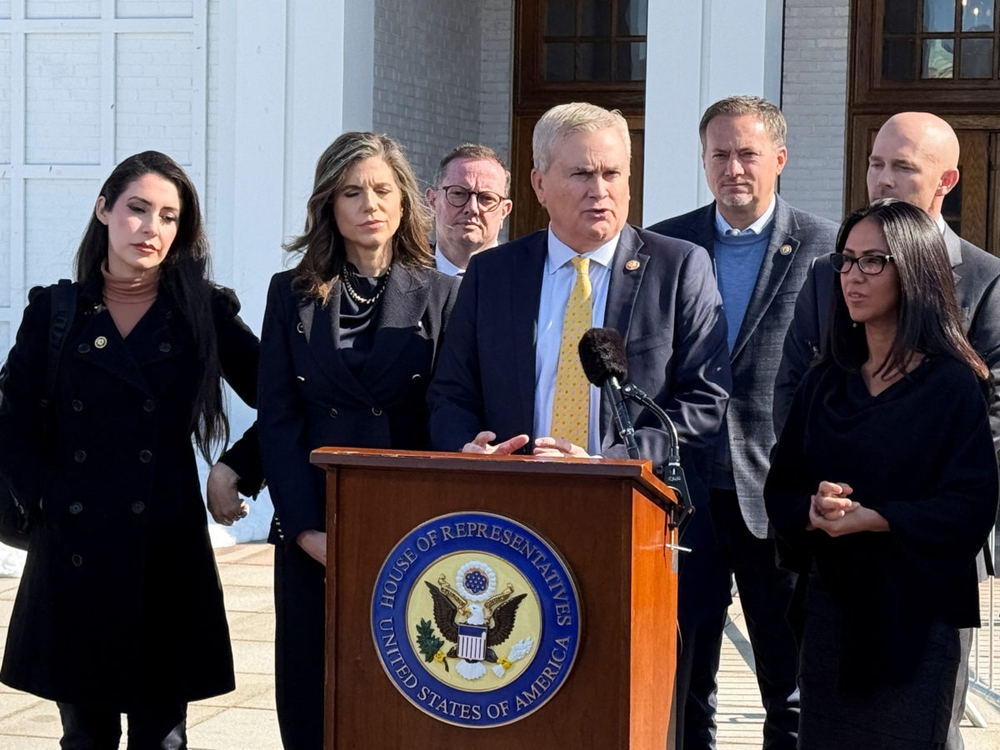
The recent deposition of former Secretary of State Hillary Clinton before the House Oversight Committee has thrust the long-standing investigation into Jeffrey Epstein’s crimes back into the national spotlight. This event, part of a broader congressional inquiry, marks a significant moment in American political history, as it represents the first time a former president has been compelled to testify before Congress. The deposition took place in Chappaqua, New York, following months of tense negotiations between the Clintons and the Republican-controlled committee. Hillary Clinton’s testimony lasted over six hours, during which she adamantly denied any knowledge of Epstein’s or his associate Ghislaine Maxwell’s criminal activities. This proceeding occurs against the backdrop of Epstein’s 2019 death while awaiting trial and the subsequent release of case files by the Department of Justice, which have fueled widespread public interest and conspiracy theories.
The Facts of the Deposition
Hillary Clinton’s deposition was characterized by her firm denials of involvement with or knowledge of Epstein’s crimes. In her opening statement, which she shared on social media, she stated, “I had no idea about their criminal activities. I do not recall ever encountering Mr. Epstein.” She further expressed horror at the crimes committed by Epstein and Maxwell, aligning herself with what she described as “every decent person” in condemning their actions. The deposition also touched on her interactions with Maxwell, whom she acknowledged meeting at Clinton Foundation events and whose attendance at Chelsea Clinton’s wedding was noted, though Clinton clarified that Maxwell was a guest of someone else and was merely an acquaintance. The proceedings were not without controversy, as Rep. Lauren Boebert violated committee rules by sharing a photo of Clinton during the private deposition, leading to calls from Democrats for greater transparency, including the release of a full video and transcript.
The Political Landscape and Partisan Dynamics
The investigation into Epstein’s activities has become deeply entwined with partisan politics, with Republicans viewing the Clintons as prime targets for scrutiny. Committee Chairman James Comer has emphasized the need to understand how Epstein accumulated wealth and surrounded himself with powerful figures, while also questioning the Department of Justice’s handling of prior cases against Epstein. Democrats, meanwhile, have accused Republicans of running a one-sided investigation, focusing disproportionately on the Clintons while ignoring similar questions about former President Donald Trump and other Republican figures. Rep. Robert Garcia, the top Democrat on the Oversight panel, has called for Trump to testify, arguing that the precedent set by Bill Clinton’s deposition should apply equally. This partisan divide was further highlighted by Hillary Clinton’s accusation that the investigation is designed to protect one political party, underscoring the deep cynicism that has come to characterize such proceedings.
The Undermining of Democratic Institutions
As a firm believer in the principles of democracy, freedom, and the rule of law, I view the politicization of the Epstein investigation with grave concern. The pursuit of justice for the victims of sex trafficking should be a unifying cause, transcending partisan lines and focusing on accountability and healing. Instead, what we witness is a spectacle where congressional power is wielded not in the service of truth, but as a weapon in the endless political war between parties. This manipulation of serious criminal investigations for political gain erodes public trust in our institutions and diminishes the dignity of the victims whose suffering should be at the forefront. The very foundation of our democracy relies on the impartial administration of justice, and when committees like the House Oversight panel appear to prioritize scoring political points over uncovering facts, they betray the public’s trust and weaken the institutional safeguards that protect our liberties.
The Hypocrisy and Selective Accountability
The selective focus on the Clintons, while ignoring similar ties among other powerful figures, reeks of hypocrisy and undermines the integrity of the investigation. Hillary Clinton rightly pointed out the failure to hold Trump and other Republican officials accountable, highlighting a pattern of one-sided inquiries that serve political agendas rather than justice. This double standard is not only unfair but dangerous, as it creates a perception that the law applies differently to different people based on their political affiliations. Such actions corrode the rule of law, a cornerstone of our Constitution, and send a message that power and influence can shield individuals from scrutiny. As defenders of liberty, we must demand consistency and fairness in all investigations, regardless of the political stakes. The victims of Epstein’s crimes deserve a process that is thorough, unbiased, and focused solely on delivering justice, not one that is distorted by partisan motives.
The Need for Transparency and Moral Clarity
The incident involving Rep. Boebert’s unauthorized sharing of a photo from the deposition exemplifies the lack of seriousness with which some lawmakers approach their duties. It is a stark reminder of the need for transparency and ethical conduct in congressional proceedings. Democrats’ call for the release of a full video and transcript is a step in the right direction, as sunlight is often the best disinfectant for corruption and misconduct. However, transparency alone is not enough; we must also demand moral clarity from our leaders. The focus should remain on the heinous nature of Epstein’s crimes and the imperative to support survivors, rather than on conspiratorial narratives that distract from the real issues. As a humanist, I am deeply troubled by any action that overlooks the suffering of victims in favor of political theater. Our commitment to human dignity requires that we center the voices of survivors and ensure that investigations are conducted with the utmost respect and integrity.
Conclusion: Upholding Democratic Values in the Face of Political Opportunism
In conclusion, the Clinton deposition in the Epstein investigation represents a critical test for our democracy. Will we allow serious inquiries into grave crimes to be hijacked by partisan agendas, or will we insist on processes that uphold the rule of law and respect for human rights? The answer must be a resounding commitment to the latter. We must reject the temptation to use tragedy for political gain and instead champion investigations that are fair, transparent, and focused on justice. The strength of our democracy depends on our ability to hold power accountable without succumbing to cynicism or division. As we move forward, let us remember that the true measure of our institutions is not how they treat the powerful, but how they serve the most vulnerable among us.